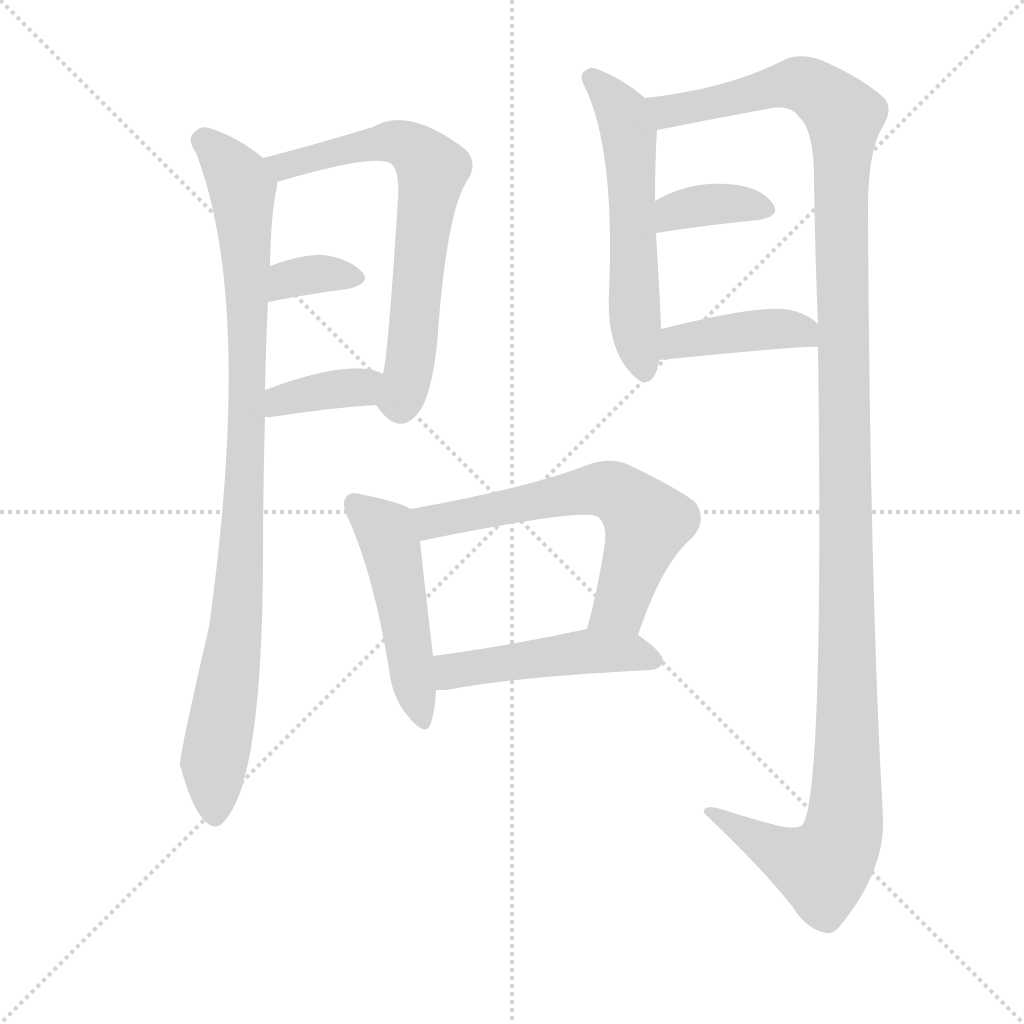
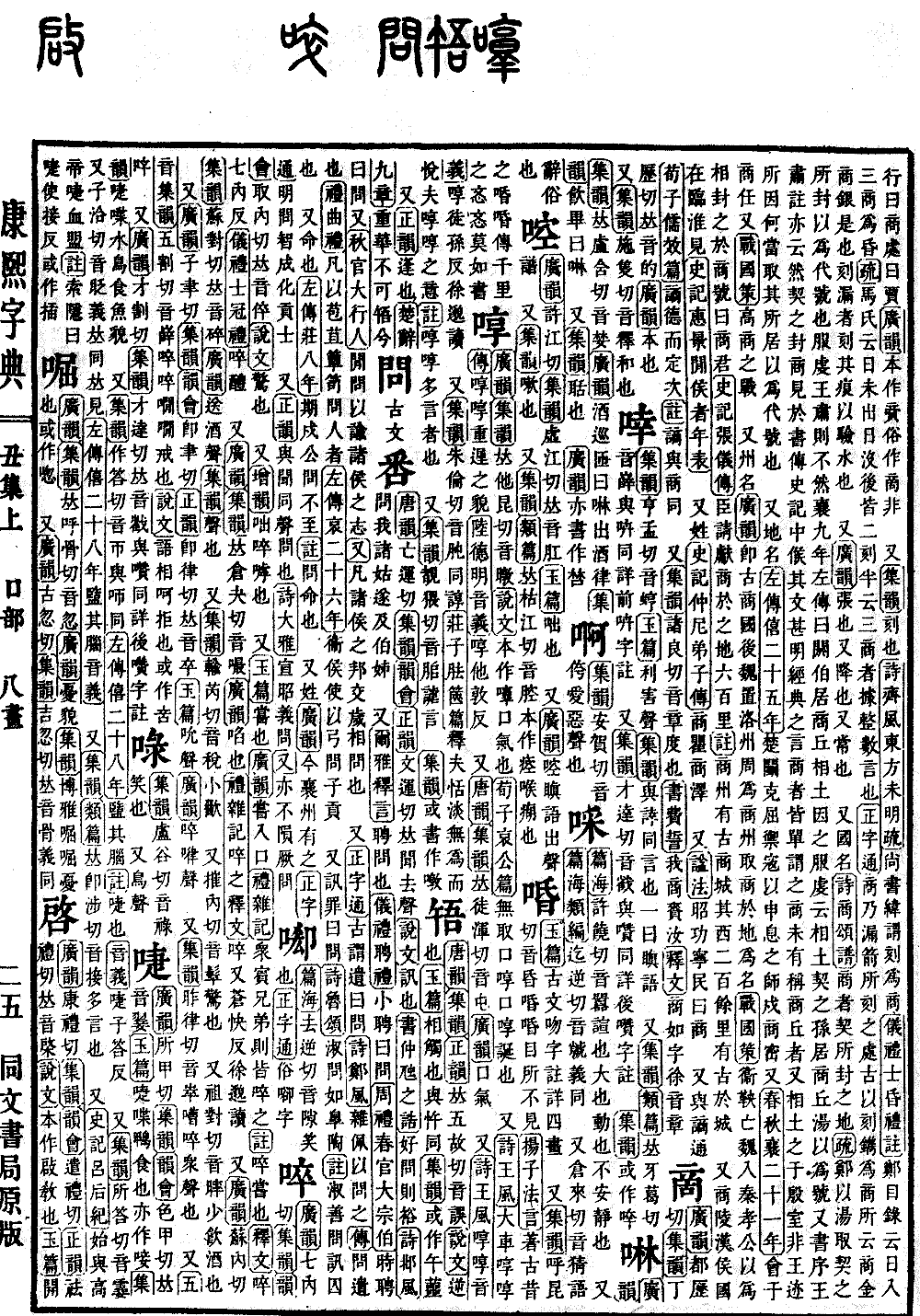
Chou Collection, Upper Volume
Radical: Mouth (kǒu)
Kangxi Strokes: 11
Page 195, Entry 10
Ancient script.
Pronounced wèn (falling tone).
According to the Discussion of Writing (Shuowen), it means to inquire.
Book of Documents (Shangshu), Charge of Zhonghui: To love inquiry leads to broad knowledge.
Book of Odes (Shijing), Beifeng: To inquire after my aunts, and then inquire after the elder sister.
Also, according to the Erya, Explanations of Words (Erya), it means a formal visit of inquiry.
Book of Etiquette and Ceremonial (Yili), Rites of Engagement: A minor visit of inquiry is called wen.
Rites of Zhou (Zhouli), Spring Officials, Great Minister of Rites: An irregular visit of inquiry is called wen.
Also, Autumn Officials, Great Envoy: To understand the intentions of the feudal lords through irregular greetings.
Also: Whenever feudal states interact, they greet each other once a year.
Also, according to the Comprehensive Dictionary of Characters (Zhengzitong), in ancient times, the act of giving a gift was called wen.
Book of Odes (Shijing), Zhengfeng: To give him mixed jade pendants as a gift.
Commentary: Wen means to present a gift.
Book of Rites (Liji), Summary of the Rules of Propriety: Whenever one presents gifts to others using bamboo containers.
Zuo Commentary (Zuozhuan), 26th Year of Duke Ai: The Marquis of Wei sent someone to present a bow to Zigong.
Also, to interrogate a criminal is called wen.
Book of Odes (Shijing), Lusong: Good at interrogation like Gao Yao.
Note: Shu means good at. Wen means to interrogate a prisoner.
Also, it means a command.
Zuo Commentary (Zuozhuan), 8th Year of Duke Zhuang: The appointed time for garrison duty arrived, but the command of the ruler did not arrive.
Note: Wen means command.
Also, a surname.
Guangyun: Currently there is this surname in Xiangzhou.
Comprehensive Dictionary of Characters (Zhengzitong): Wen Zhi of the Ming Dynasty, a tribute student during the Chenghua era.
Also, according to the Correct Rhymes (Zhengyun), same as wen, meaning reputation.
Book of Odes (Shijing), Daya: To proclaim and manifest a fine reputation.
Also: And did not lose his reputation.
Textual research: Book of Rites (Liji), Summary of the Rules of Propriety: Whenever one presents gifts using woven bamboo containers. Following the original text, the bamboo mat container has been corrected to a bamboo basket container.