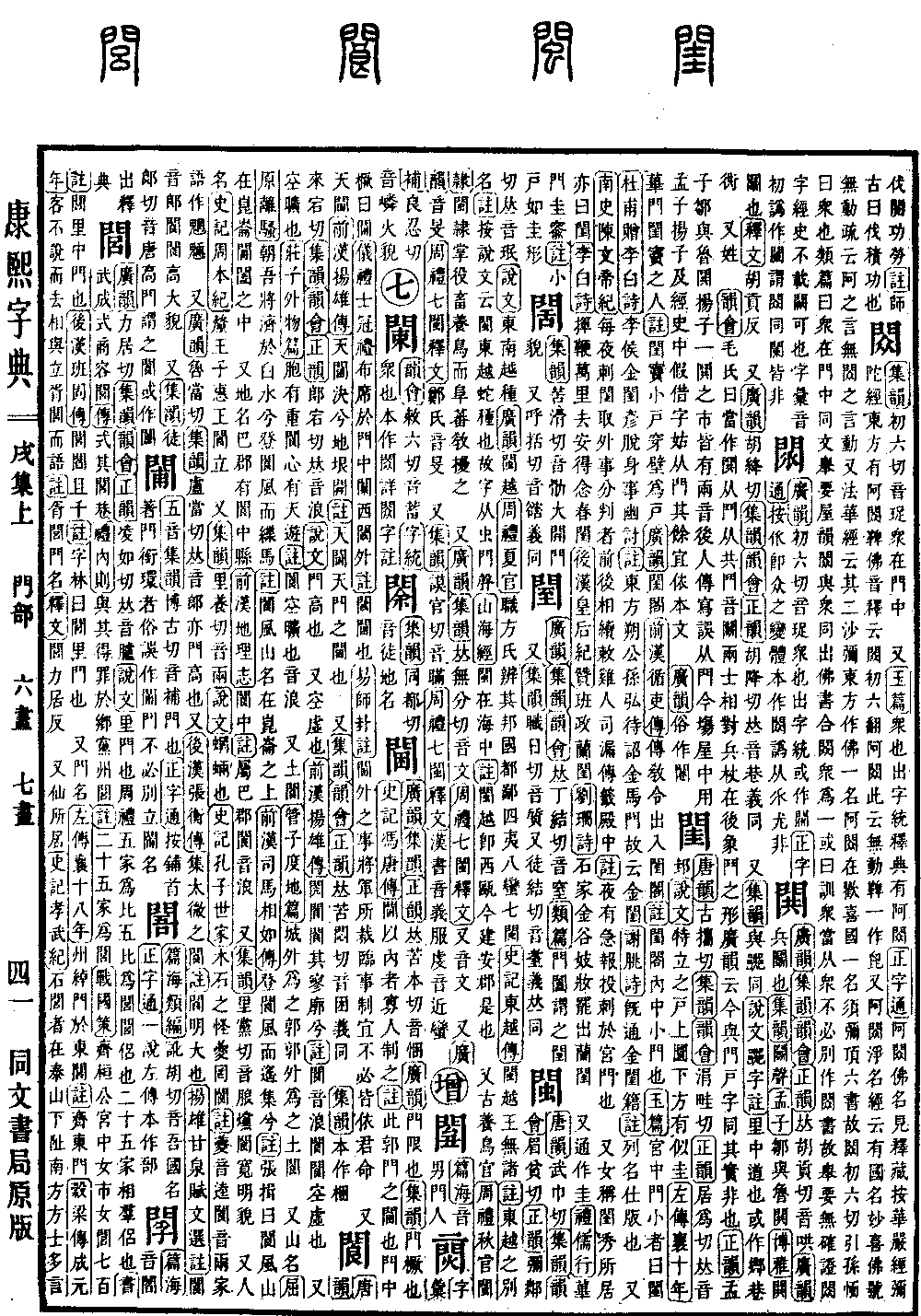
Xu Collection, Upper Volume
Radical: Gate (mén)
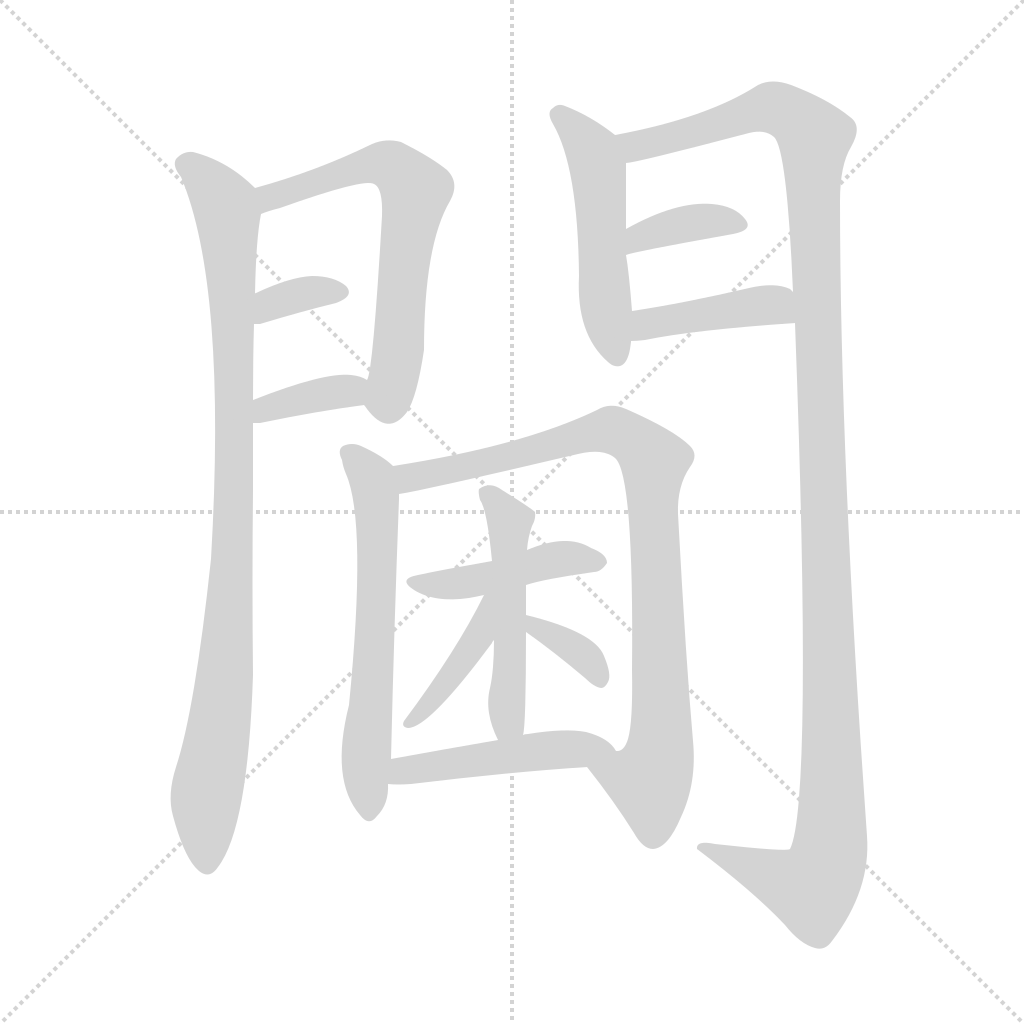
Kun
Kangxi strokes: 15
Page 1335, Entry 12
Broad Rhymes (Guangyun), Collected Rhymes (Jiyun), Correct Rhymes (Zhengyun): Pronounced kun (rising tone).
Broad Rhymes (Guangyun): The threshold of a gate.
Collected Rhymes (Jiyun): A short wooden post in the middle of a gate.
Records of the Grand Historian (Shiji), Biography of Feng Tang: Matters within the threshold of the capital gate are under my jurisdiction.
Commentary: This refers to the threshold of the outer city gate; the wooden post in the middle of the gate is called kun.
Book of Etiquette and Ceremonial (Yili), Disquisition on the Cap Ceremony: Spread the mat inside the gate to the west of the doorpost and outside the threshold. Commentary: The threshold is the kun.
Book of Changes (Yijing), Commentary on the Shi Hexagram: Matters outside the city gate are decided by the general according to the practical circumstances, not necessarily requiring the emperor's command in every instance.
Also refers to the threshold of the heavenly gate.
History of the Former Han (Qianhanshu), Biography of Yang Xiong: The heavenly gates open wide, the earthly boundaries open up.
Commentary: The heavenly kun is the threshold of the heavenly gate.
Also in Collected Rhymes (Jiyun), Rhyme Compendium (Yunhui), and Correct Rhymes (Zhengyun): Pronounced kun (falling tone). The meaning is the same.
Collected Rhymes (Jiyun): Originally written in a variant form (kun).