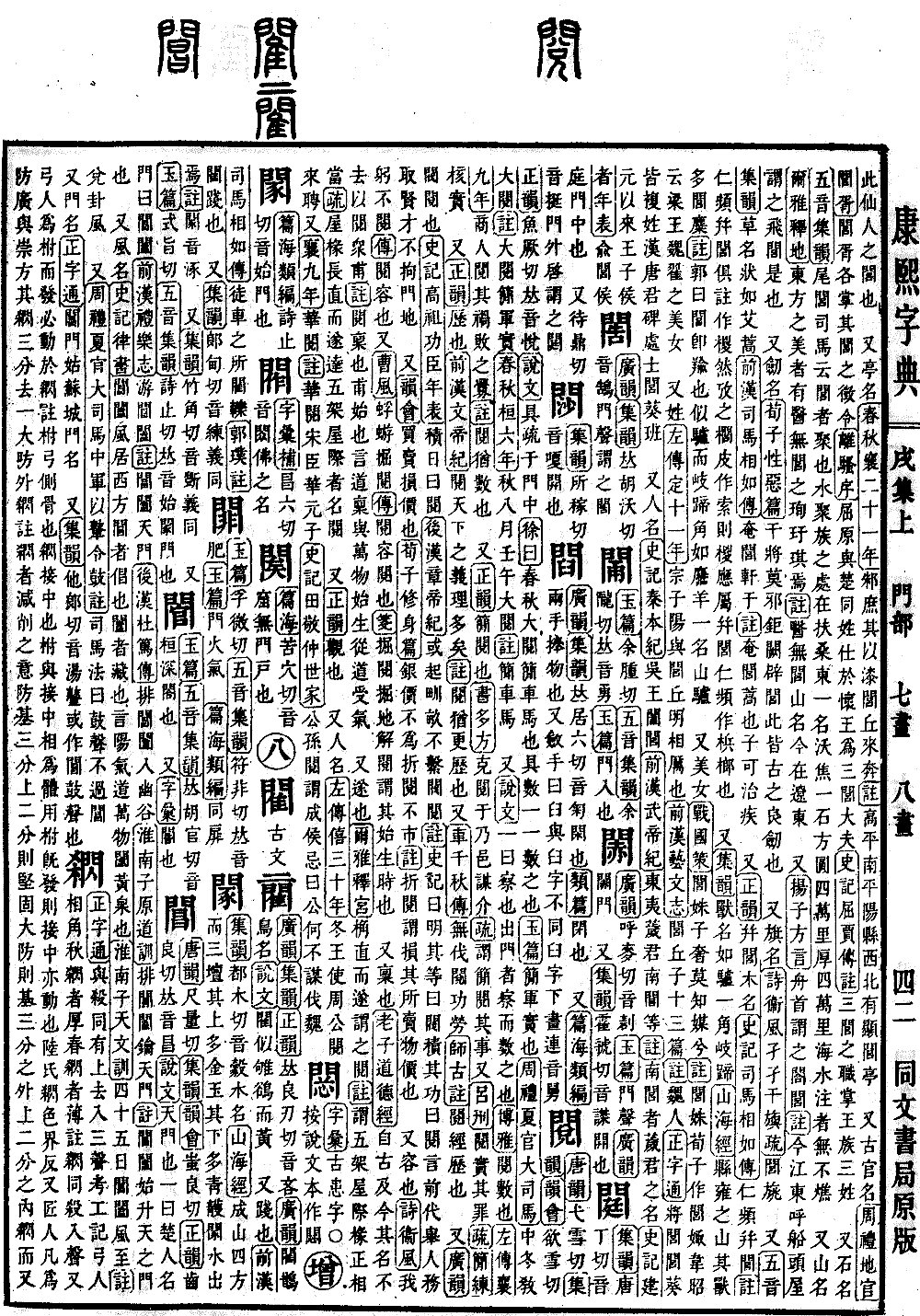
Xu Collection, Upper Volume
Radical: Gate (mén)
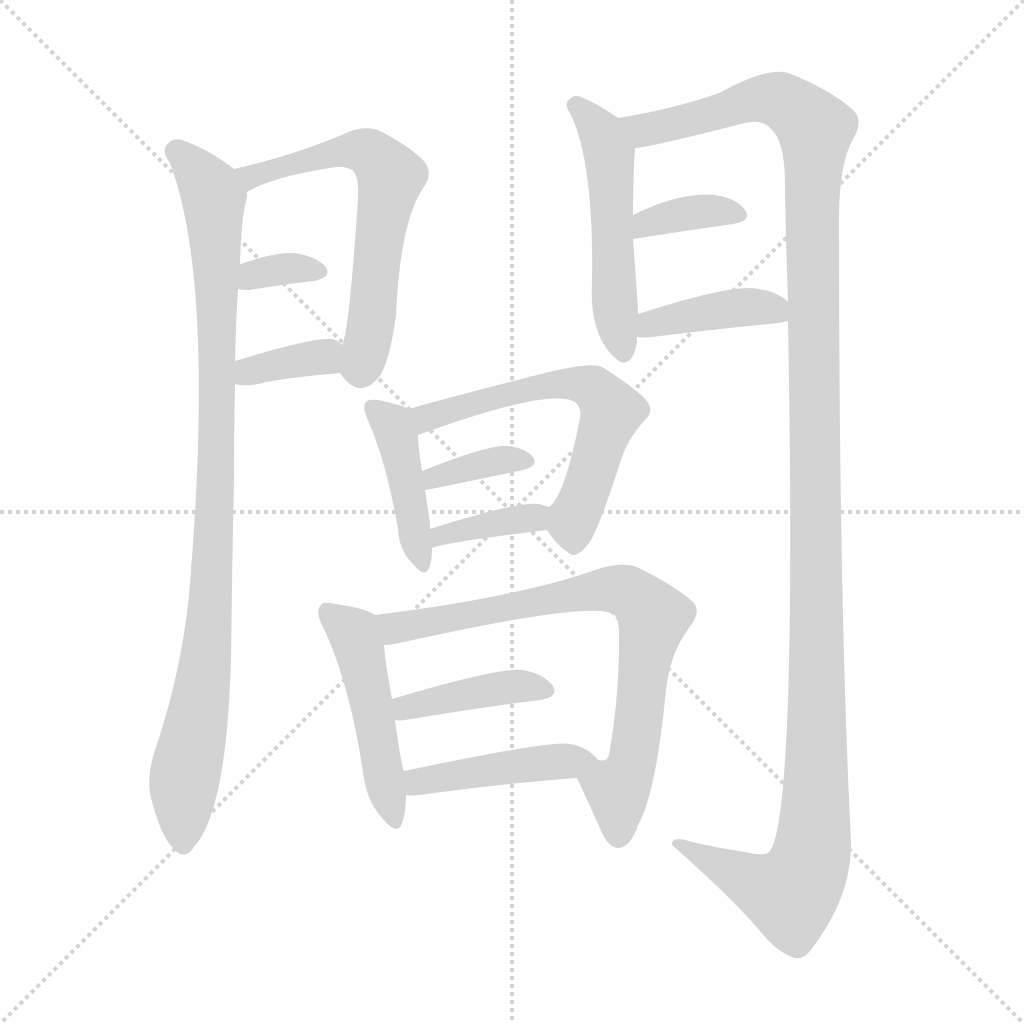
Chang
Kangxi strokes: 16
Page 1336, Entry 17
Pronounced chang.
Shuowen Jiezi (Shuowen) states: The gate of heaven. Another account states: The people of Chu call a gate a changhe.
History of the Former Han (Qianhan shu), Treatise on Rites and Music: Roaming through the changhe. Commentary: Changhe is the gate of heaven.
History of the Later Han (Houhan shu), Biography of Du Du: Pushing open the changhe, entering the secluded valley.
Huainanzi, Treatise on the Original Way: Pushing open the changhe, unlocking the gate of heaven. Commentary: Changhe is the gate through which one begins the ascent to heaven.
Also the name of a wind. Records of the Grand Historian (Shiji), Treatise on the Pitch Pipes: The changhe wind resides in the west. Chang means to initiate; he means to store. It refers to the yang energy guiding the myriad things and closing the yellow springs.
Huainanzi, Treatise on Astronomy: The forty-fifth is the arrival of the changhe wind. Commentary: The wind of the Dui trigram.
Rites of Zhou (Zhouli), Summer Offices, Great Minister of War, commentary on the instruction to use the drums for the central army: The Sima Method states: The sound of the drum does not exceed a chang.
Also the name of a gate. Zhengzitong: Chang Gate is the name of a city gate in Gusu.
Pronounced tang. Sometimes written in a variant form (tang). Refers to the sound of a drum.