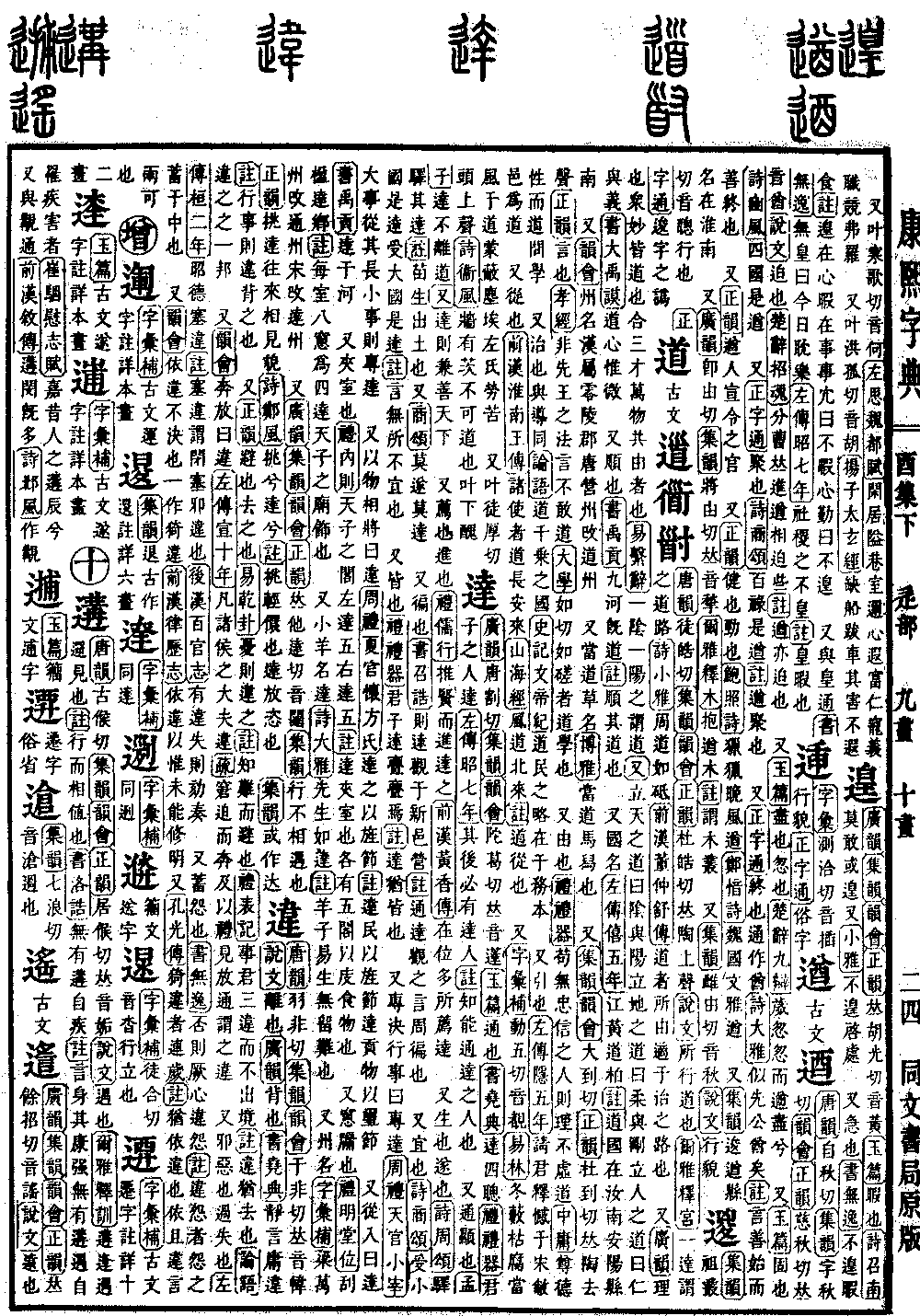
You Collection, Lower Volume
Radical: Walk (chuò)
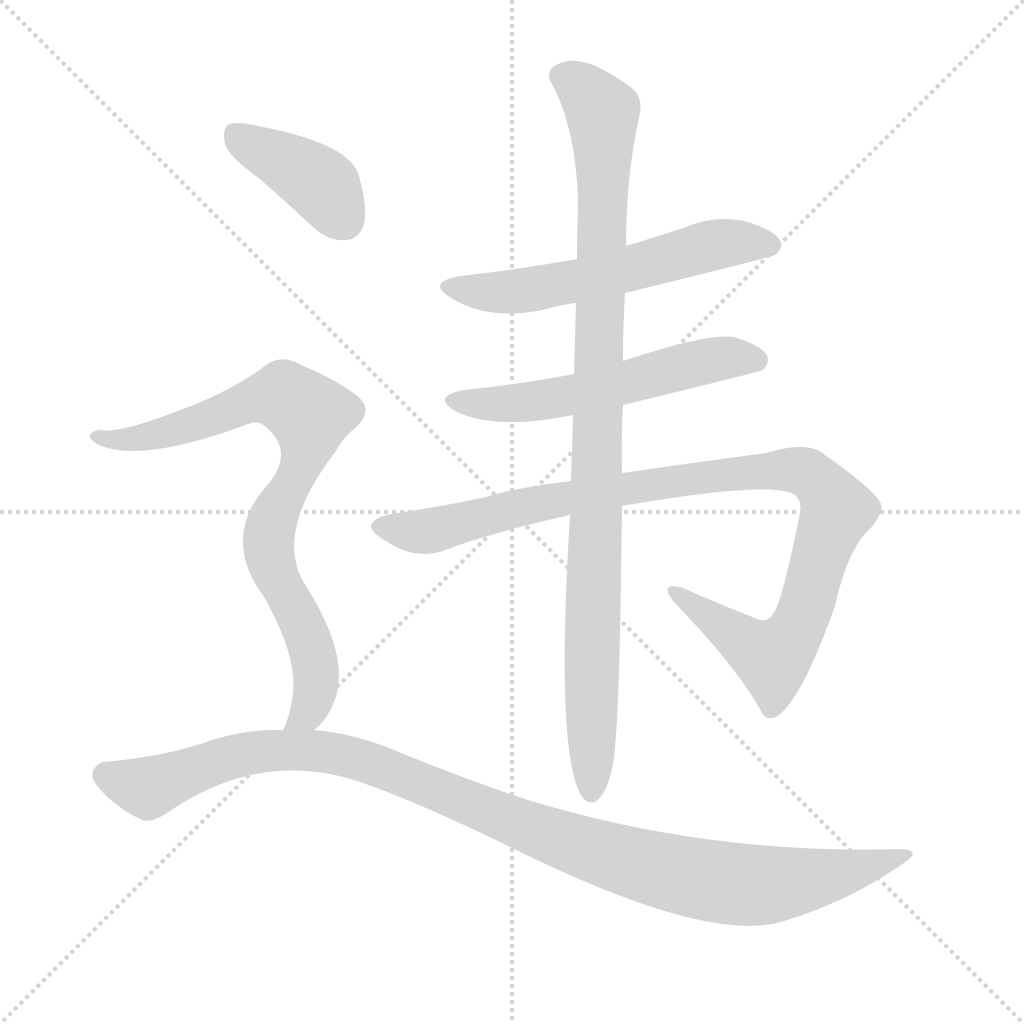
Character: Wei
Kangxi Stroke Count: 16
Page 1262, Entry 01
Pronounced wei.
According to the Explaining Graphs and Analyzing Characters (Shuowen), it means to separate.
According to the Broad Rhymes (Guangyun), it means to go against.
In the Book of Documents (Shangshu), Chapter on the Canon of Yao: Silent words are used to contradict. The commentary states: when it comes to conducting affairs, one goes against them.
Also, according to the Correct Rhymes (Zhengyun), it means to avoid or to depart from.
In the Book of Changes (Yijing), Hexagram of Qian: In times of worry, one should avoid the situation. The commentary states: to know the difficulty and avoid it.
In the Book of Rites (Liji), Chapter on Records of Dress: Serving one's lord, if one contradicts him three times without leaving the border. The commentary states: to contradict is to depart.
In the Analects (Lunyu): He departed for another state.
Also, according to the Rhyme Compendium (Yunhui), a rapid flight is called wei.
In the Zuo Tradition (Zuozhuan), Year 10 of Duke Xuan: All the grandees of the various lords who fled. The commentary explains: whether driven by distress or dismissed for ritual reasons, it is collectively called wei.
Also, it means evil or wicked, or a mistake.
In the Zuo Tradition (Zuozhuan), Year 2 of Duke Huan: Manifest virtue and block what is evil. The commentary states: blocking what is evil refers to closing off wickedness.
In the History of the Later Han (Hou Hanshu), Treatise on Officials: If there is a mistake or failure, then impeach and report it.
Also, it means to store up resentment.
In the Book of Documents (Shangshu), Chapter on Without Ease: Otherwise, their hearts will store up resentment. The commentary states: storing up resentment means resentment accumulating within.
Also, according to the Rhyme Compendium (Yunhui), to hesitate (yiwei) means to be indecisive. Sometimes written in a variant form (yiwei).
In the Book of Han (Hanshu), Treatise on Harmonics and Calendars: Hesitating in reflection, failing to clarify.
In the Biography of Kong Guang: Hesitated for successive years. The commentary states: the same as yiwei. To rely and yet contradict, speaking of being able to go either way.