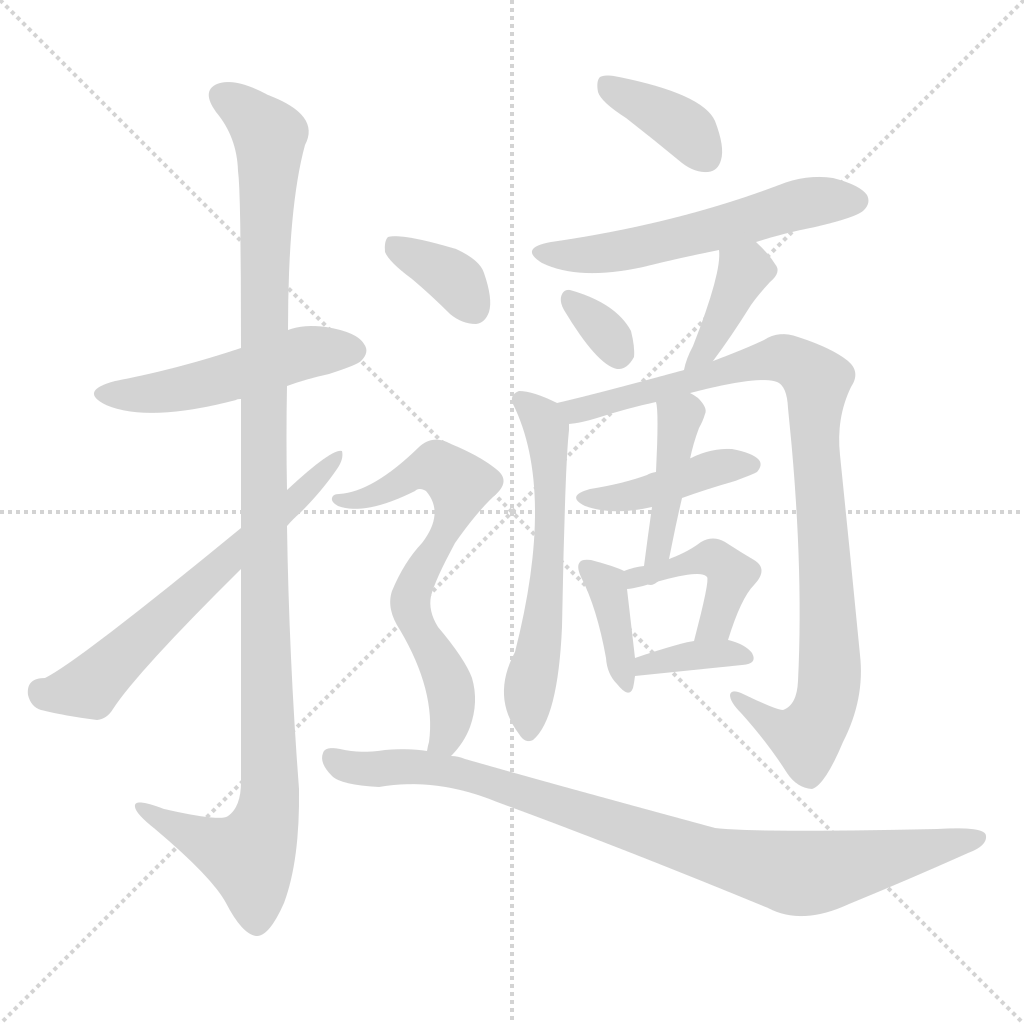
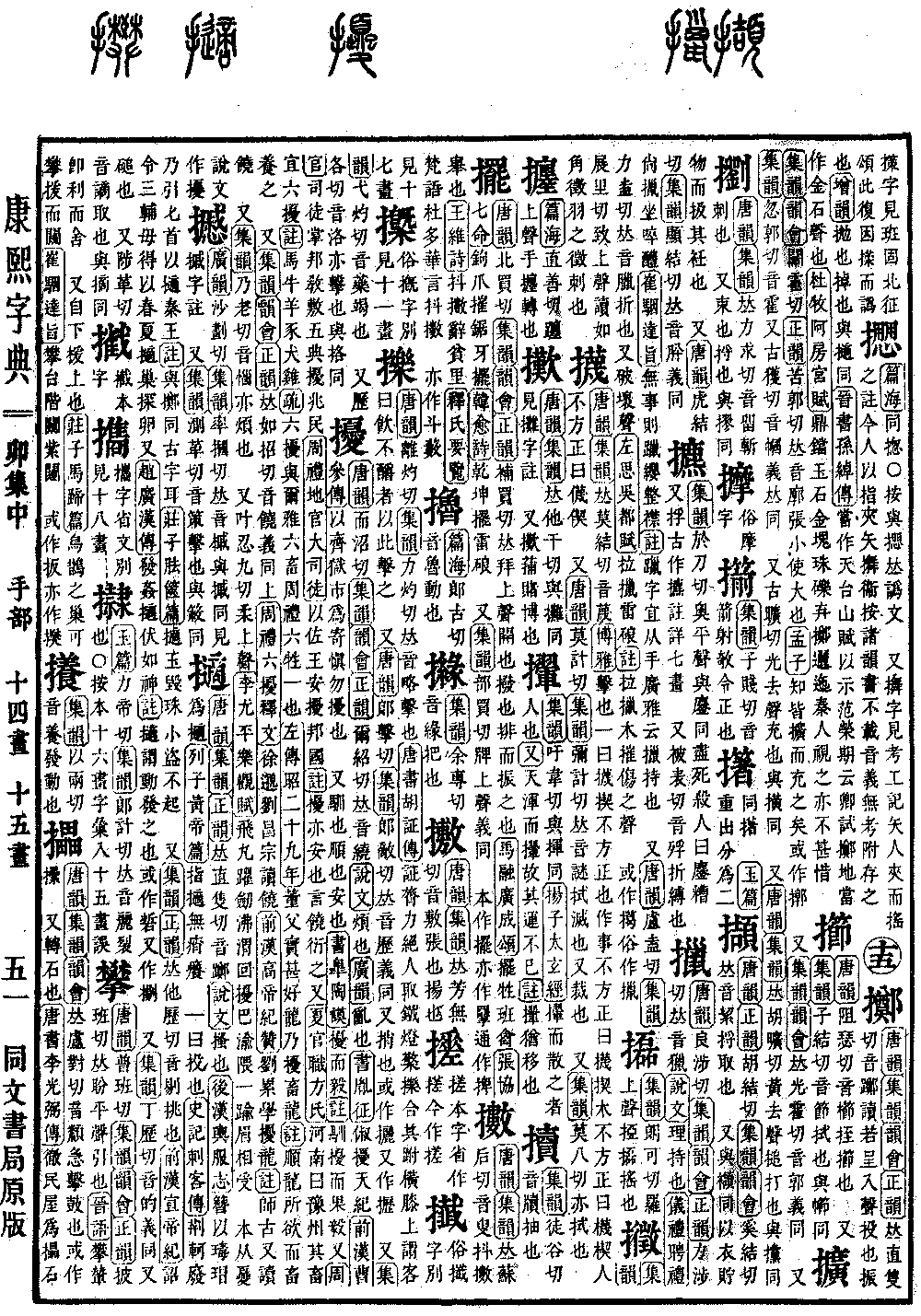
Mao Collection, Middle Volume. Radical: Hand (shǒu). Kangxi strokes: 19. Page 461, Entry 30.
Tang Dynasty Rhyme Dictionary (Tangyun), Collection of Rhymes (Jiyun), and Correct Rhymes (Zhengyun) record the pronunciation as zhí. According to the Explaining Graphs and Analyzing Characters (Shuowen), it means to scratch. In the Treatise on Carriage and Dress from the History of the Later Han (Hou Hanshu), it is written: Hairpins were made of tortoiseshell as a hairpin (zhí). In the Yellow Emperor chapter of the Master Lie (Liezi), it states: To point or scratch where there is no itch. Another meaning is to throw. In the Biographies of Assassins from the Records of the Grand Historian (Shiji), it is written: Jing Ke was disabled, so he raised his head to throw (zhí) at the King of Qin. The commentary notes that this is the same as the character for to throw (zhì). It is merely an ancient form of the character. In the Opening Trunks chapter of the Master Zhuang (Zhuangzi), it states: If one discards (zhí) jade and destroys pearls, petty thieves will not arise.
Also according to the Collection of Rhymes (Jiyun) and Correct Rhymes (Zhengyun), the pronunciation is tì. It means to pick out or provoke. In the Annals of Emperor Xuan from the History of the Former Han (Qian Hanshu), a decree was issued to the three metropolitan administrative regions forbidding the disturbing of nests or probing for eggs during the spring and summer. In the Biography of Zhao Guanghan, it says: Exposing treachery and unearthing hidden crimes as if by divine intervention. The commentary notes that this implies triggering or revealing. Sometimes written in a variant form (chè). Also written in another variant form.
Also according to the Collection of Rhymes (Jiyun), the pronunciation is dí. The meaning is the same as above. It also means to strike or push.
Also, pronounced zhé. It means to take or pluck. It is the same as the character for to pluck (zhāi).