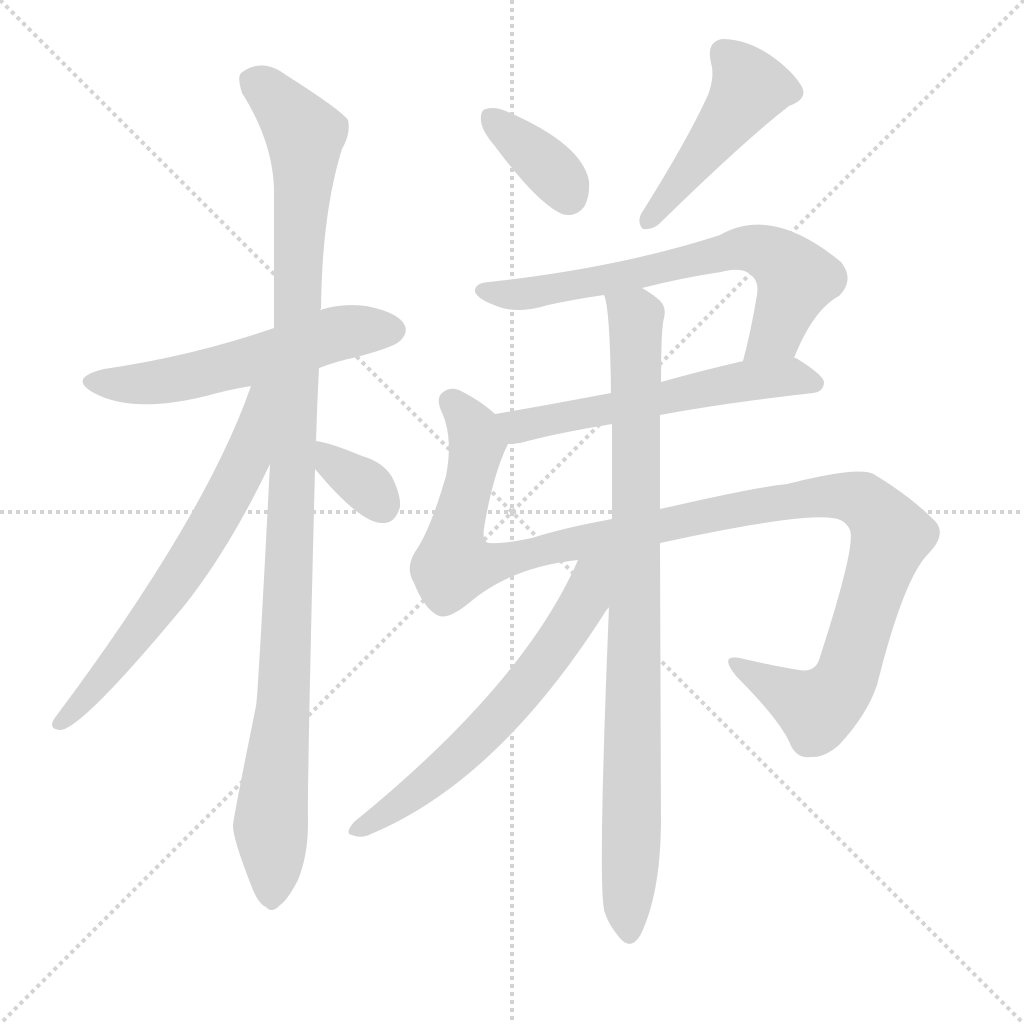
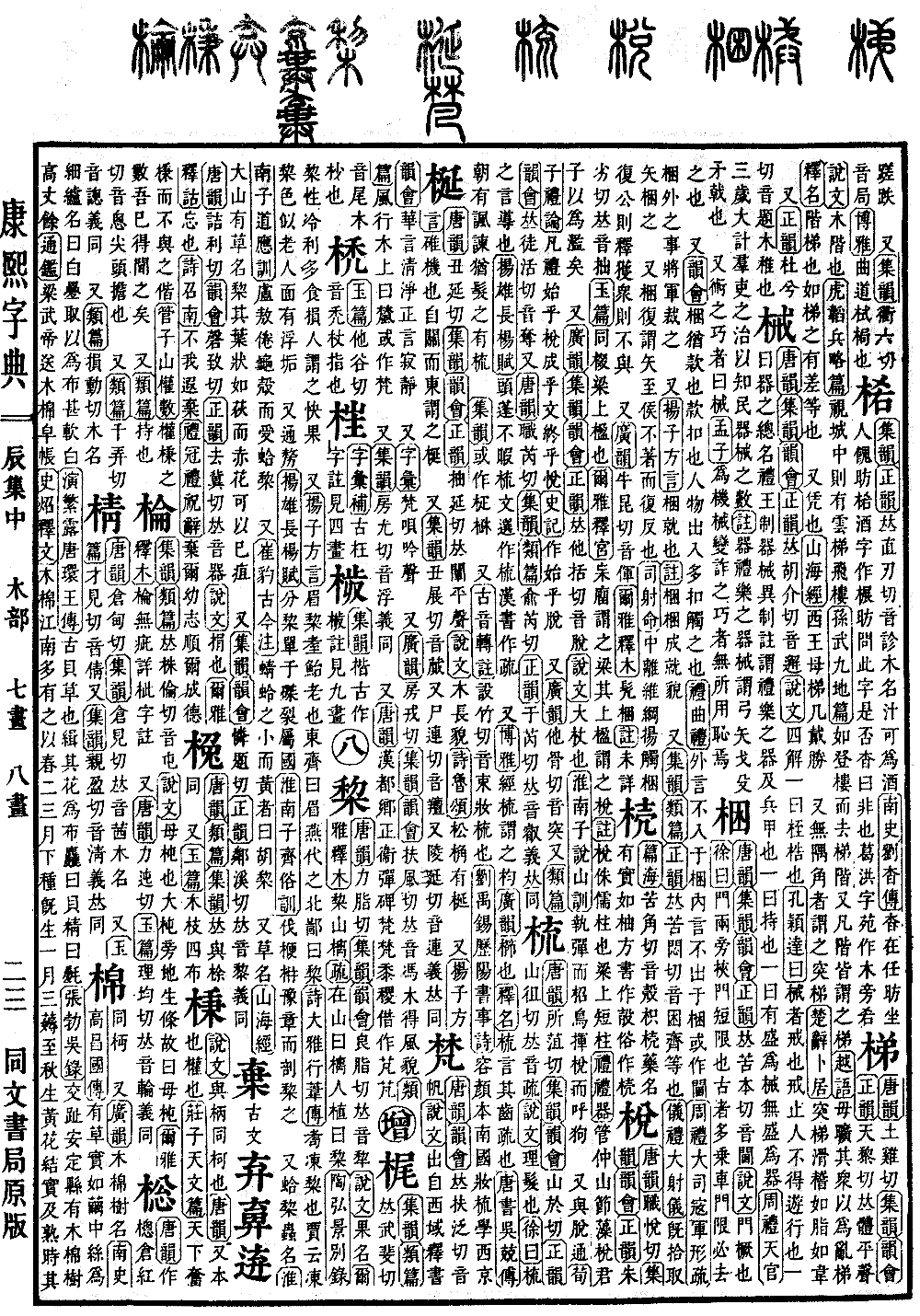
Chen Collection, Middle Volume. Radical: Tree (mù). Kangxi stroke count: 11. Page 531, Entry 02.
According to the Tang Dynasty Rhymes (Tangyun), pronounced ti. According to the Collected Rhymes (Jiyun), the Rhyme Collection (Yunhui), and the Correct Rhymes (Zhengyun), pronounced ti (level tone), read as the level tone of the character meaning body. The Explanation of Simple and Compound Characters (Shuowen Jiezi) defines it as steps made of wood. The Tiger Strategy (Huotao), Military Strategy chapter, mentions that when observing conditions within a city, one may use cloud ladders and flying towers. Sun Wu (Sunzi), Nine Terrains chapter, states that it is like ascending a high building and then removing the ladder. Furthermore, all stairs or steps may be called a ladder. The Sayings of Yue (Yueyu) states, do not allow the people to remain idle, lest they become a ladder to chaos. The Explanation of Names (Shiming) explains that a staircase is a ladder, just as a ladder has high and low levels. It also carries the meaning of leaning against something. The Classic of Mountains and Seas (Shanhaijing) records that the Queen Mother of the West leaned against a low table, wearing a jade ornament on her head. Additionally, that which lacks sharp edges is called tuti. The Songs of Chu (Chuci), Divination chapter, describes being smooth and conforming to custom, like grease that is slippery and like tanned leather that is soft. Furthermore, according to the Correct Rhymes (Zhengyun), pronounced ti. It refers to the seedlings of a tree.