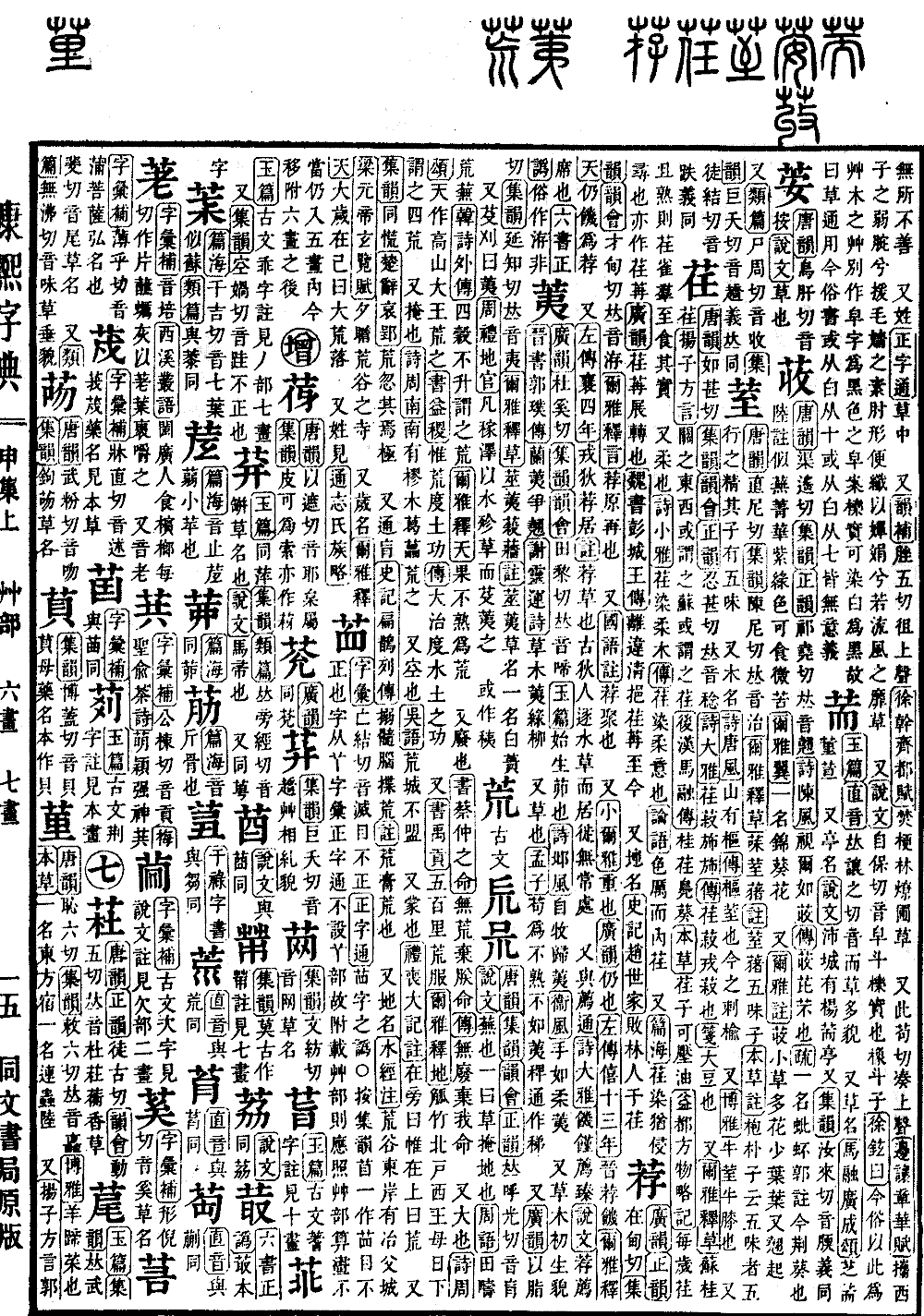
Shen Collection, Upper Volume
Radical: Grass (cǎo)
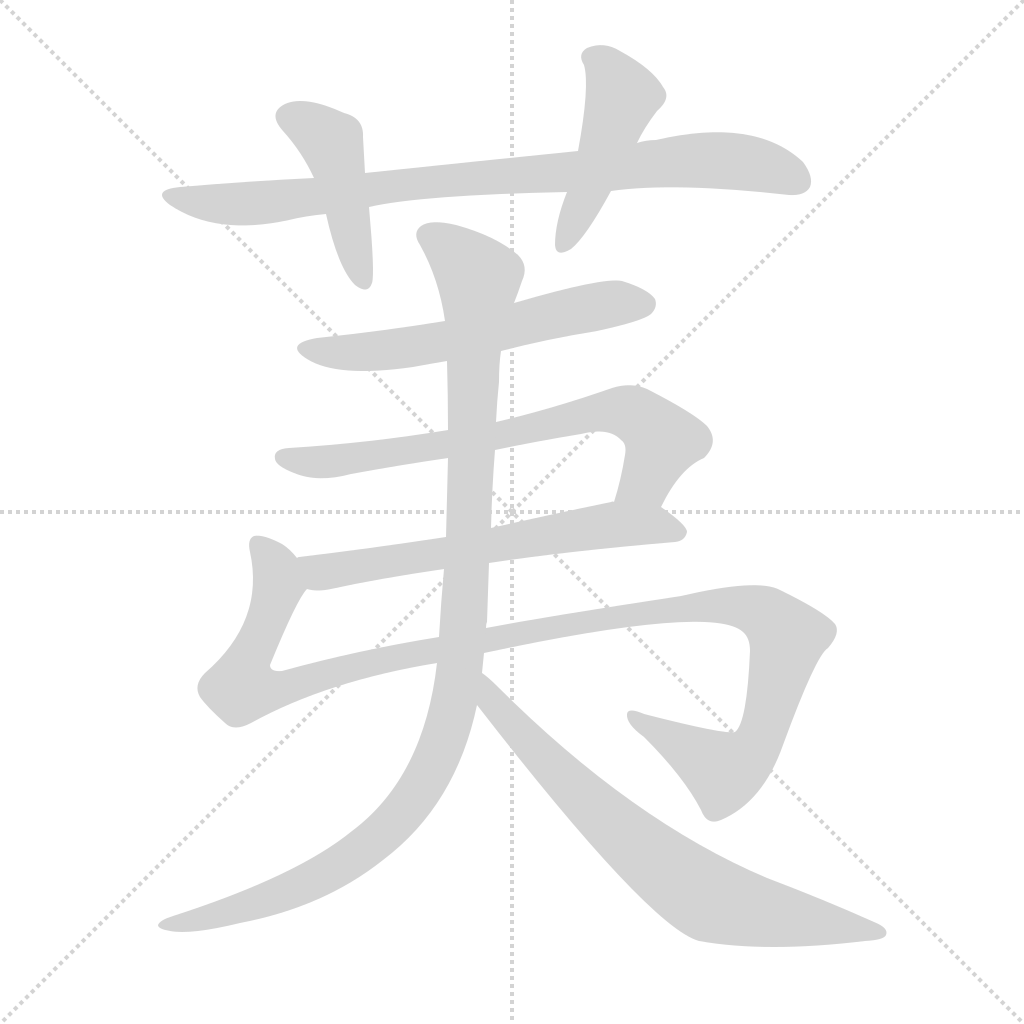
荑
Kangxi strokes: 12
Page 1031, Entry 07
Pronounced ti.
Yu Pian (Jade Chapters): Newly sprouted cogon grass.
Book of Odes (Shijing), Beifeng: To gather newly sprouted grass from the wilderness as a gift.
Book of Odes (Shijing), Weifeng: Hands as soft as newly sprouted grass shoots.
Also refers to the appearance of plants when they first sprout.
Book of Jin (Jinshu), Biography of Guo Pu: Orchids and newly sprouted shoots vie to emerge.
Poetry of Xie Lingyun: Newly sprouted green willows in the low-lying wetlands of the plains.
Also refers generally to weeds.
Mencius: If it does not mature, it is no better than weeds or tares.
Commonly written with the character ti (cereal grass).
Pronounced yi.
Erya (Approaching Elegance), Explaining Grasses: Wuti, also known as lili.
Commentary: Wuti is a type of grass, also known as baikui.
Also, cutting away weeds is called ti.
Rites of Zhou (Zhouli), Earth Office: For all crops planted in marshlands, submerge the weeds in water before cutting them away.
Sometimes written in a variant form.
Textual research:
Poetry of Xie Lingyun: Vegetation like newly sprouted green willows. We have corrected the text to read plains and wetlands in accordance with the original poem.