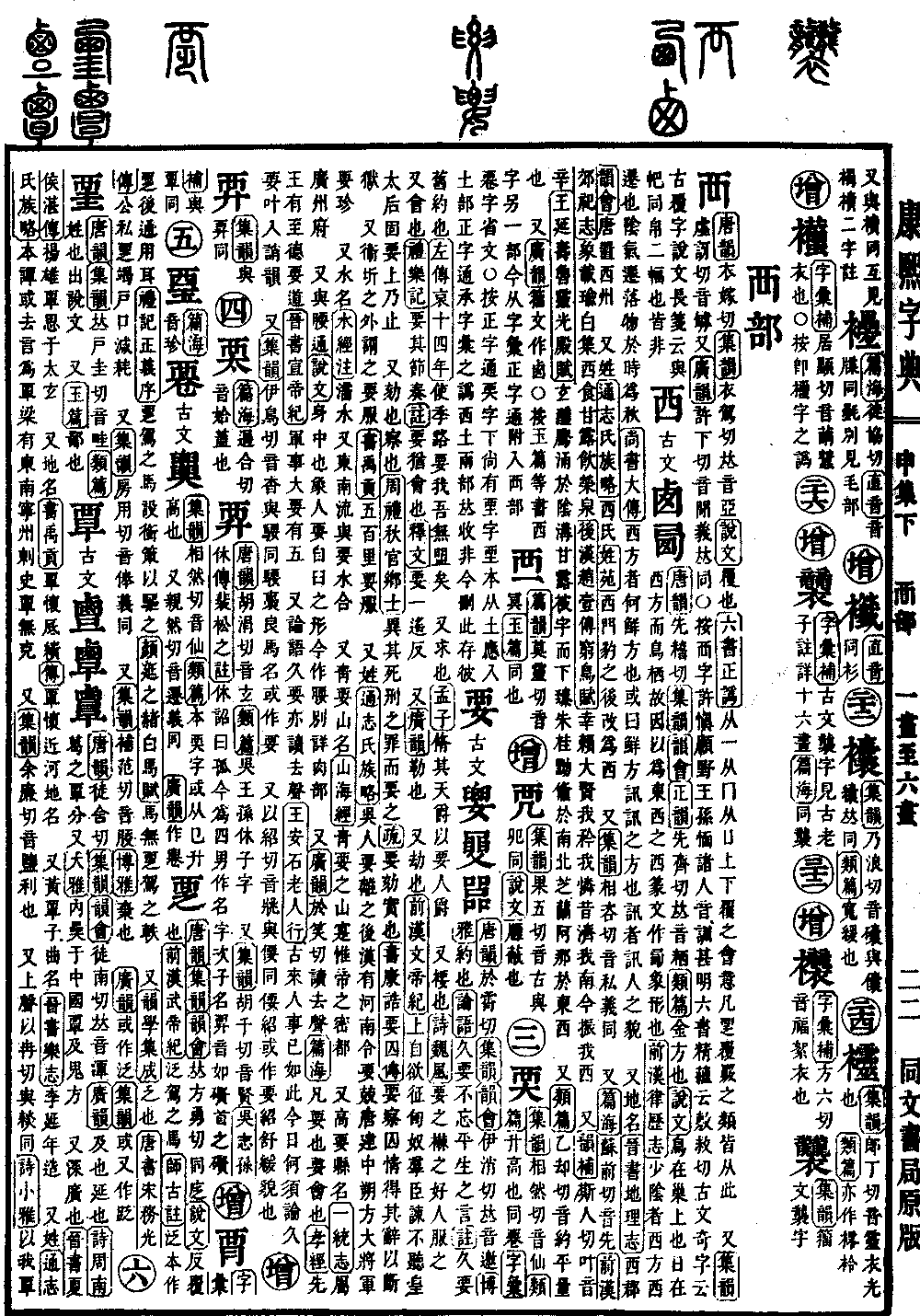
Shen Collection, Lower Volume
Radical: Cover (yà)
Kangxi Strokes: 12
Page 1128, Entry 29
Pronounced tan. According to Tang Rhymes (Tangyun), it is pronounced tan. According to Collected Rhymes (Jiyun) and Rhyme Collection (Yunhui), it is pronounced tan. The pronunciation is the same as the word for deep pool. According to Extensive Rhymes (Guangyun), it means to reach or to extend. The Book of Odes (Shijing), Zhou Nan section, contains the phrase: The kudzu vine extends. The Greater Odes (Daya) section writes: Internal resentment in the Central States extends to the Ghost Regions.
It also means deep and broad. The Book of Jin (Jinshu), Biography of Xiahou Zhan, mentions: Yang Xiong thinks deeply about the great. This refers to profound contemplation.
It is also a place name. The Book of Documents (Shangshu), Tribute of Yu (Yugong), records: The results were achieved in Thanhai. The commentary explains: Thanhai is a place name near the Yellow River.
It is also the name of a musical composition, Huangtanzi. The Book of Jin (Jinshu), Treatise on Music, records that it was created by Li Yannian.
It is also a surname. The Comprehensive Record of Clans (Tongzhi Shizule) records that the surname was originally Tan, and some removed the speech radical to change it to Tan. During the Liang dynasty, there was a regional inspector of the Southeast Nanning Prefecture named Tan Wuke.
It is also pronounced yan. The meaning is benefit.
It is also pronounced in the rising tone as tan. It has a similar meaning to the word for together. The Book of Odes (Shijing), Lesser Odes (Xiaoya), contains the phrase: With our plows, we begin to work the southern fields.
It is also pronounced shen. The meaning is the same.
According to the Correct Meaning Guide (Zhengzitong), it is classified under the gan rhyme and pronounced tan. However, according to rhyme books, there is no such pronunciation as tan.