You Collection, Lower Volume
Radical: Walk (chuò)
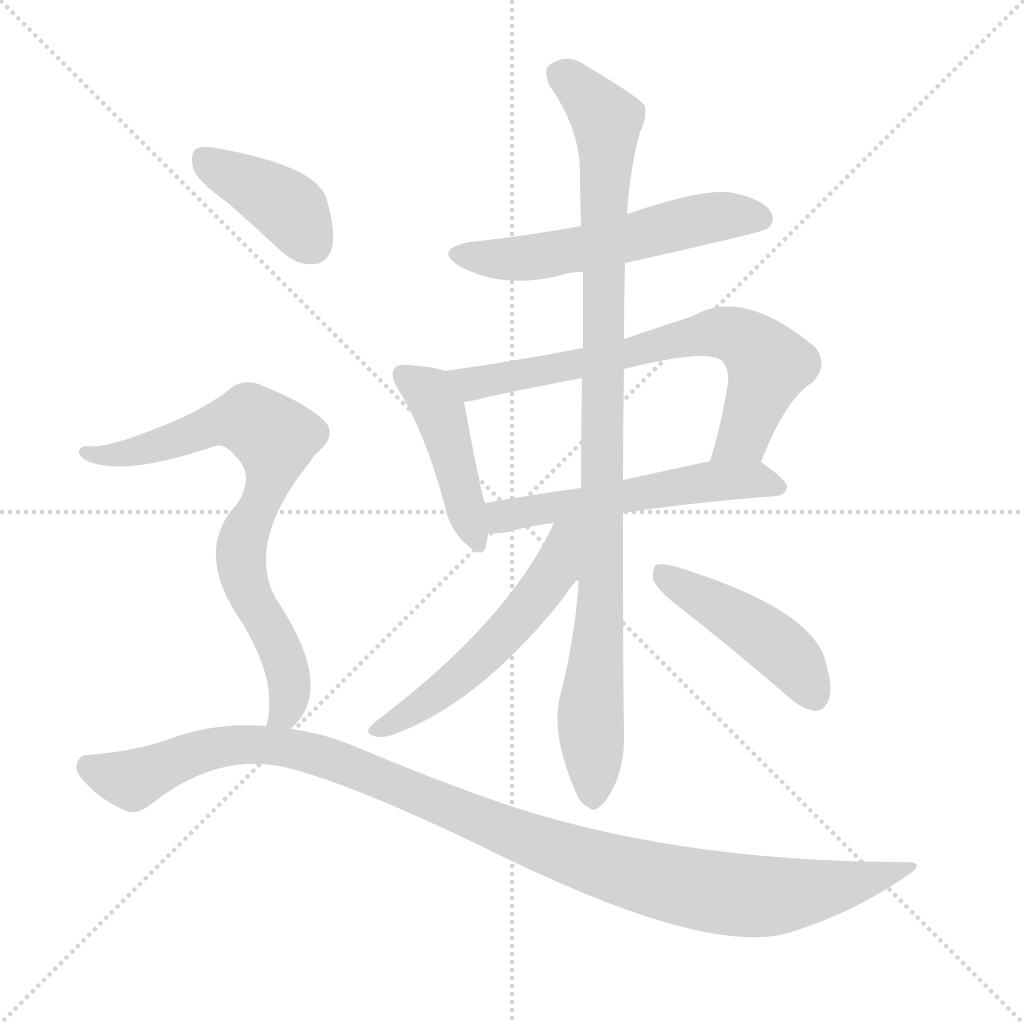
速
Kangxi strokes: 14
Page 1258, Entry 10
Ancient text:
Guangyun (Guangyun), Jiyun (Jiyun), and Zhengyun (Zhengyun) define it with the pronunciation su; Yunhui (Yunhui) defines it with the pronunciation su.
According to the Shuowen Jiezi (Shuowen Jiezi), it means fast or urgent.
Mencius (Mengzi): The King quickly issued an order.
Also, according to the Yupian (Yupian), it means to invite or summon.
Book of Changes (Yijing): Three uninvited guests arrive.
Book of Odes (Shijing): Invite all the elders.
Also, su-su describes an appearance of not being close or intimate.
Songs of Chu (Chuci): One keeps oneself distant and does not draw close to me.
Also, interchangeable with a variant form. Su-su refers to being vulgar, base, or shallow.
Book of the Later Han (Hou Hanshu): The vulgar, base petty people rub shoulders. Commentary: Su-su refers to vulgar, base petty people. In the Book of Odes (Shijing), it is written with a variant character.
Also, according to the Zhengyun (Zhengyun), the tracks of a deer are called su.
Stone Drum Inscriptions (Shiguwen): The tracks of the deer are su-su.
The ancient seal script is written as a variant form.
The character su is under the Radical: Walk (chuò).
Textual research:
Songs of Chu (Chuci): Nine Songs (Jiuge), reading "My own person is su-su and does not draw close to me." According to the original text, Nine Songs (Jiuge) should be corrected to Nine Laments (Jiutan).