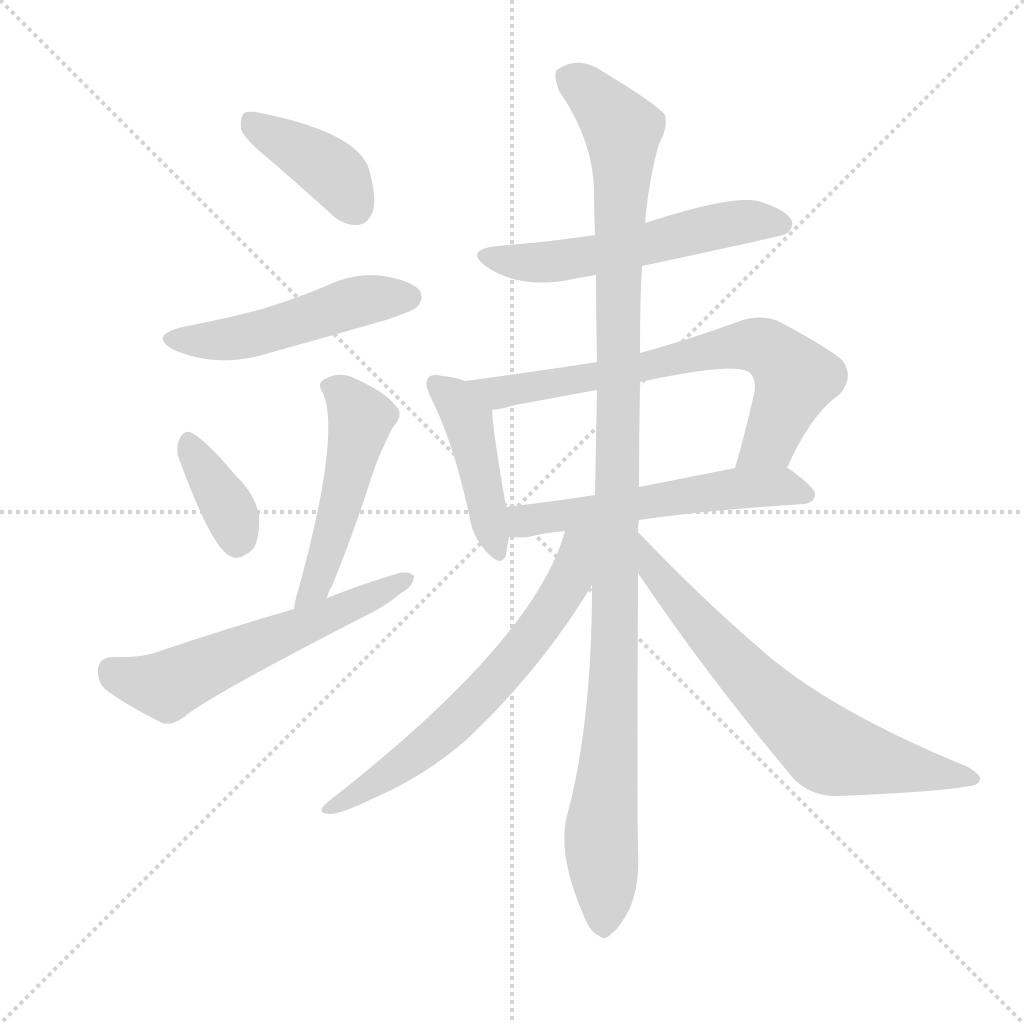
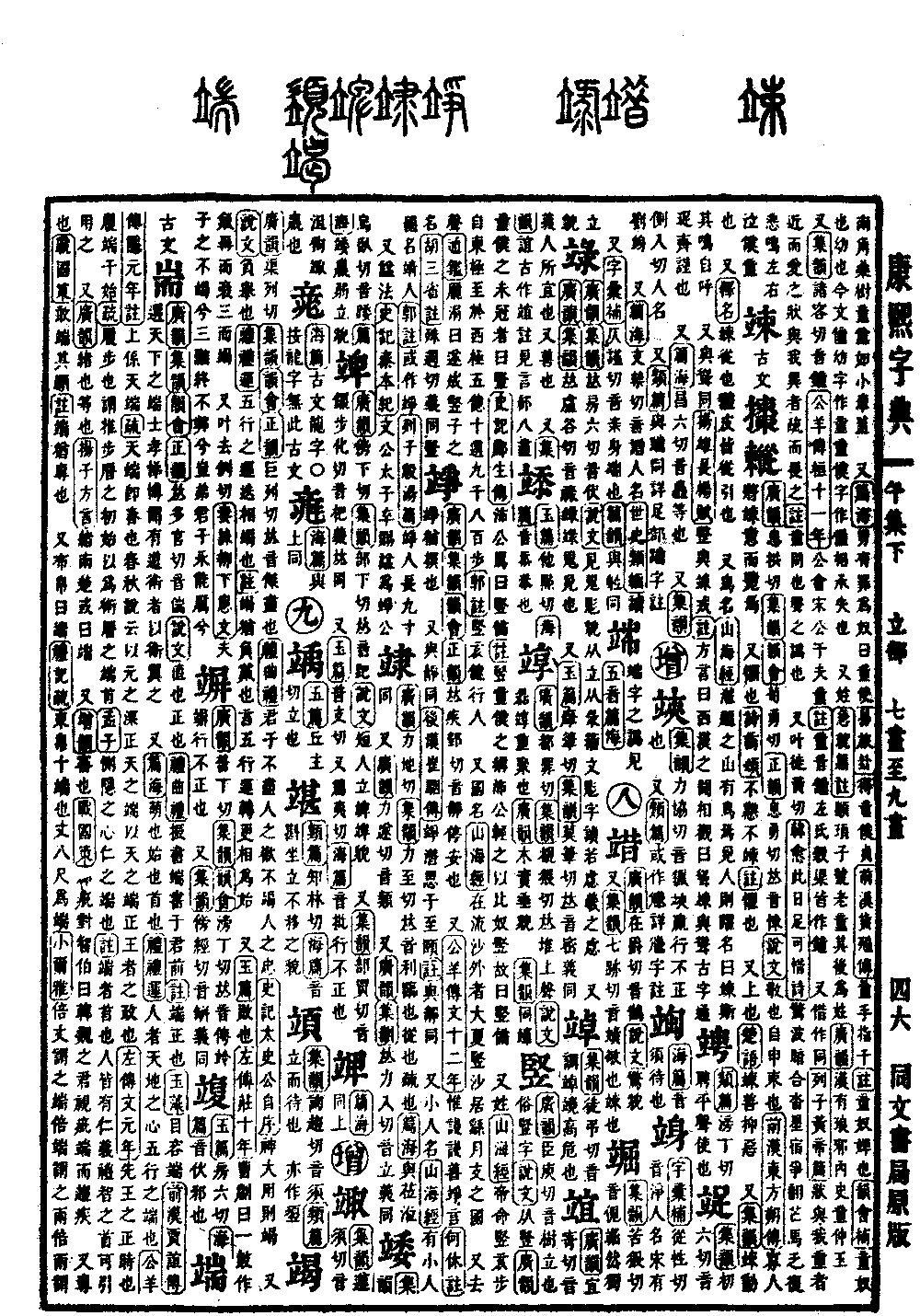
Wu Collection, Lower Volume
Radical: Stand (lì)
Kangxi strokes: 12
Page 872, Entry 01
Ancient character form.
Pronounced song.
From the Explaining Graphs and Analysis of Characters (Shuowen Jiezi): to respect; to restrain oneself.
From the History of the Former Han (Qianhan Shu), Biography of Dongfang Shuo: I shall compose my thoughts and examine them.
Also means to fear.
From the Book of Odes (Shijing), Shang Eulogies: Neither trembling nor afraid.
Note: afraid.
Also means to elevate.
From the Discourses of the States (Chu Yu): To elevate the good and suppress the wicked.
Also from the Collected Rhymes (Jiyun): Song, to move.
Also from the Explanation of Names (Shiming): Song, to follow. It implies the body and skin all following the act of stretching.
Also the name of a bird.
From the Classic of Mountains and Seas (Shanhai Jing): On Mount Guanti there is a bird; when it sees a person it jumps. It is named Songsi, and its call mimics its own name.
Also interchangeable with the character meaning to rise or to shrug (song).
From Yang Xiong, Rhapsody on the Longyang (Changyang Fu): Arranging the carriages and raising the weapons.
Note: The Dialect (Fangyan) states that in the region of Western Han, to observe one another is called song. Song and the character for rising are ancient interchangeable characters.