Wu Collection, Upper Volume
Radical: Life (shēng)
Kangxi Strokes: 12
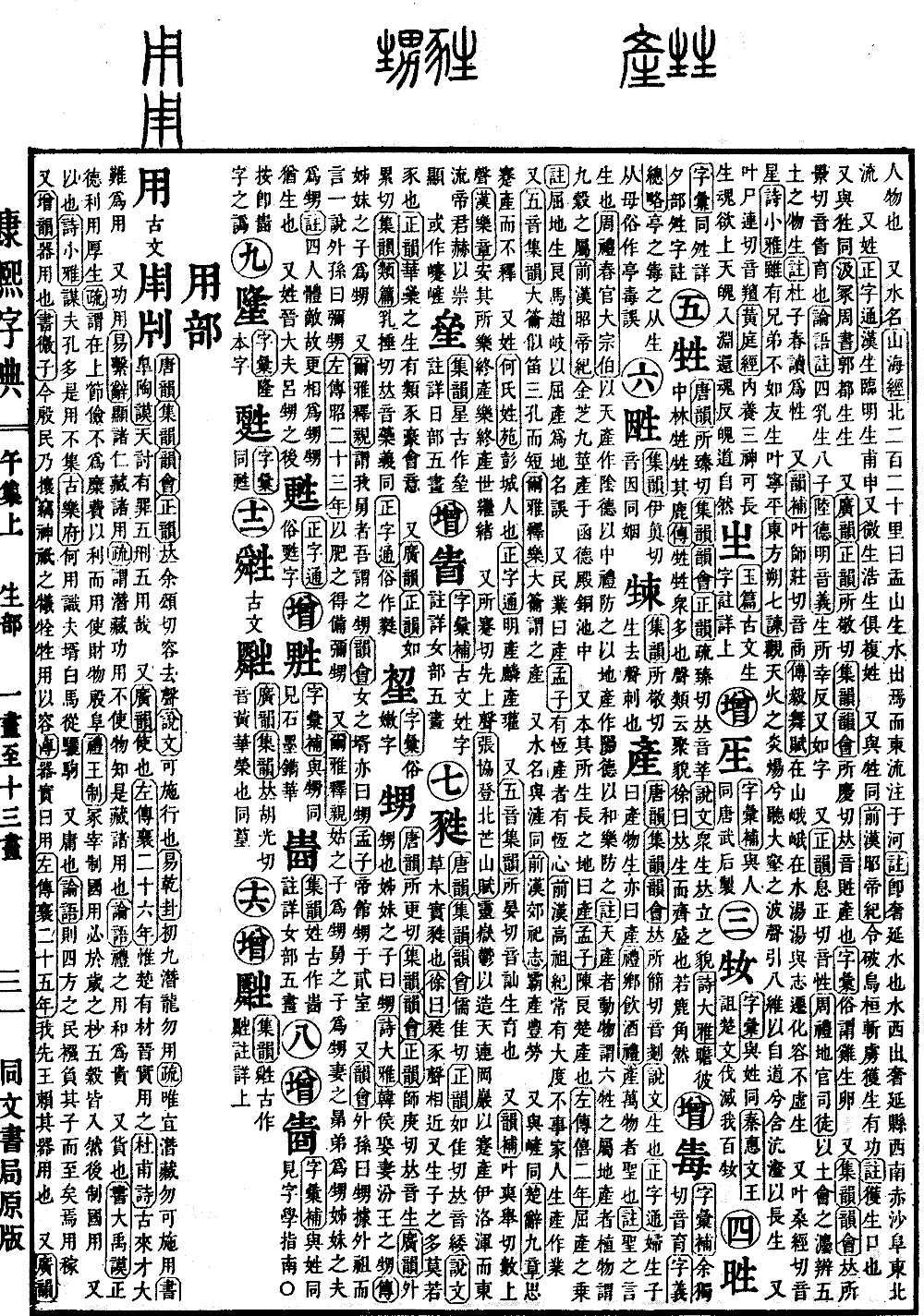
Page 755, Entry 14
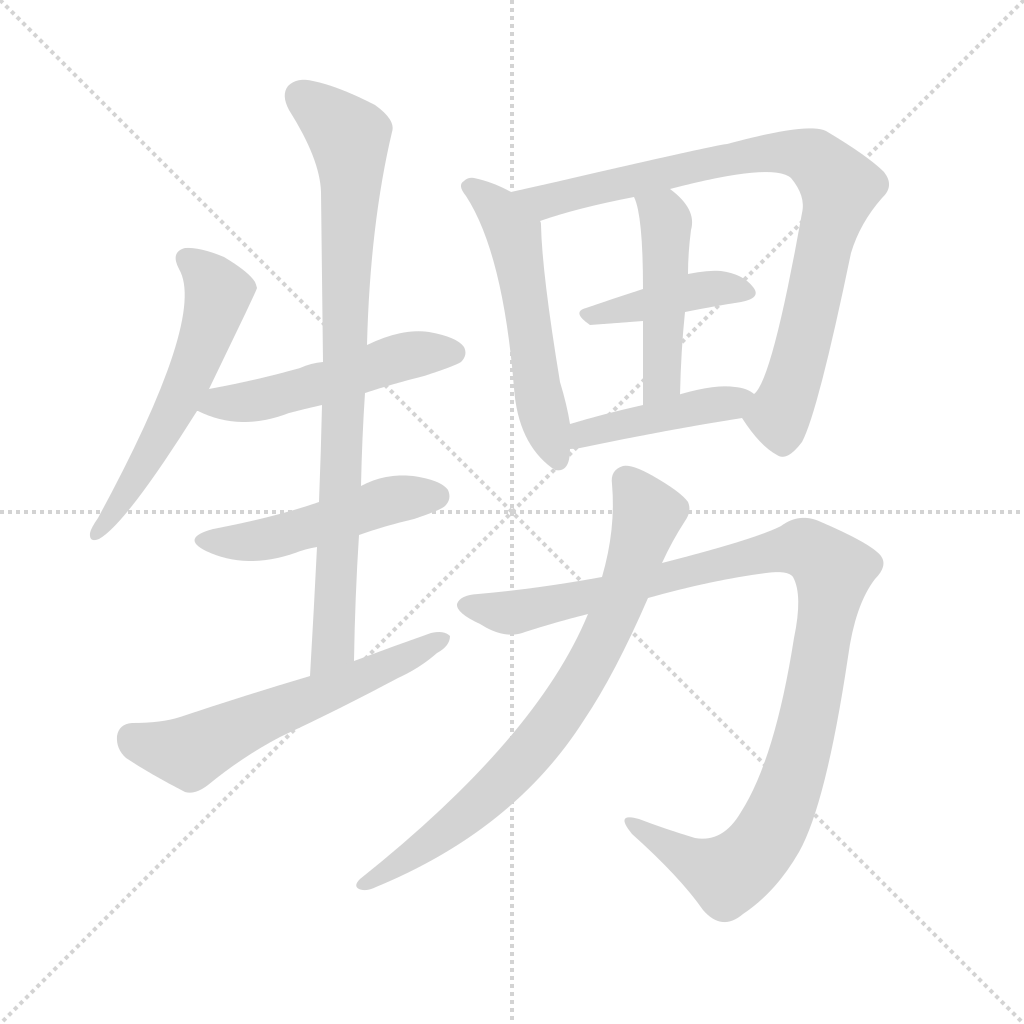
Pronounced sheng.
According to the Book of Tang (Tangyun) and other rhyme dictionaries, it is defined as a sister's son. In the Book of Odes (Shijing), it is recorded that Marquis Han took a wife, who was a nephew (sheng) of the King of Fen. The commentary explains that the son of a sister is addressed as sheng.
According to the Literary Expositor (Erya), a person who calls me uncle is addressed by me as sheng. The Rhyme Compilation (Yunhui) notes that a daughter's husband is also called sheng. In the Mencius (Mengzi), it is written that the emperor provided lodging for his nephew (sheng) in the second chamber.
The Rhyme Compilation also notes that a grandson through a daughter may be called sheng when viewed from the perspective of the maternal grandfather. One source suggests that a grandson through a daughter is specifically called mi-sheng. In the Zuo Tradition (Zuozhuan), it is noted that because of Fei's status, he was prepared as a mi-sheng.
The Literary Expositor further states that the son of a father's sister, the son of a mother's brother, the brother of a wife, and the husband of a sister are all called sheng. The commentary explains that these four categories of relatives share an equal status and therefore refer to one another as sheng. The term sheng carries the meaning of life.
It is also used as a surname, descended from Lu Sheng, an official of the State of Jin.