Wei Collection, Lower Volume
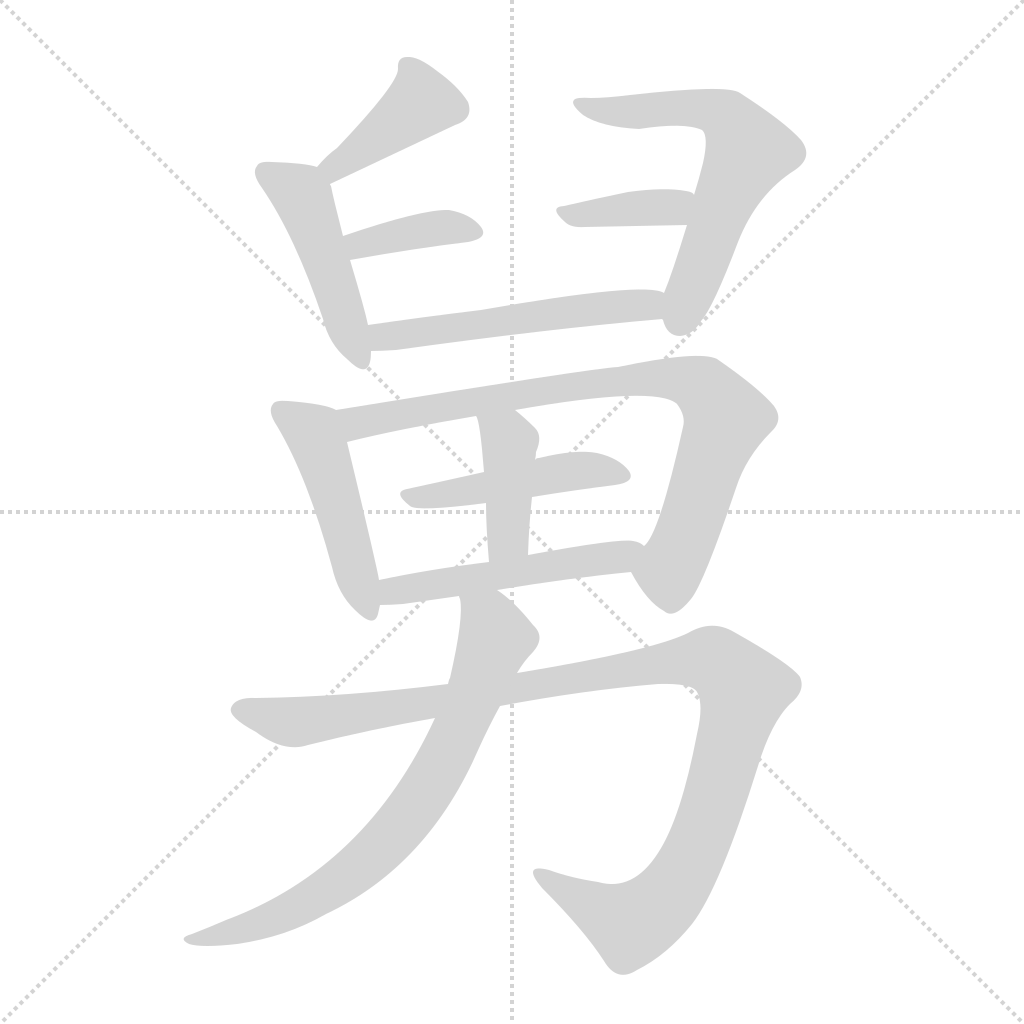
Radical: Mortar (jiù)
Kangxi Strokes: 13
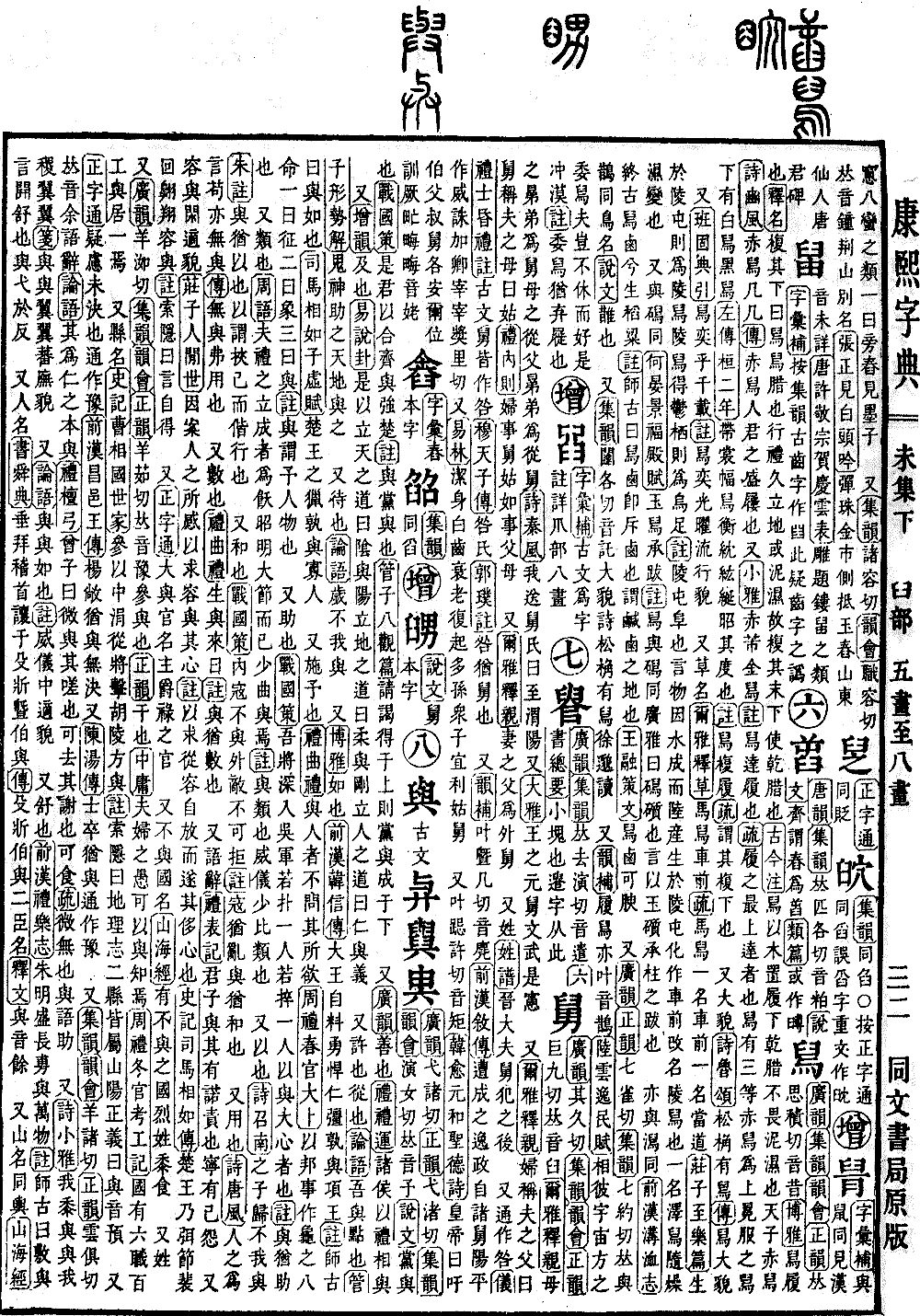
Page 1004, Entry 09
Pronounced jiu (falling tone).
Classic of Rites (Erya), Explanation of Kinship: A mother's brother is called a maternal uncle, and a mother's cousin is called a collateral maternal uncle.
Book of Odes (Shijing), Qin Wind: I escorted my maternal uncle, escorting him to the north bank of the Wei River. Also, in the Greater Odes (Daya): The king's eldest maternal uncle took King Wen and King Wu as his models.
Classic of Rites (Erya), Explanation of Kinship: A wife calls her husband's father a father-in-law, and her husband's mother a mother-in-law.
Record of Rites (Liji), Inner Rules: A daughter-in-law serves her parents-in-law as she serves her own parents.
Classic of Rites (Erya), Explanation of Kinship: A wife's father is called a father-in-law.
Also a surname. Surname Genealogy (Xingpu): Descendants of the Jin state official Jiu Fan.
Also written interchangeably as jiu. Record of Etiquette (Yili), Commentary on Scholar's Wedding Rites: In ancient texts, the character for father-in-law was always written as the character for fault. Biography of the Son of Heaven (Tianzi Zhuan): The Jiu clan. Commentary by Guo Pu: Jiu is the same as maternal uncle.
Pronounced ji (rising tone).
History of the Former Han Dynasty (Qianhan Shu), Introductory Biography: Encountering the indulgence of Emperor Cheng, state affairs were controlled by the various maternal uncles. The Marquis of Yangping acted with authority, imposing executions and punishments upon ministers and chancellors.
Book of Changes Forest (Yilin): Purify one's own teeth until they are white; after growing old, one exerts oneself once more. With many descendants, it is auspicious for the parents-in-law.
Pronounced ju (rising tone).
Han Yu, Poem on the Sagely Virtues of the Yuanhe Era: The Emperor said: Uncles and elders, each of you must safely guard your official positions and instruct your people.