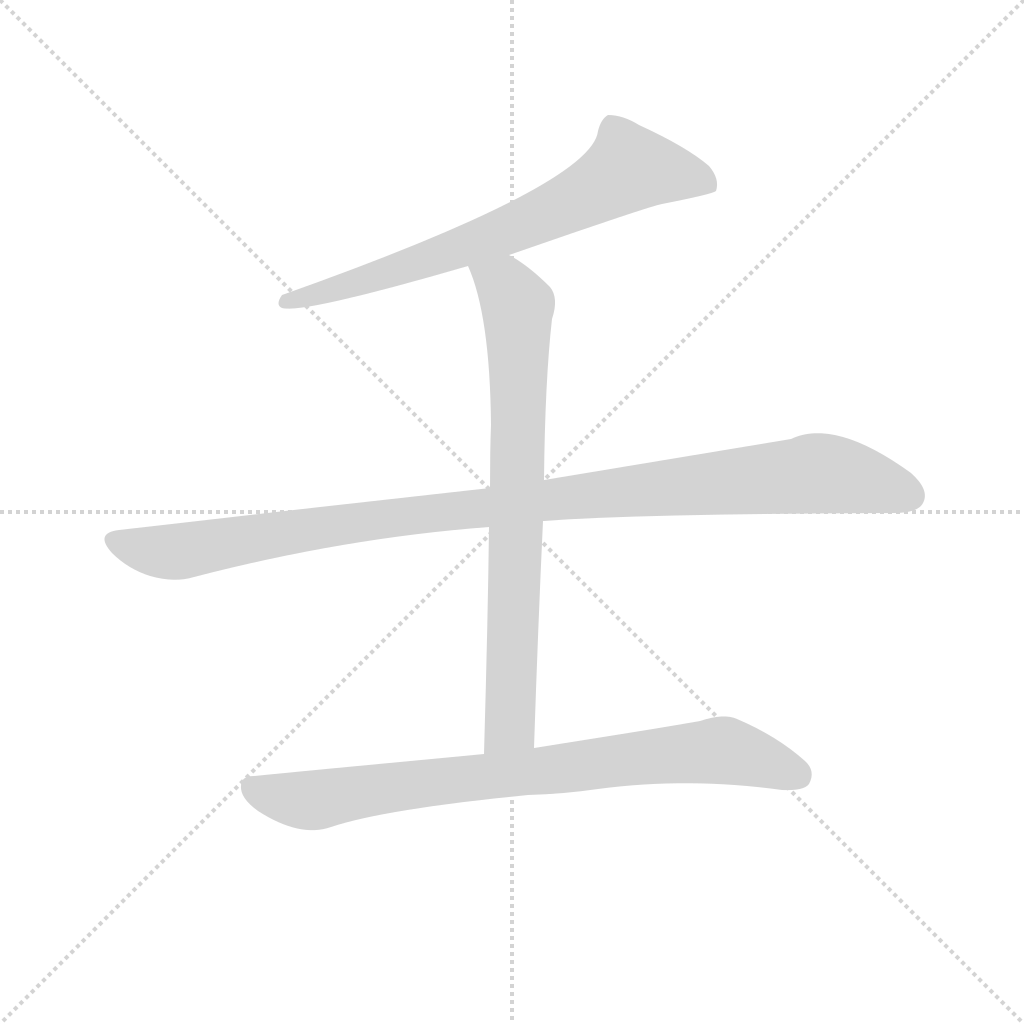
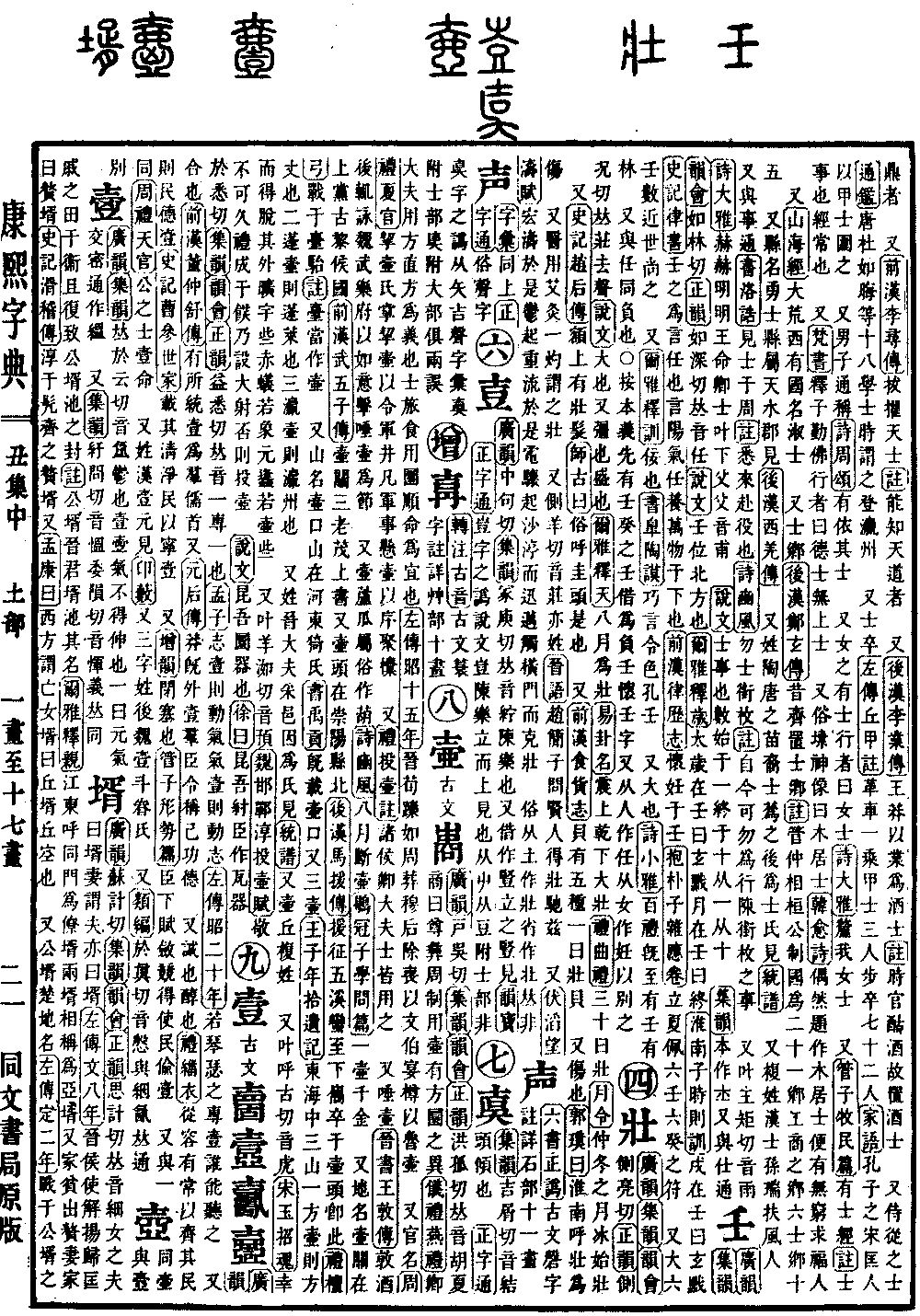
Chou Collection, Middle Volume. Radical: Scholar (shì); Kangxi strokes: 4; Page 243, Entry 01.
Pronounced ren.
In the Shuo Wen Jie Zi (Explaining Graphs and Analyzing Characters), the position of ren is the north. According to the Erya (Approaching Elegance), the Tai Sui (Grand Duke Jupiter) in ren is called yi, and the month in ren is called zhong. In the Huainanzi (Masters of Huainan), the position of xu in ren is called yi. According to the Records of the Grand Historian (Shiji), the term ren means to sustain; it refers to the yang energy sustaining and nurturing all things beneath. According to the Book of Han (Hanshu), it refers to the state of gestation in the ren phase. In the Baopuzi (Book of the Master Who Embraces Simplicity), it is noted that on the beginning of summer, one should carry the talisman of the six ren and six gui. Furthermore, the practice of the Great Six Ren divination has been popular in recent generations.
It also means fawning. In the Book of Documents (Shangshu), it is written that flowery words and a pleasant appearance are very fawning.
It also means great. In the Book of Odes (Shijing), it is written that when all the rites have arrived, they are grand and numerous.
It is also interchangeable with the character ren, meaning to bear or carry. The original meaning refers to the ten celestial stems ren and gui. It was borrowed to serve as the character for bearing or pregnancy. Later, the radical for person was added to distinguish it as the verb to bear, and the radical for woman was added to denote pregnancy. Note that the original character for yi was written with the radical for spear.