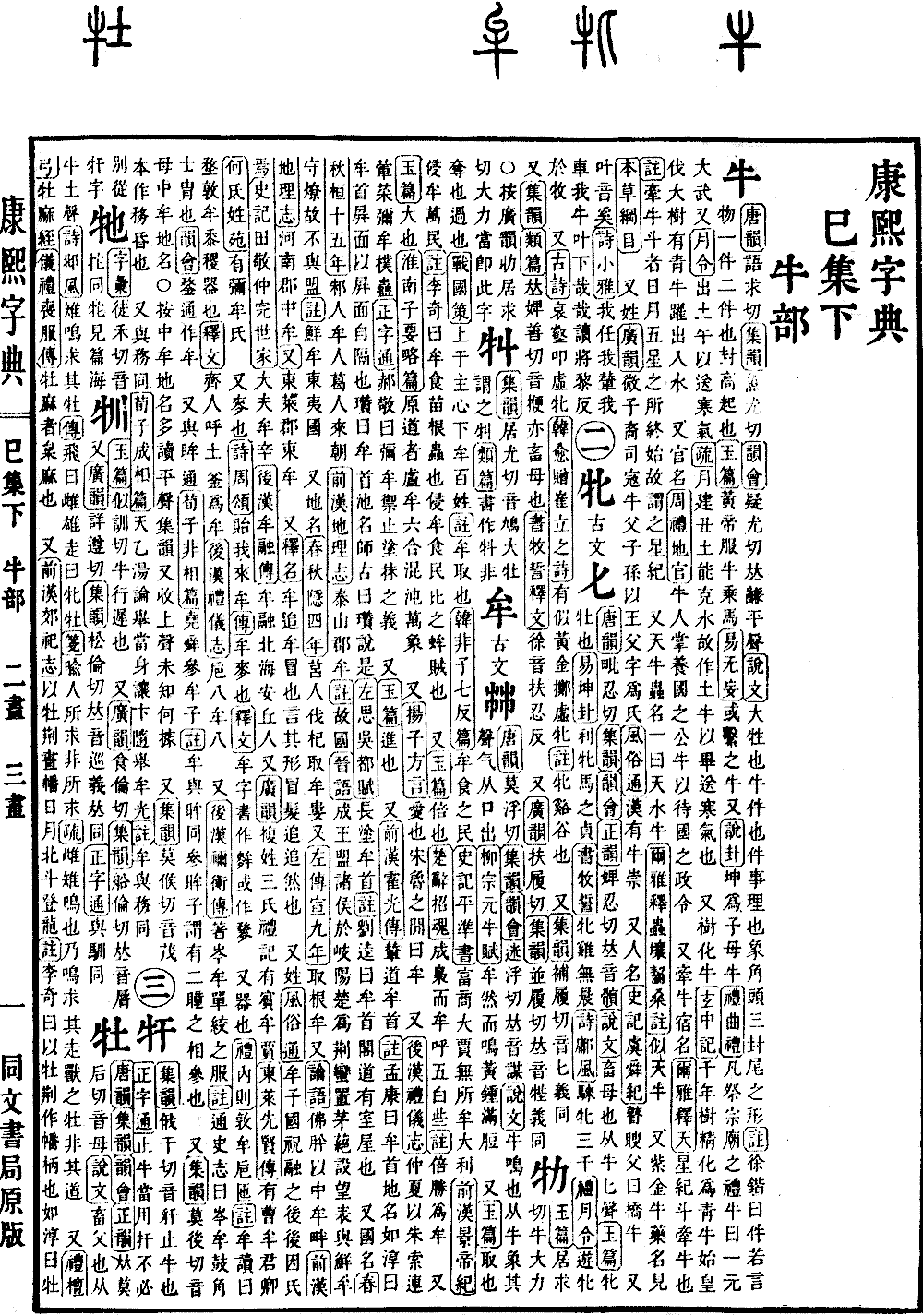
Si Collection, Lower Volume
Radical: Ox (niú)
Kangxi Strokes: 6
Page 697, Entry 02
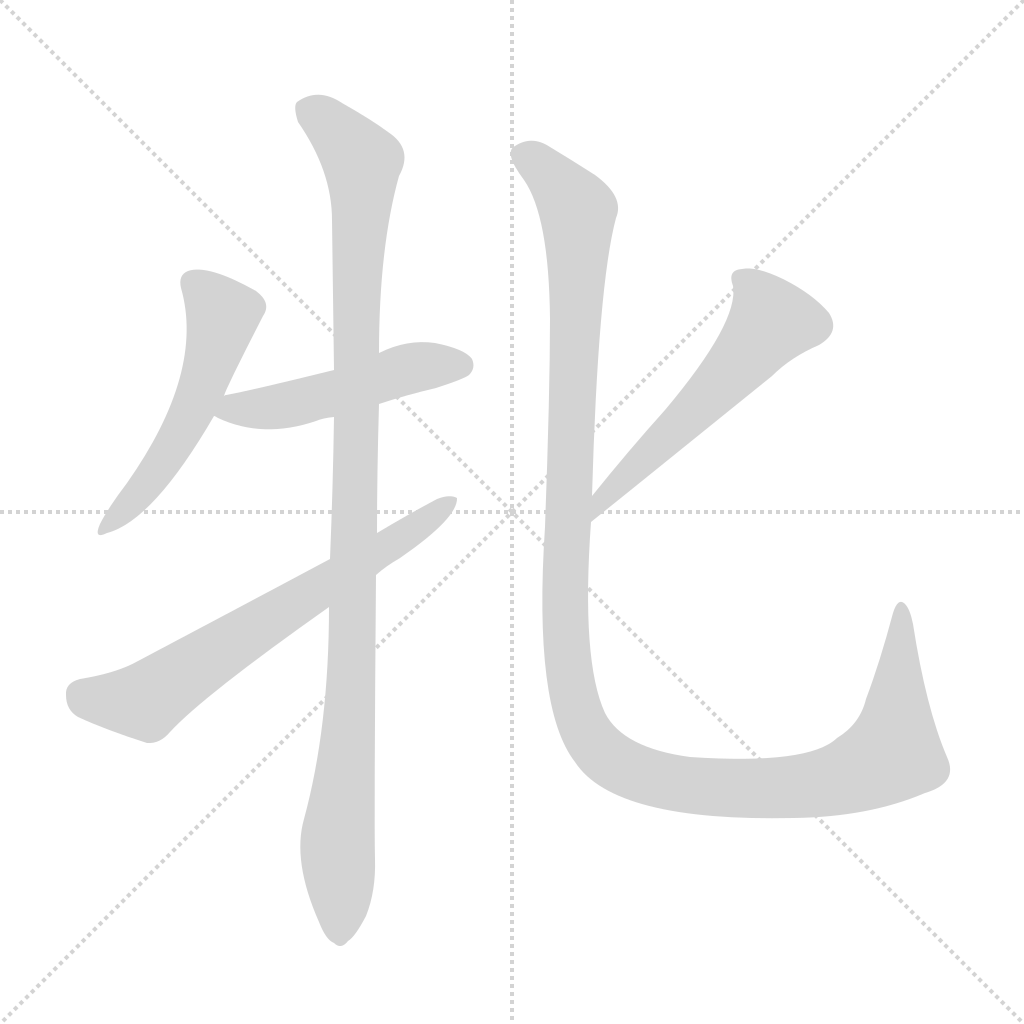
Ancient form. Tang Rhymes (Tangyun) pronounces pin (rising tone). Collected Rhymes (Jiyun), Rhyme Meetings (Yunhui), and Correct Rhymes (Zhengyun) pronounce bin (rising tone).
Explaining Graphs and Analyzing Characters (Shuowen Jiezi): The mother of livestock. Derived from ox, with bi acting as the phonetic.
Jade Chapters (Yupian): Female and male.
Book of Changes (Yijing), Hexagram Kun: It is beneficial to be like the constancy of a mare.
Book of Documents (Shujing), Speech at Mu: A hen does not announce the dawn.
Book of Odes (Shijing), Odes of Yong: Three thousand black mares.
Book of Rites (Liji), Monthly Ordinances: Let the female animals roam in the pasture.
Also, from ancient poetry: The sad valley strikes against the empty gorge.
Han Yu, Poem presented to Cui Lizhi: Like gold thrown into an empty gorge. Note: Here, it refers to a valley or gorge.
Also, according to Collected Rhymes (Jiyun), pronounced bi (rising tone). Same meaning.
Also, according to Collected Rhymes (Jiyun) and Classified Chapters (Leipian), pronounced pian. Same meaning, referring to the mother of livestock.
Book of Documents (Shujing), Explanation of the Speech at Mu: Xu reads it as fu (rising tone).
Also, according to Extensive Rhymes (Guangyun) and Collected Rhymes (Jiyun), pronounced bi. Same meaning.
Textual Research: In Collected Rhymes and Classified Chapters, the entry for bian should be corrected to pian, as the text notes pian is a type of tree, and the entry for the character in question defines it as the mother of livestock. The text has been corrected accordingly.