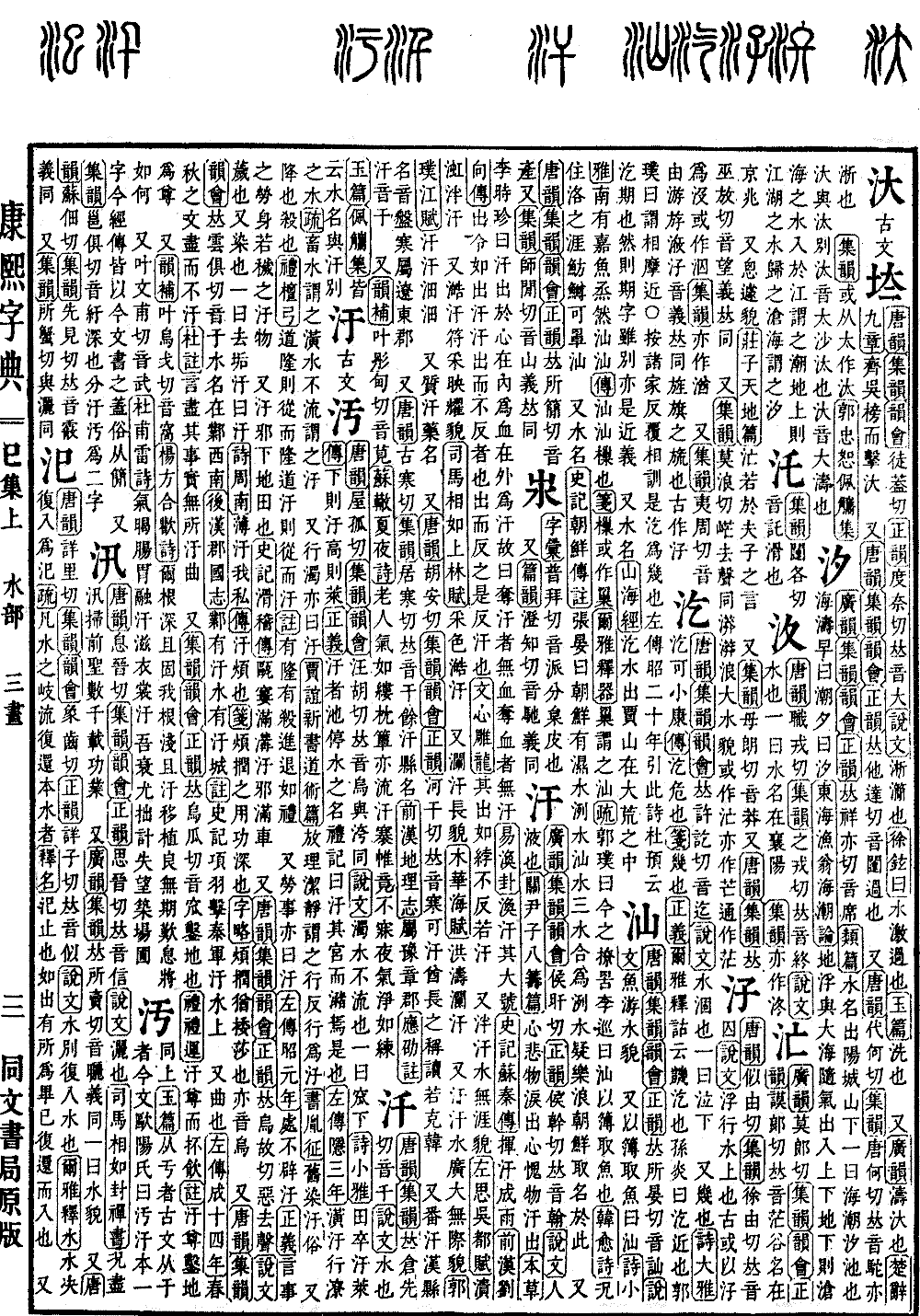
Si Collection, Upper Volume
Radical: Water (shuǐ)
Kangxi Strokes: 7
Page 605, Entry 08
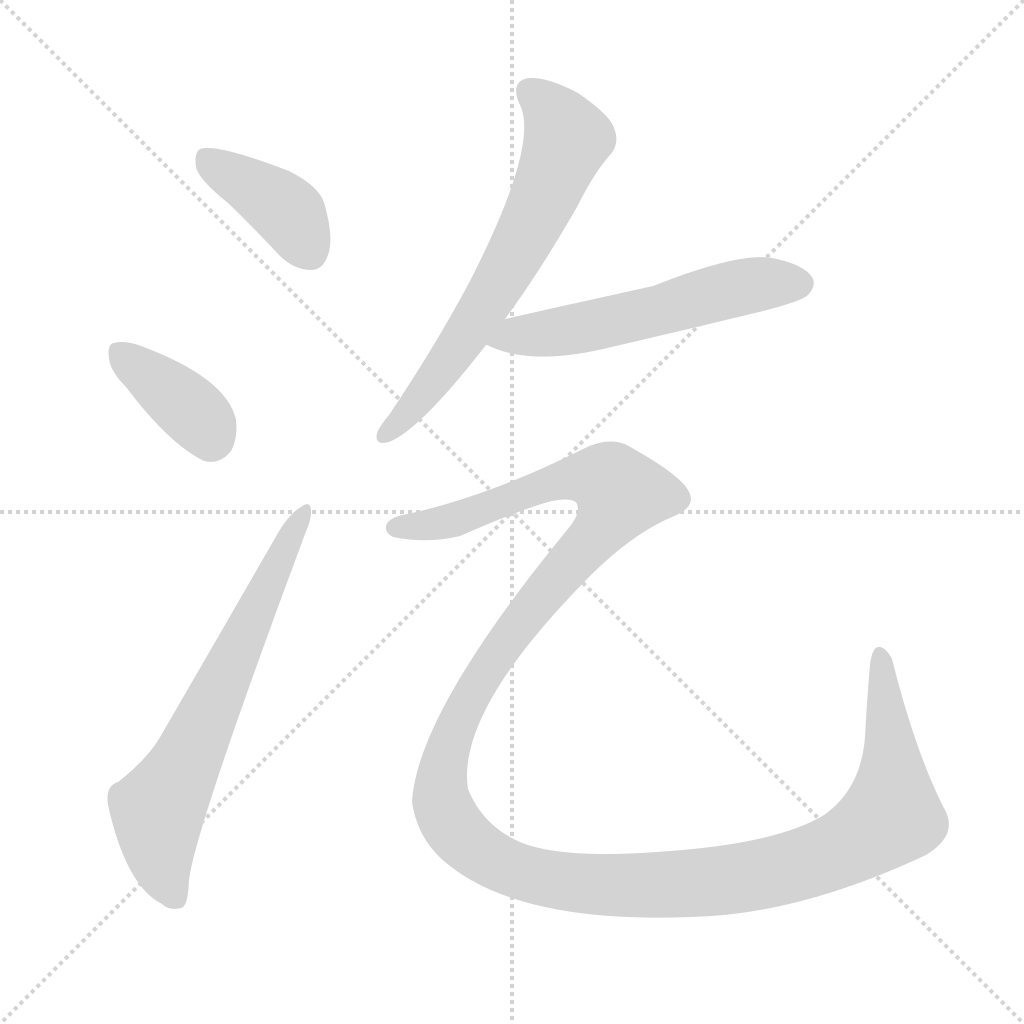
Pronounced qi.
According to the Shuo Wen Jie Zi (Explaining Graphs and Analyzing Characters), the term refers to water drying up. Another interpretation suggests it refers to shedding tears. It is also used to indicate proximity or nearly.
In the Book of Odes (Shijing), it is written: Nearly, there may be a small state of peace. The commentary notes that this implies danger. The Mao commentary suggests it means close to. The standard interpretation cites the Erya (Approaching Elegance), which defines the term as approaching. Sun Yan states it means to draw near, and Guo Pu states it refers to things nearing one another. Examining the various interpretations, it is understood that the term means almost. In the Zuo Zhuan (Commentary of Zuo on the Spring and Autumn Annals), the passage from the Book of Odes is cited, and Du Yu notes that it means to hope. Although the term hope differs, it also carries the connotation of drawing near.
It is also the name of a river. The Classic of Mountains and Seas (Shanhaijing) states that the Qi River originates at Jia Mountain, located within the Great Wilderness.