Wei Collection, Lower Volume
Radical: Meat (ròu)
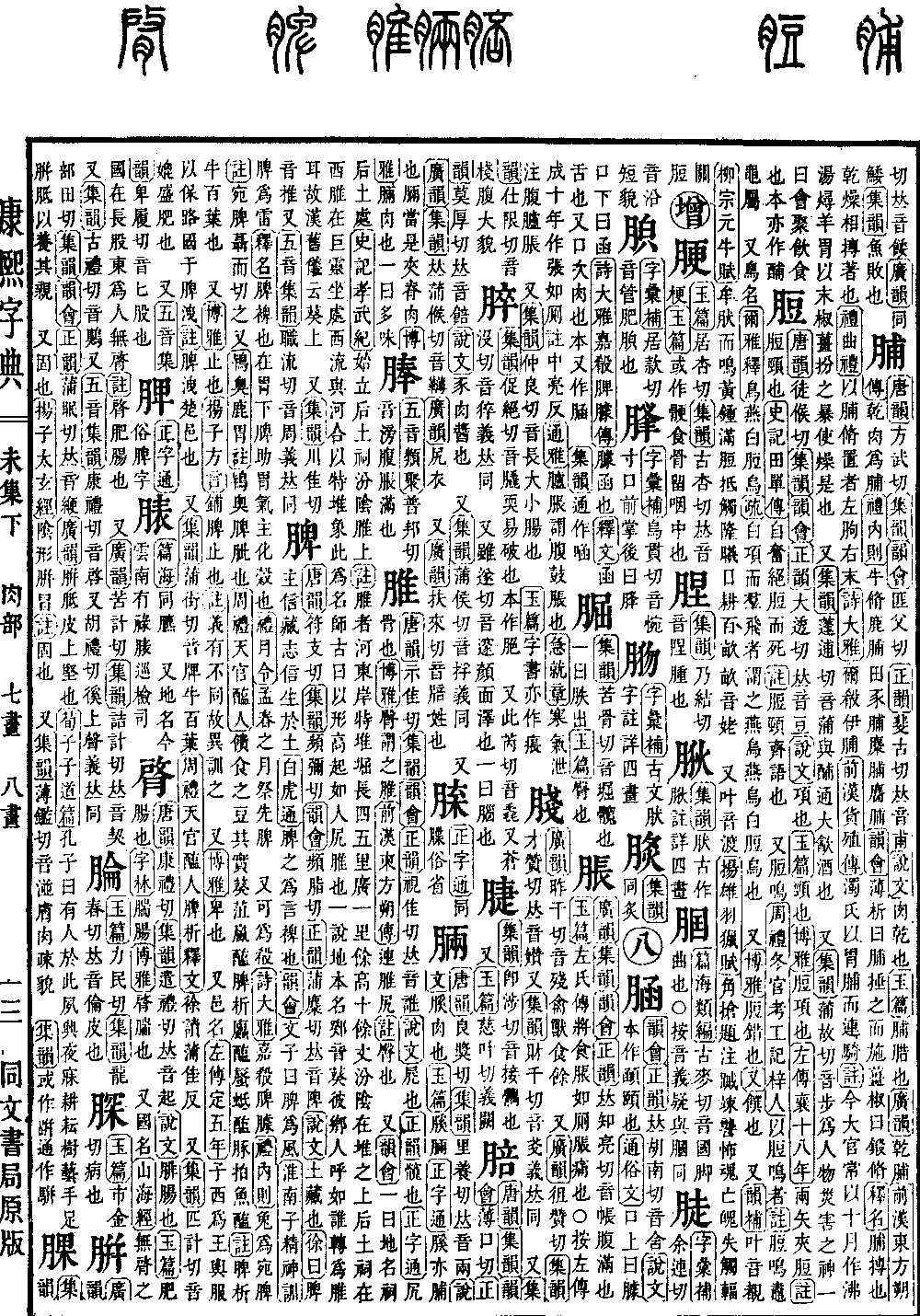
脯
Kangxi Stroke Count: 13
Page 985, Entry 01
Pronounced fǔ.
According to the Explaining Graphs and Analyzing Characters (Shuowen Jiezi), it refers to dried meat. According to the Jade Chapters (Yupian), the character refers to cured meat. According to the Broad Rhymes (Guangyun), it refers to dried meat. According to the Biography of Dongfang Shuo in the History of the Former Han Dynasty (Qianhan Shu), dried meat is called fu. According to the Inner Disciplines chapter of the Book of Rites (Liji), it mentions beef strips, venison strips, wild boar strips, elk strips, and muntjac strips. According to the Rhyme Collection (Yunhui), meat sliced thinly is called fu, and when pounded and seasoned with ginger and Sichuan pepper, it is called duanxiu. According to the Explanations of Names (Shiming), fu implies cohesion, as the meat dries and binds together. According to the Qu Li chapter of the Book of Rites (Liji), when presenting meat strips, the curved end should be on the left and the end on the right. According to the Great Odes of the Book of Odes (Shijing), it mentions your side dishes and your dried meat. According to the Biographies of Money-makers in the History of the Former Han Dynasty (Qianhan Shu), the Zhuo family became wealthy through the sale of tripe strips and traveled in carriages. The commentary notes that officials in the tenth month traditionally prepare boiling water to scald sheep tripe, seasoning it with powdered Sichuan pepper and ginger, and drying it in the sun.
Pronounced pú. It is used interchangeably with the character meaning a large feast or drinking gathering.
Pronounced bù. It refers to a spirit that brings disaster to people. Another source states it refers to a gathering for the purpose of eating and drinking. Originally also written with the character meaning a feast.