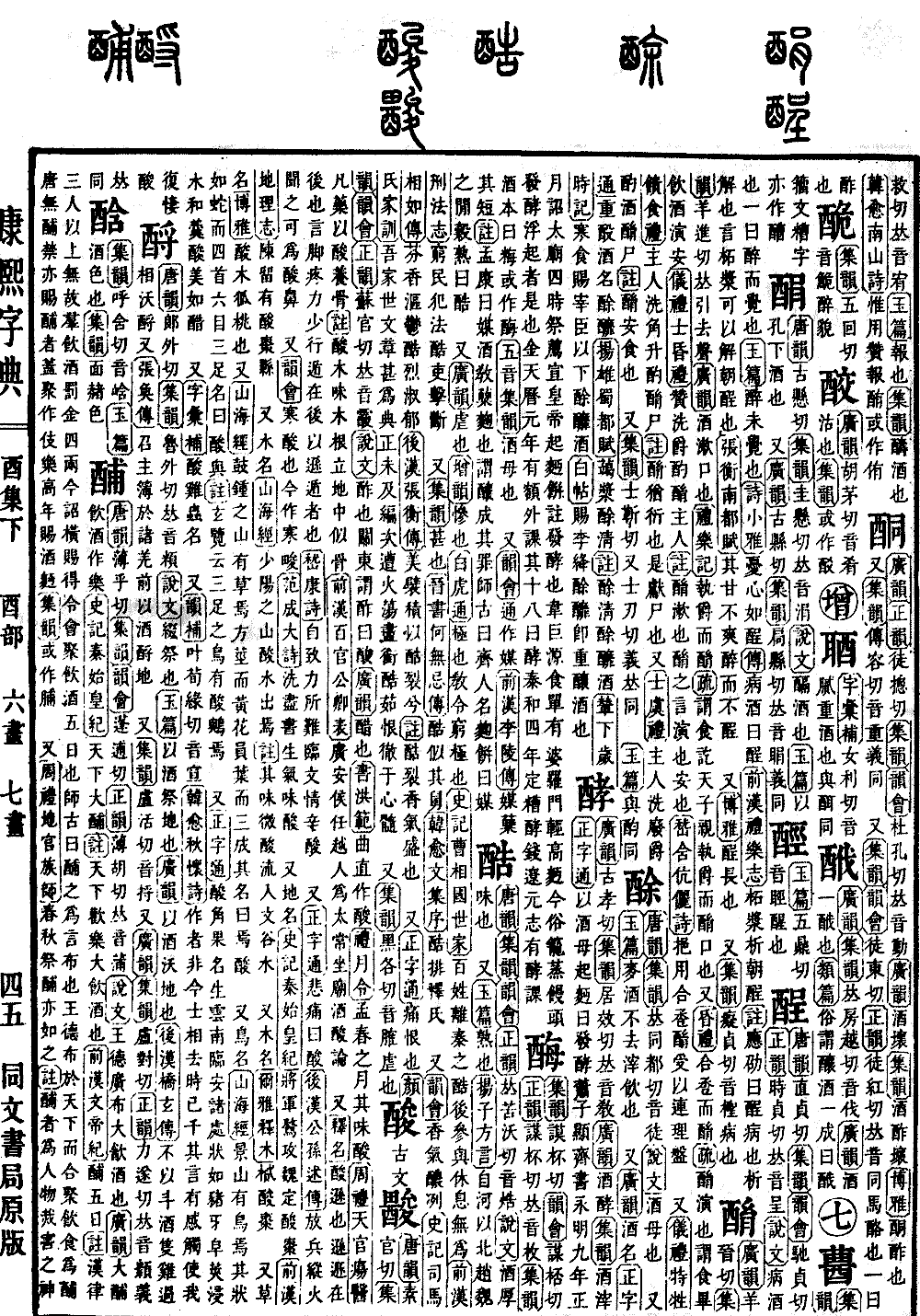
You Collection, Lower Volume
Radical: Wine (yǒu)
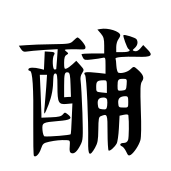
酺
Kangxi strokes: 14
Page 1283, Entry 19
Pronounced pu.
Shuowen Jiezi (Shuōwén Jiězì): A large-scale communal feast permitted by the monarch when his grace is widely extended throughout the world.
Guangyun (Guǎngyùn): Great pu refers to drinking and making merry.
Records of the Grand Historian (Shǐjì), Annals of Qin Shi Huang: The world held a great communal feast.
Commentary: The world celebrated with a large-scale communal feast.
Book of Han (Qiánhàn), Annals of Emperor Wen: Specifically permitted communal drinking for five days.
Commentary: According to Han dynasty law, three or more people drinking together without cause were fined four liang of gold. Now the emperor has issued an edict specifically permitting people to gather and drink for five days. Shigu said: The meaning of pu is to bestow. When a monarch's grace is extended to the world, allowing people to gather for food and drink is called pu. In the Tang dynasty, there was no ban on communal drinking, and there were also instances of the emperor granting feasts. This likely involved gathering to perform music and dance, with the elderly being gifted wine and flour-based foods.
Jiyun (Jíyùn): Sometimes written in a variant form.
Also, Rites of Zhou (Zhōulǐ), Earth Official, Clan Master: In spring and autumn, sacrifices are made to the pu god as well.
Commentary: Pu refers to the deity in charge of human disasters.
Pronounced bu. The meaning is the same.
Textual Research:
Shuowen Jiezi (Shuōwén Jiězì): Kingly virtue is widely spread; a great feast. Following the original text, the character broad is omitted after virtue.