Zi Collection, Page Position: Lower
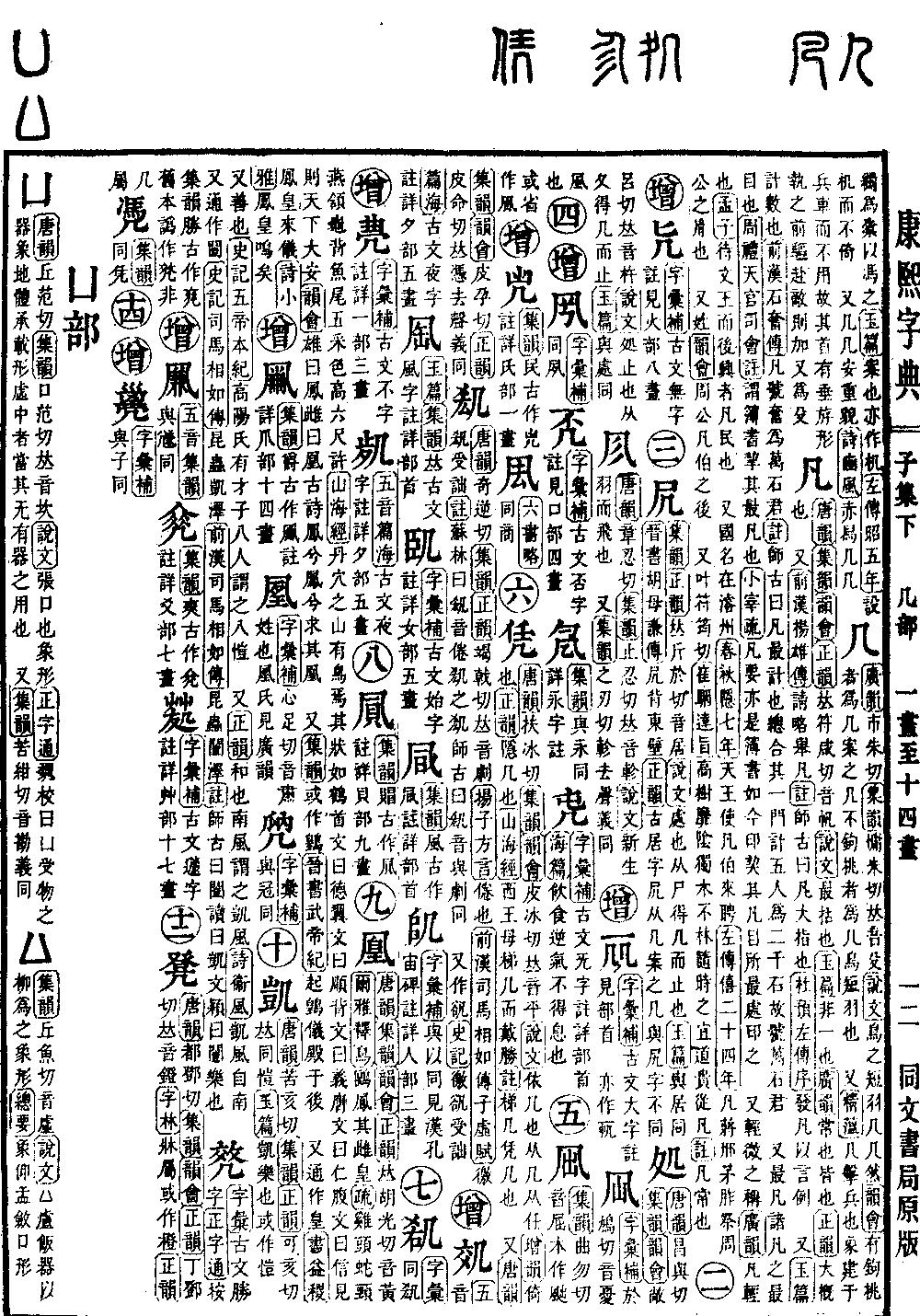
Radical: Table (jǐ)
Kangxi strokes: 16
Page number: 134, entry 16
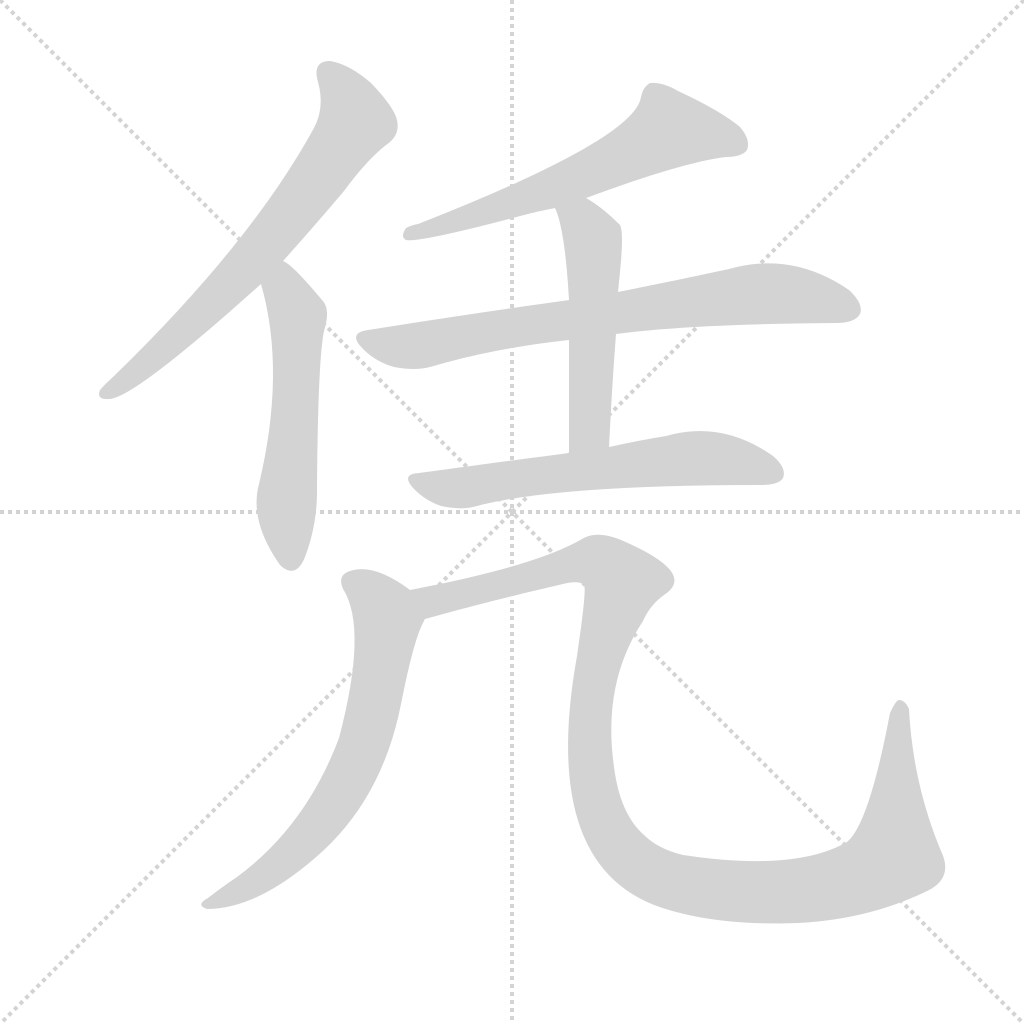
Tangyun (tángyùn): fúbīngqiē; Jiyun (jíyùn), Yunhui (yùnhuì): píngbīngqiē; pronounced píng. Shuowen (shuōwén): To lean on a table. Composed of the radical jǐ and rèn. Zengyun (zēngyùn): To lean on. Zhengyun (zhèngyùn): To lean on a low table. Classic of Mountains and Seas (Shānhǎijīng): "The Queen Mother of the West leaned on a table and wore a sheng ornament." Note: Tījǐ means to lean on a table.
Also, Tangyun (tángyùn), Jiyun (jíyùn), Yunhui (yùnhuì): píyùnqiē; Zhengyun (zhèngyùn): pímìngqiē; píng in the departing tone. The meaning is the same.
Ping. Guangyun (guǎngyùn): fúbīngqiē; Jiyun (jíyùn), Yunhui (yùnhuì): píngbīngqiē; pronounced píng. To lean on, to rely on. Book of Documents (Shūjīng), "The Testamentary Charge": "leaning on a jade table." Also a surname. Also, a rhyming word, pùmēngqiē, pronounced péng. Hua He's "Self-Reproach Essay" (Huá Hég Zìzékéwén): "Emerging from the decaying soil, like a cicada shedding its skin in the imperial court. The purple gates glow brightly, the green lattice is what I lean on." Commonly written as 慿, which is incorrect.