Shen Collection, Upper Volume
Radical: Grass (cǎo)
荏
Kangxi stroke count: 12
Page 1031, Entry 05
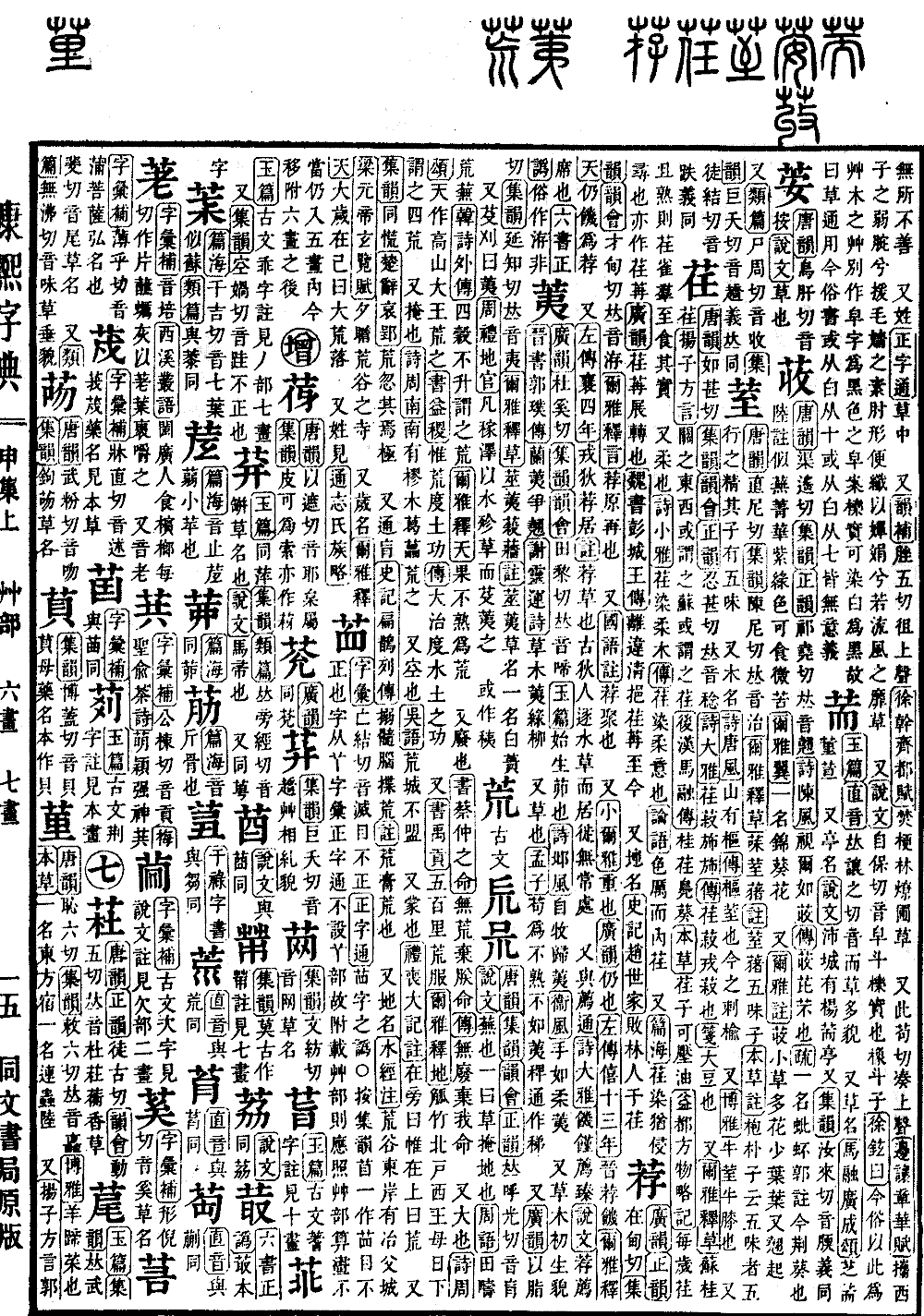
Pronounced ren (falling tone). Pronounced ren (falling tone). Pronounced ren (falling tone). Pronounced ren (falling tone). The pronunciation is the same as ren (third tone).
Book of Odes (Shijing), Greater Odes (Daya): The large beans grow luxuriantly. Commentary: Large beans are the same as Rong beans. Notes: Refers to soybeans.
Also, Er Ya, Explaining Plants: Su, also called Guiren.
Yangzi, Dialect (Fangyan): In regions east and west of Hangu Pass, some call it Su, and others call it Ren.
History of the Later Han (Hou Hanshu), Biography of Ma Rong: Guiren and fukui.
Materia Medica (Bencao): Seeds of the Ren plant can be pressed for oil.
Yidu Local Records (Yidu Fangwu Lueji): Every year when the Ren plant is about to ripen, flocks of Ren sparrows arrive to eat its fruit.
Also refers to softness. Book of Odes (Shijing), Lesser Odes (Xiaoya): Soft and pliable woods. Commentary: Ren-ran means soft and flexible.
Analects (Lunyu): Stern in appearance but weak at heart.
Also, Pian Hai: Ren-ran signifies gradual or progressive advancement. Sometimes also written in a variant form (ren-ran).
Guangyun: Ren-ran refers to the passage of time or lingering.
History of Wei (Weishu), Biography of Prince of Pengcheng: It is difficult to go against your noble modesty, which has caused this delay until now.
Also refers to a place name. Records of the Grand Historian (Shiji), House of Zhao: Defeated the Lin people at the territory of Ren.
Textual research: History of Wei (Weishu), Biography of Prince of Pengcheng: Away from your noble modesty, dragging on until now. According to the original text, the character li has been corrected to nan.