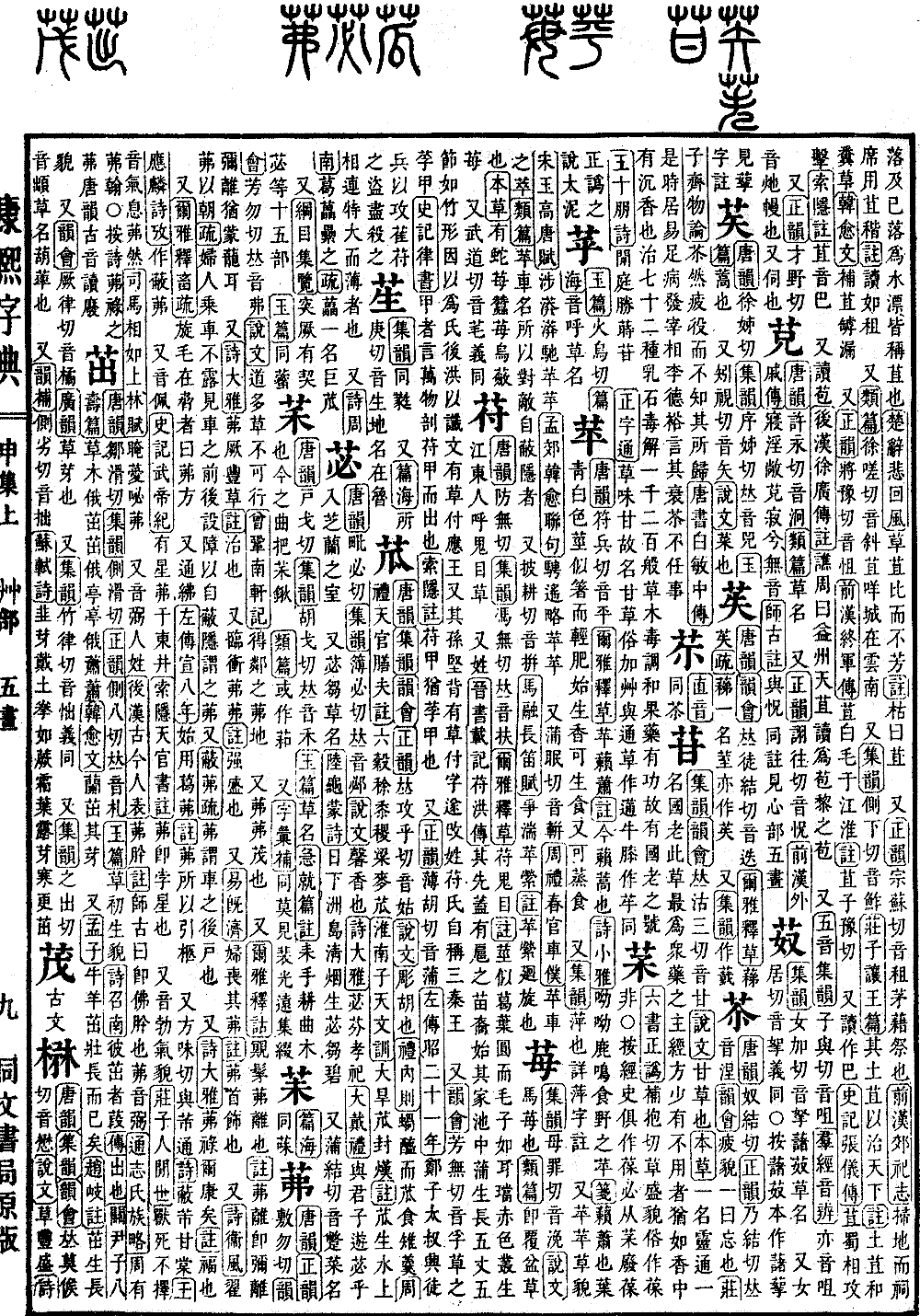
Shen Collection, Upper Volume
Radical: Grass (cǎo)
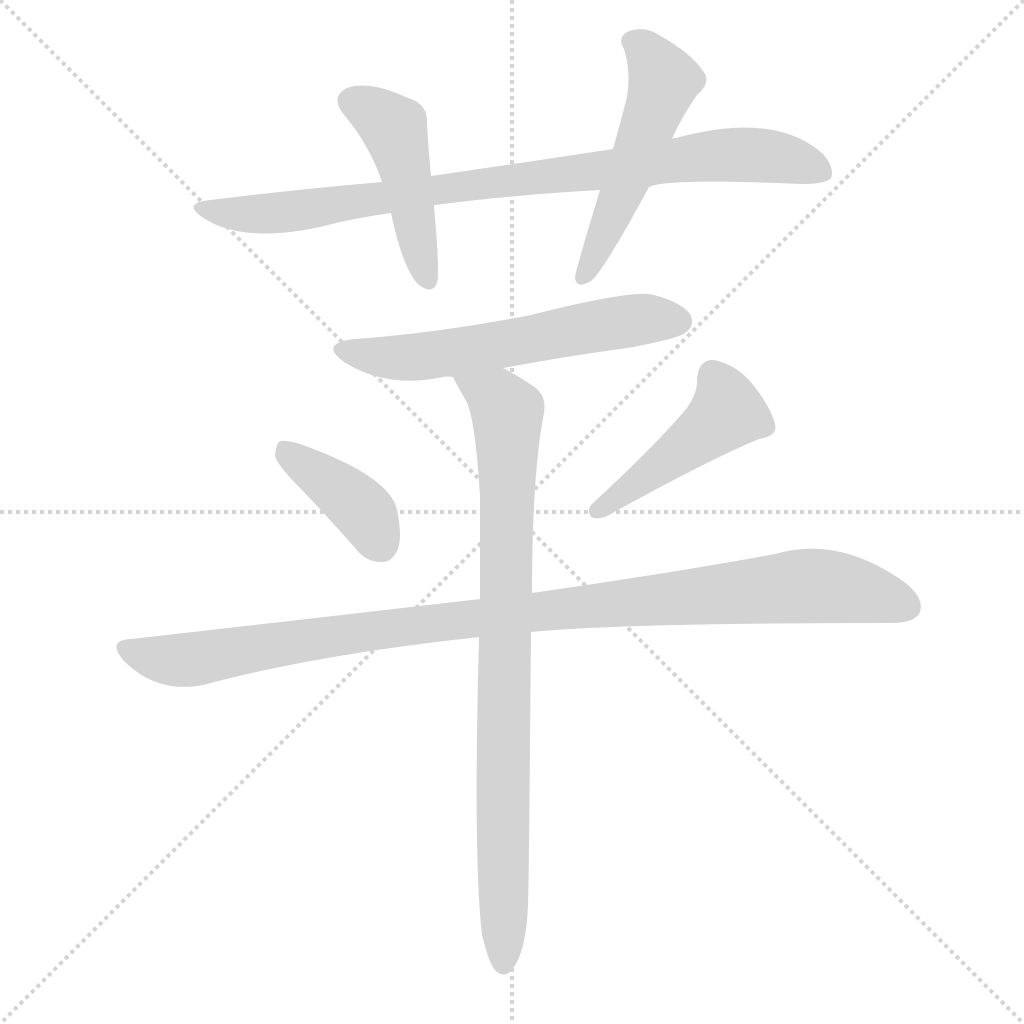
Pin
Kangxi stroke count: 22
Page 1025, Entry 10
Pronounced pin.
Shuowen Jiezi (Explaining and Analyzing Characters): Originally written as the base character. It is a large duckweed.
Erya (Approaching Elegance), Commentary on Grasses: Duckweed is called ping, and its large variety is called pin.
Bencao Jijie (Collected Commentaries on Materia Medica): A plant consisting of four leaves that form one, resembling the character for field, is pin.
Book of Odes (Shijing), Shao Nan: To gather the pin.
Commentary: In ancient times, those about to marry off a daughter would first perform rites for her at the ancestral hall, using fish as a sacrificial offering, and garnish it with pin and algae.
Sub-commentary: The word pin implies guest.
Explanation of Texts: The Han version of the Odes states: That which sinks is called pin.
Lüshi Chunqiu (Spring and Autumn Annals of Master Lü): Among excellent vegetables, there is the pin of Kunlun.
Erya Yi (Expanded Erya): Pin resembles the leaf of a locust tree and grows in clusters in shallow water. In the fifth month, it has white flowers, hence it is called white pin.
Chu Ci (Songs of Chu), Nine Chapters: Ascending the white pin to gaze into the distance.
Textual research:
Book of Odes, Shao Nan: To gather the pin.
Sub-commentary: The Han version of the Odes states: That which sinks is called pin. (In accordance with the original book, the sub-commentary has been corrected to refer to the Explanation of Texts).
Lüshi Chunqiu: Among excellent vegetables, there is the pin of Kunlun. (Note: The original text assigned the word sea to the preceding clause rather than this one; the word sea has been omitted here).