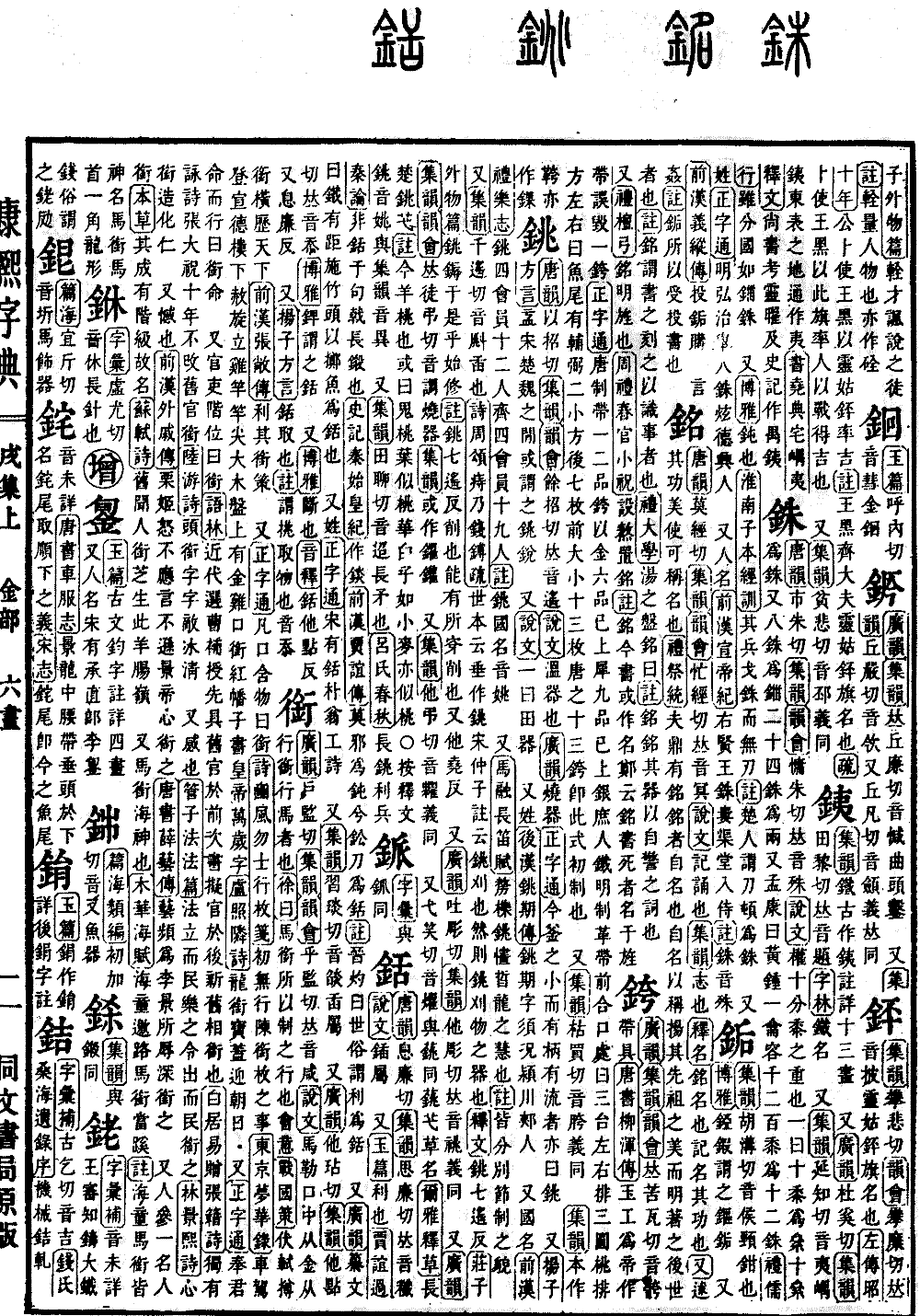
Xu Collection, Upper Volume
Radical: Metal (jīn)
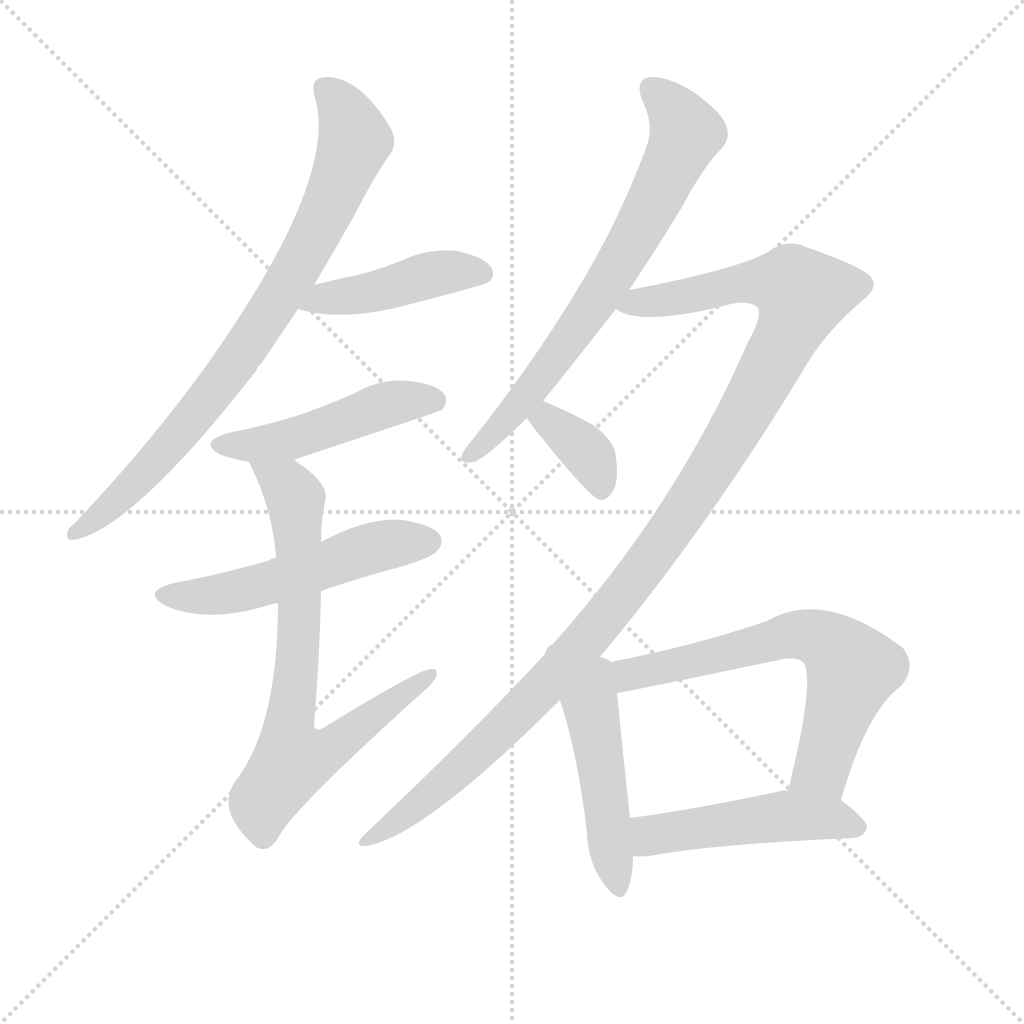
銘
Kangxi strokes: 14
Page 1305, Entry 01
Pronounced ming.
In the Shuowen Jiezi, it means to memorize or recite.
In the Jiyun, it means intent.
In the Shiming, it says: Ming means name; it is to record a name and its merits.
Also, it means to describe one's merits and beauty so that they can be praised and named.
Book of Rites (Liji), Sacrificial Rituals: The tripod has an inscription (ming). The inscription is a self-naming; it is to name oneself in order to praise the virtues of one's ancestors and clearly manifest them to later generations.
Annotation: Inscription refers to writing or carving to record events.
Book of Rites (Liji), The Great Learning: The inscription on the basin of Tang states.
Annotation: The inscription is words engraved on a vessel to serve as a self-admonition.
Also, in the Book of Rites (Liji), Tan Gong: The inscription is the banner of identification.
Rites of Zhou (Zhouli), Spring Offices, Lesser Invoker: Arrange the roasting stand and set the inscription.
Annotation: The inscription is sometimes written as name (ming) in modern texts. Zheng Xuan says: The inscription is writing the name of the deceased on a banner.