Xu Collection, Upper Volume
Radical: Metal (jīn)
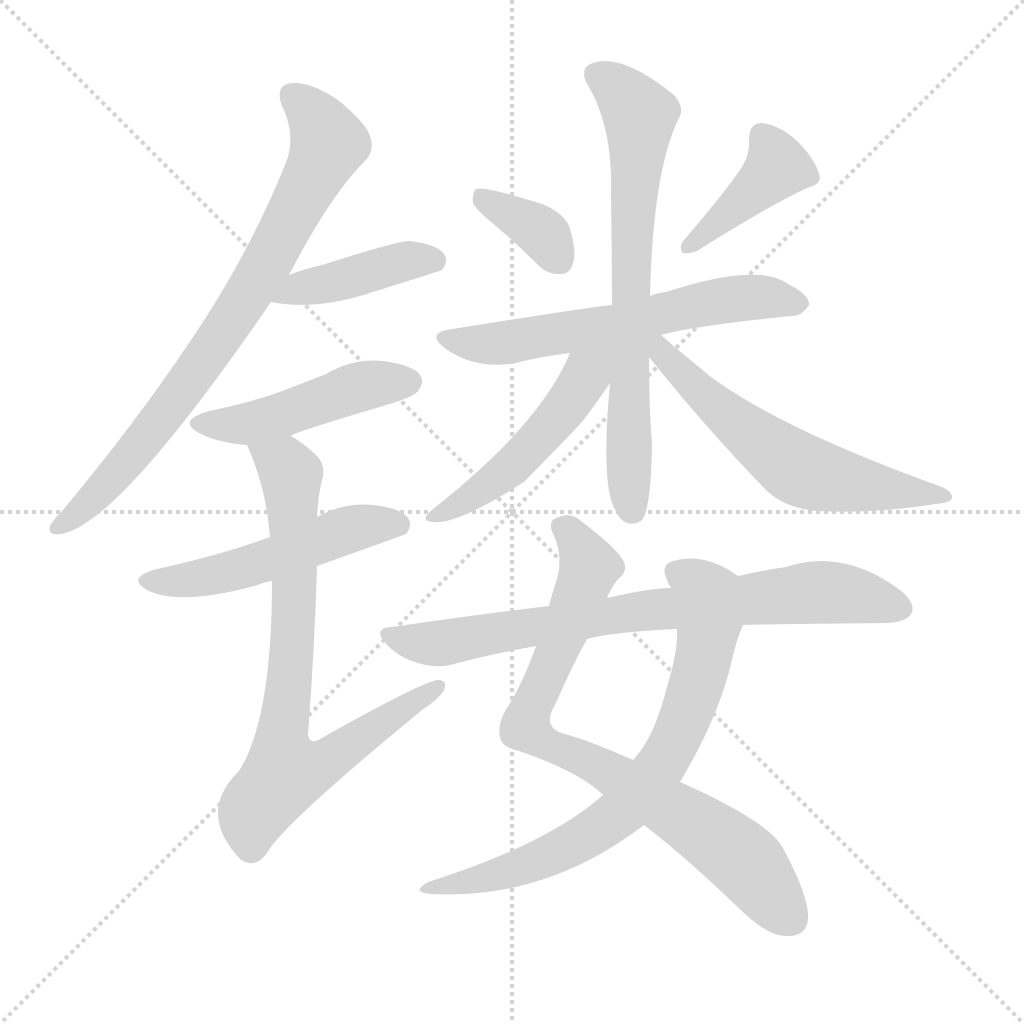
镂; Kangxi strokes: 19; Page 1320
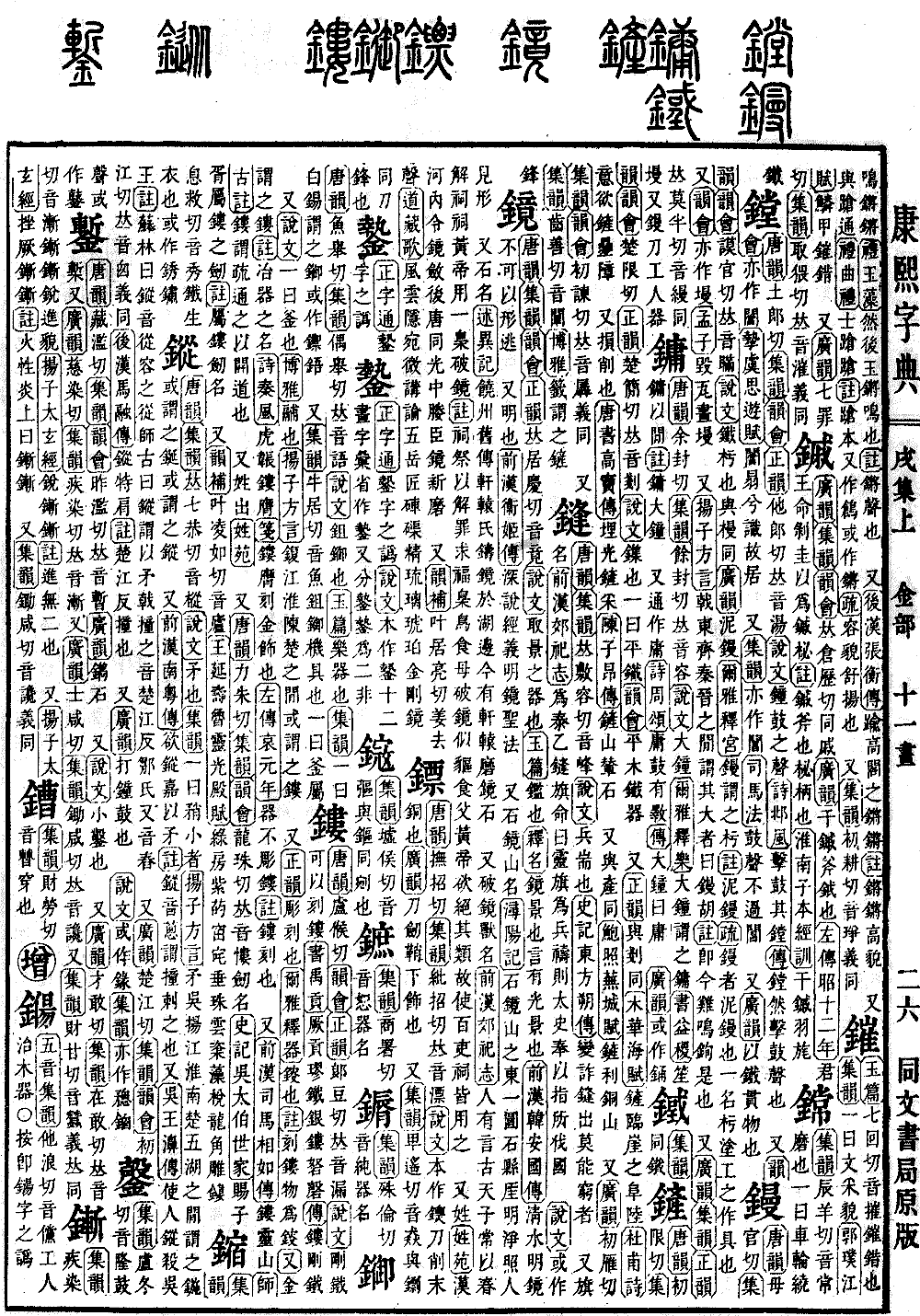
Pronounced lou. According to the Tang Rhyme (Tangyun), the Rhyme Collection (Yunhui), and the Correct Rhymes (Zhengyun), the pronunciation is identical to lou (falling tone).
According to the Explaining Graphs and Analyzing Characters (Shuowen), it refers to hard iron that can be used for carving.
In the Book of Documents (Shujing), specifically the Tribute of Yu (Yu Gong), it states: The tribute includes qiu, iron, silver, lou, nu, and qing stones. The commentary states: Lou is hard iron.
Another definition in the Explaining Graphs and Analyzing Characters (Shuowen) refers to a pot. According to the Broad Elegance (Boya), it is a pot. In the Dialects (Fangyan) by Yang Xiong, it is noted that a fu (a type of pot) is sometimes called lou in the regions of the Yangtze, Huai, and Chu.
According to the Correct Rhymes (Zhengyun), it refers to carving. In the Literary Expositor (Erya), it is defined as carving. The commentary notes that carving patterns onto an object is called lou. It further notes that the carving of metal is called lou, which is a term for the crafting of metal implements.
In the Book of Odes (Shijing), specifically the Odes of Qin (Qin Feng), there is mention of a tiger-skin bow bag and a chest strap decorated with inlaid gold. The commentary clarifies that lou ying refers to a chest strap decorated with inlaid gold ornaments.
In the Zuo Commentary (Zuo Zhuan), first year of Duke Ai, it states: Vessels were neither painted red nor carved. The commentary states: Lou means to carve.
In the History of the Former Han (Qianhan), Biography of Sima Xiangru, it mentions carving through the Ling Mountain. Yan Shigu’s commentary states: Lou means to cut through or clear out in order to open a path.
It also serves as a surname, as recorded in the Garden of Surnames (Xingyuan).
Pronounced lou. According to the Tang Rhyme (Tangyun), the Collected Rhymes (Jiyun), and the Rhyme Collection (Yunhui), the pronunciation is identical to lou (rising tone). It refers to the name of a sword. In the Records of the Grand Historian (Shiji), House of Wu Taibo, it states: Bestowed upon Wu Zixu was the Shulou sword. The commentary states: Shulou is the name of a sword.
According to the Rhyme Supplements (Yunbu), it is pronounced like ling, or similar to lu. In the Rhapsody on the Lingguang Hall of Lu (Lu Lingguang Dian Fu) by Wang Yanshou: Green lotus pods and purple seeds, hanging down like pearls. Painted cloud brackets, short pillars on colorful beams, with dragon horns carved exquisitely. The character was originally written with the roof radical and the character zha.
Textual research: In the Zuo Commentary (Zuo Zhuan), first year of Duke Ai, the original text reads: Vessels were not carved. In accordance with the original text, the term has been corrected to tonglou.