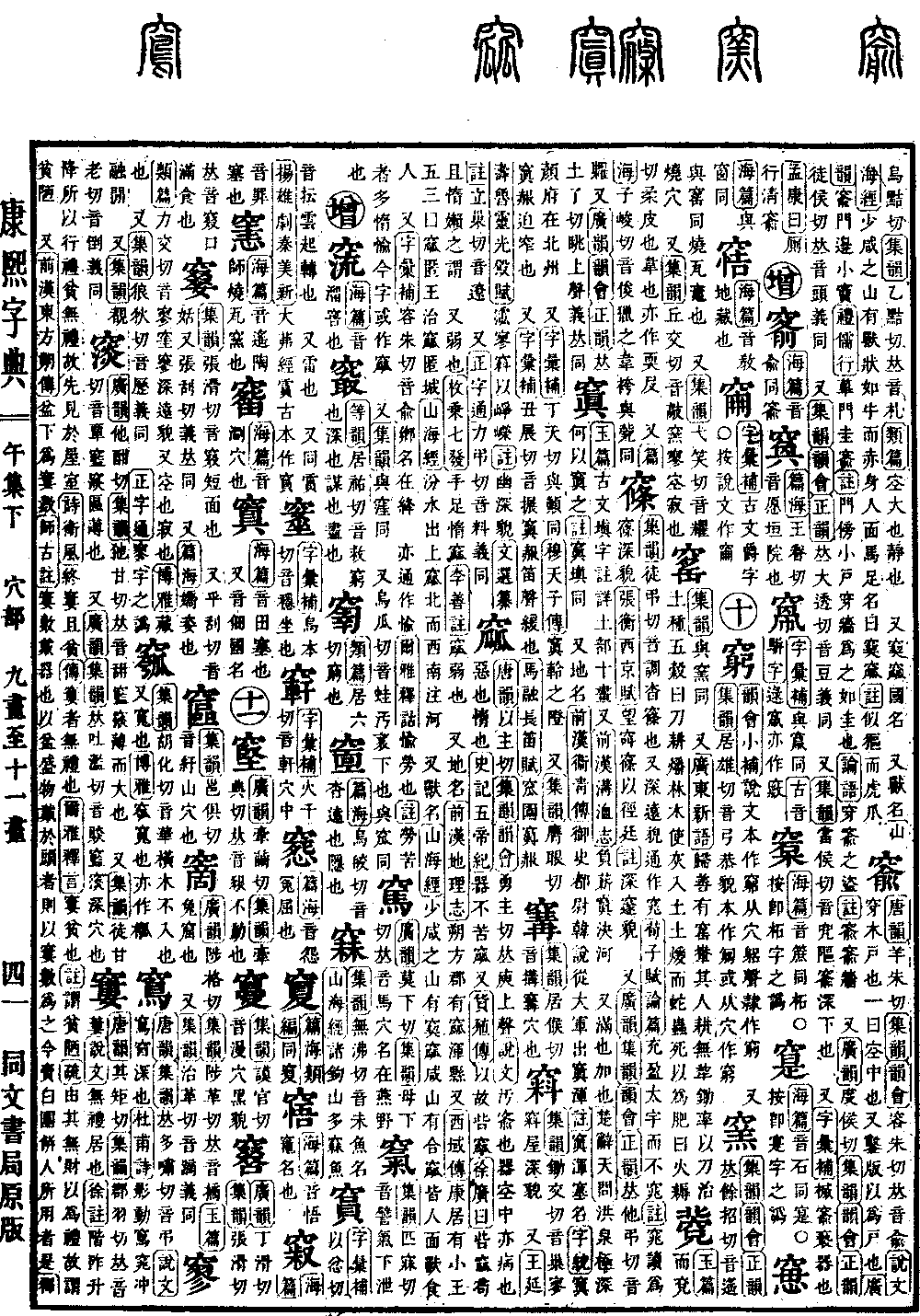
Wu Collection, Lower Volume
Radical: Cave (xué)
窶
Kangxi strokes: 16
Page 867, Entry 09
Pronounced lou (rising tone).
As defined in Explaining Graphs and Analyzing Characters (Shuowen Jiezi), it refers to a residence lacking in ritual. According to the commentary by Xu, the rituals concerning the ascent and descent of the eastern stairs and the main hall are performed by those with the means to do so; the poor lack the wealth for such rituals, and this is reflected in the state of their dwellings. In the Book of Odes (Shijing), it is written: Destitute and poor. The commentary states that the term signifies a lack of ritual. In the Erya (Erya), it states: Poverty. The commentary explains that this refers to a state of poor and humble circumstances. The sub-commentary adds that because there is no wealth to perform rituals, it is called poor and humble.
Furthermore, in the Biography of Dongfang Shuo in the History of the Former Han (Qian Han Shu), there is a mention of a vessel placed under a basin. The commentary by Yan Shigu states that this refers to a tool carried on the head. A person carrying things on their head in a basin uses this device, much like those who sell white round cakes today. In the Explaining Names (Shiming), it is noted that this term implies being restricted or cramped, describing something small and narrow.
Pronounced lou.
In the Biography of Chunyu Kun in the Records of the Grand Historian (Shiji), it is mentioned: Small, barren plots of land filled the baskets. The commentary by Pei Yin explains that this refers to narrow and barren land.
Pronounced lü (falling tone).
The meaning is the same.
Textual research: In the Book of Odes (Shijing), the reference to the Wei Air section has been corrected to the Bei Air section per the original text.