Zi Collection, Middle Volume
Radical: Person (rén)
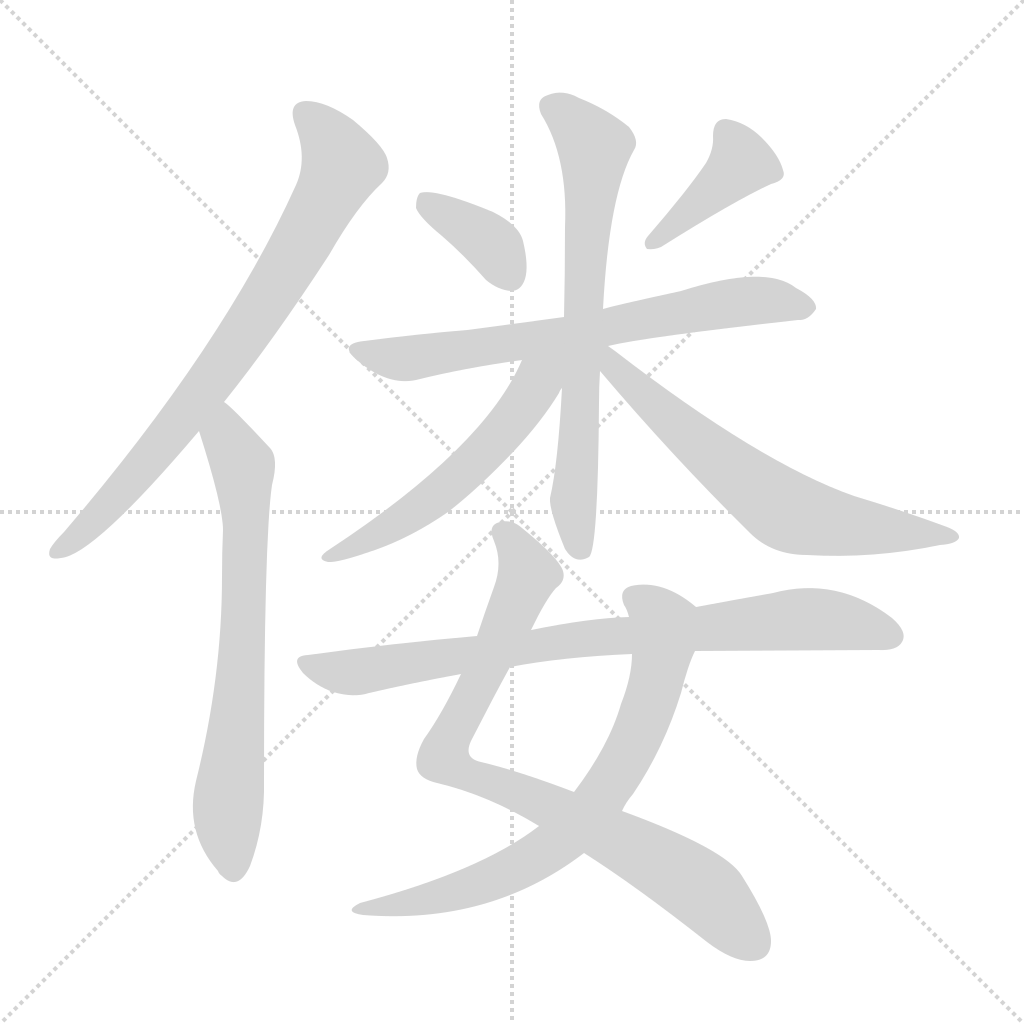
Lou; Kangxi strokes: 13; Page 115
Pronounced lou.
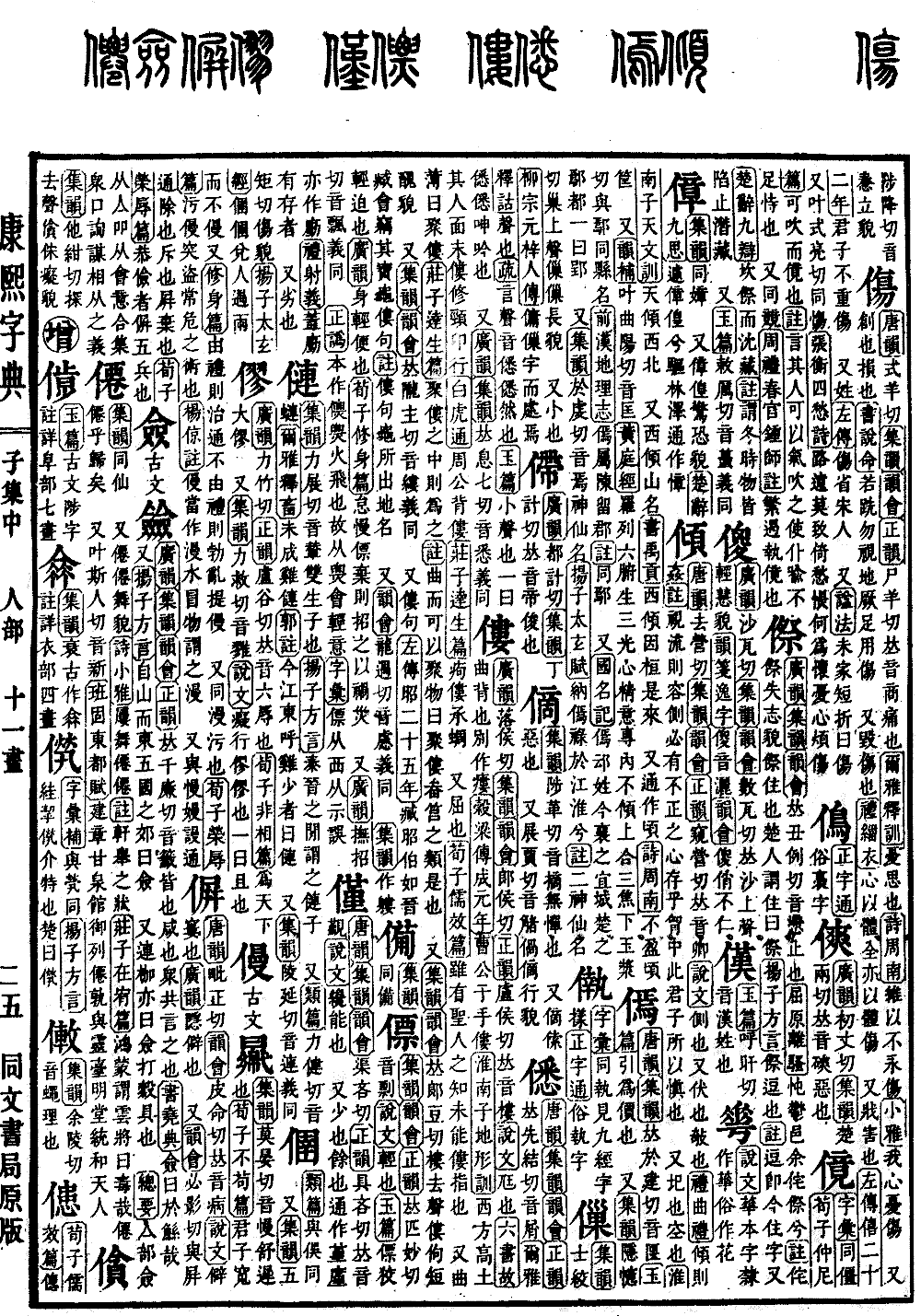
According to the Explaining Graphs and Analyzing Characters (Shuowen Jiezi), it means crooked or crippled. According to the Detailed Commentary on the Six Writings (Liushugu), it means a curved back. Also written in a variant form (lou).
As cited in the Commentary of Guliang (Guliang Zhuan), Year 1 of Duke Cheng: The Duke of Cao was hunchbacked and crippled in the hands.
As cited in the Masters of Huainan (Huainanzi), Topographical Teachings: In the high lands of the west, the people have faces that end in a curve, long necks, and walk with their heads held high.
As cited in the Comprehensive Discussions in the White Tiger Hall (Baihu Tong): The Duke of Zhou had a hunched back.
As cited in the Zhuangzi, chapter Mastering Life (Dasheng pian): A hunchback catching cicadas.
Also means to bend. As cited in the Xunzi, chapter The Effective Way of the Scholar (Ruxiao pian): Even if one possesses the wisdom of a sage, one cannot bend their fingers to count it all.
Also, curved and thin baskets are called julu. As cited in the Zhuangzi, chapter Mastering Life (Dasheng pian): Within the julu, one makes use of it. The commentary notes: Things that are curved and can store items are called julu, such as baskets or round containers.
Also, pronounced lou (departing tone). Lougou refers to a short, ugly appearance.
Also, pronounced lu. The meaning is the same.
Also refers to Louju. As cited in the Zuo Commentary (Zuo Zhuan), Year 25 of Duke Zhao: Zang Zhaobo went to the state of Jin, and Zang Hui stole his precious turtle, the Louju. The commentary notes: Louju is the name of the place from which the turtle originated.
Also, pronounced lu (departing tone). The meaning is the same. The Collection of Rhymes (Jiyun) writes this as lou.