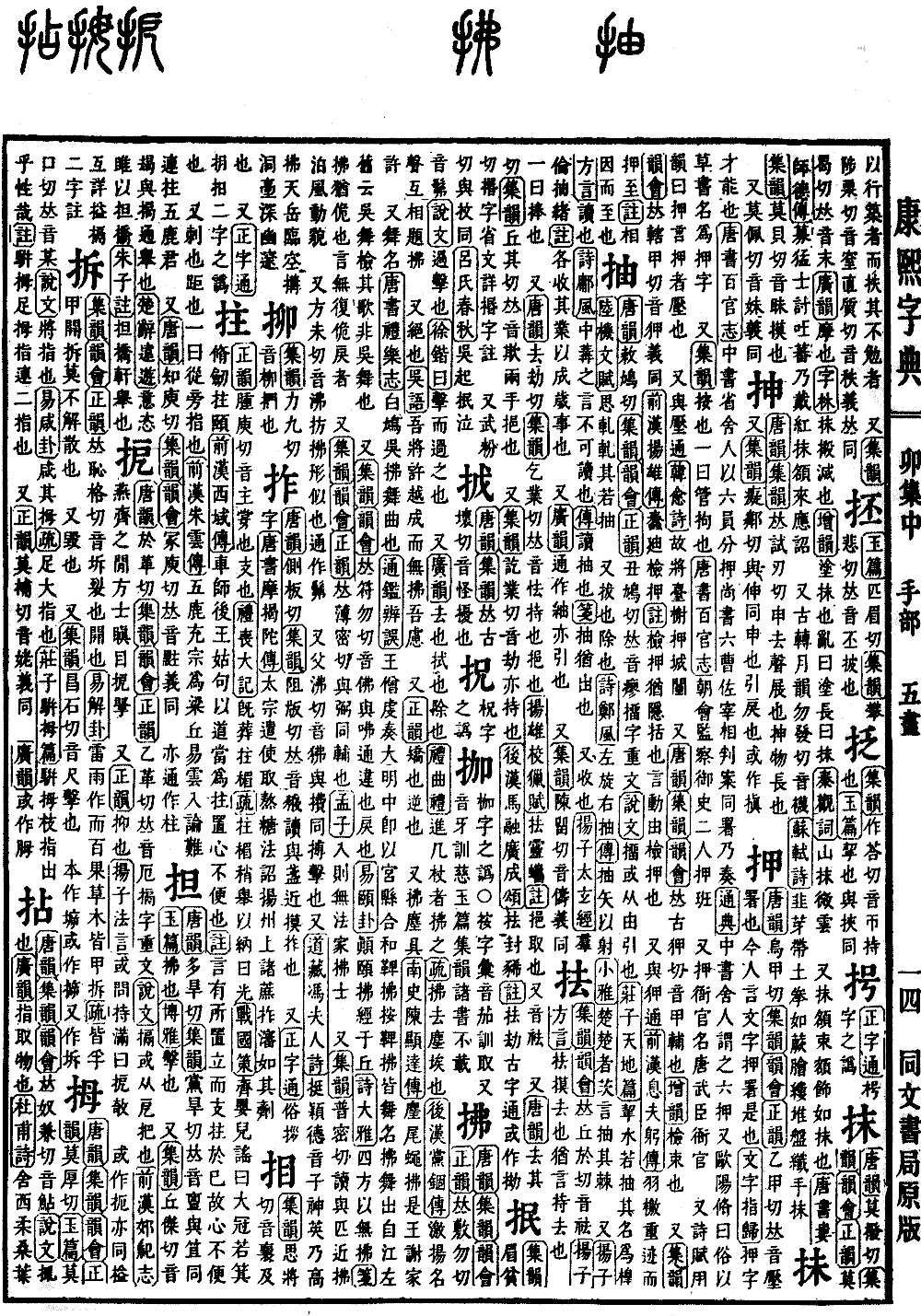
Mao Collection, Middle Volume
Radical: Hand (shǒu)
Page 424, Entry 04
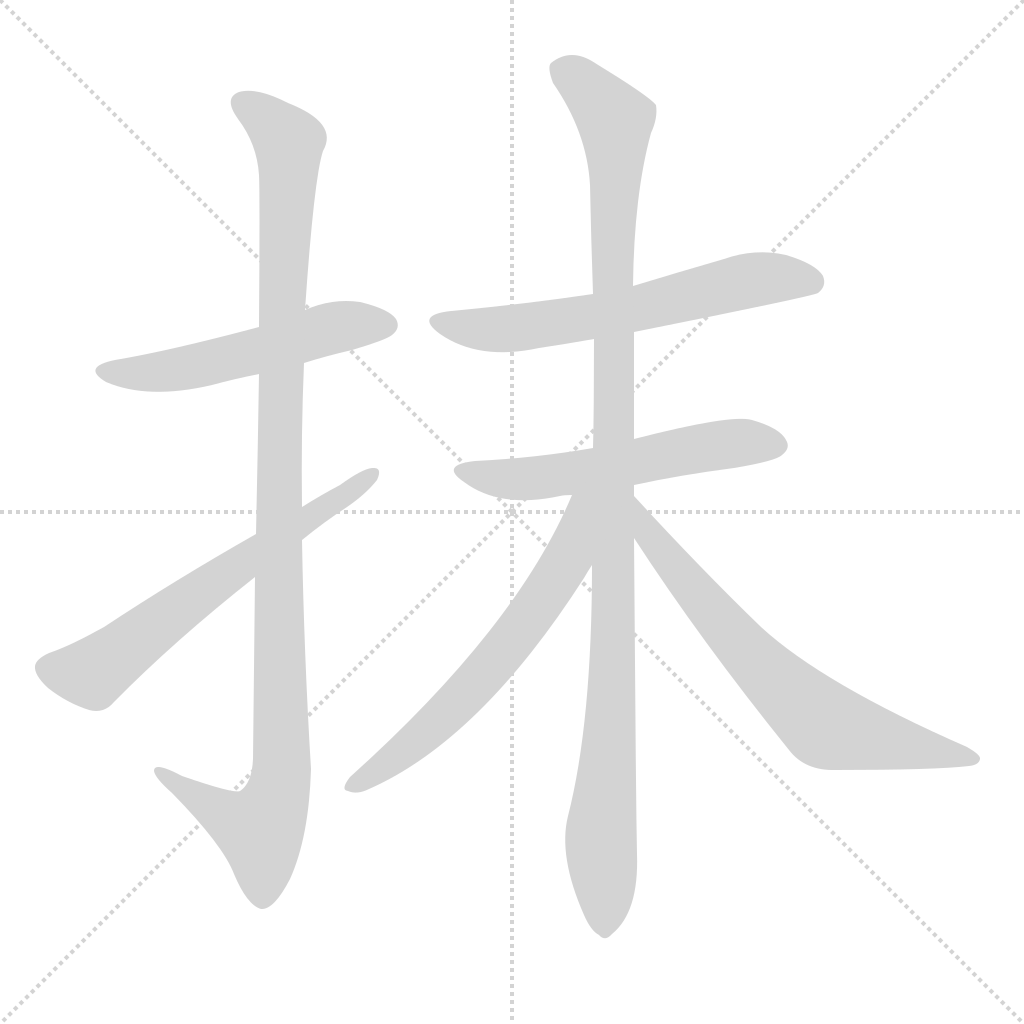
Pronounced mo.
In The Tang Rhyme (Tangyun), the dictionary of the Tang dynasty, it is defined as to rub. In The Collected Rhymes (Jiyun), The Rhyme Collection (Yunhui), and Correct Rhymes (Zhengyun), it is defined as to rub, pronounced mo.
According to The Extensive Rhyme (Guangyun), it means to rub or stroke. According to The Forest of Characters (Zilin), the phrase mo sha means to extinguish or destroy. According to The Amplified Rhyme (Zengyun), it means to apply or smear. Smearing in a chaotic manner is called tu, while smearing in a long stroke is called mo. From a poem by Qin Guan: Mountains are smeared with faint clouds.
Also, it refers to a mo e, which is a head ornament that binds the forehead, used like a binding. In the Biography of Lou Shide from The Book of Tang (Tangshu), it is mentioned that when recruiting fierce warriors to attack the Tibetan Empire, he wore a red headband to answer the decree.
Also, in the ancient rhyme category of yue, it is pronounced wa. From a poem by Su Shi: Leek sprouts carry soil, curled like ferns; sliced meat piled on a plate, smoothed by delicate hands.