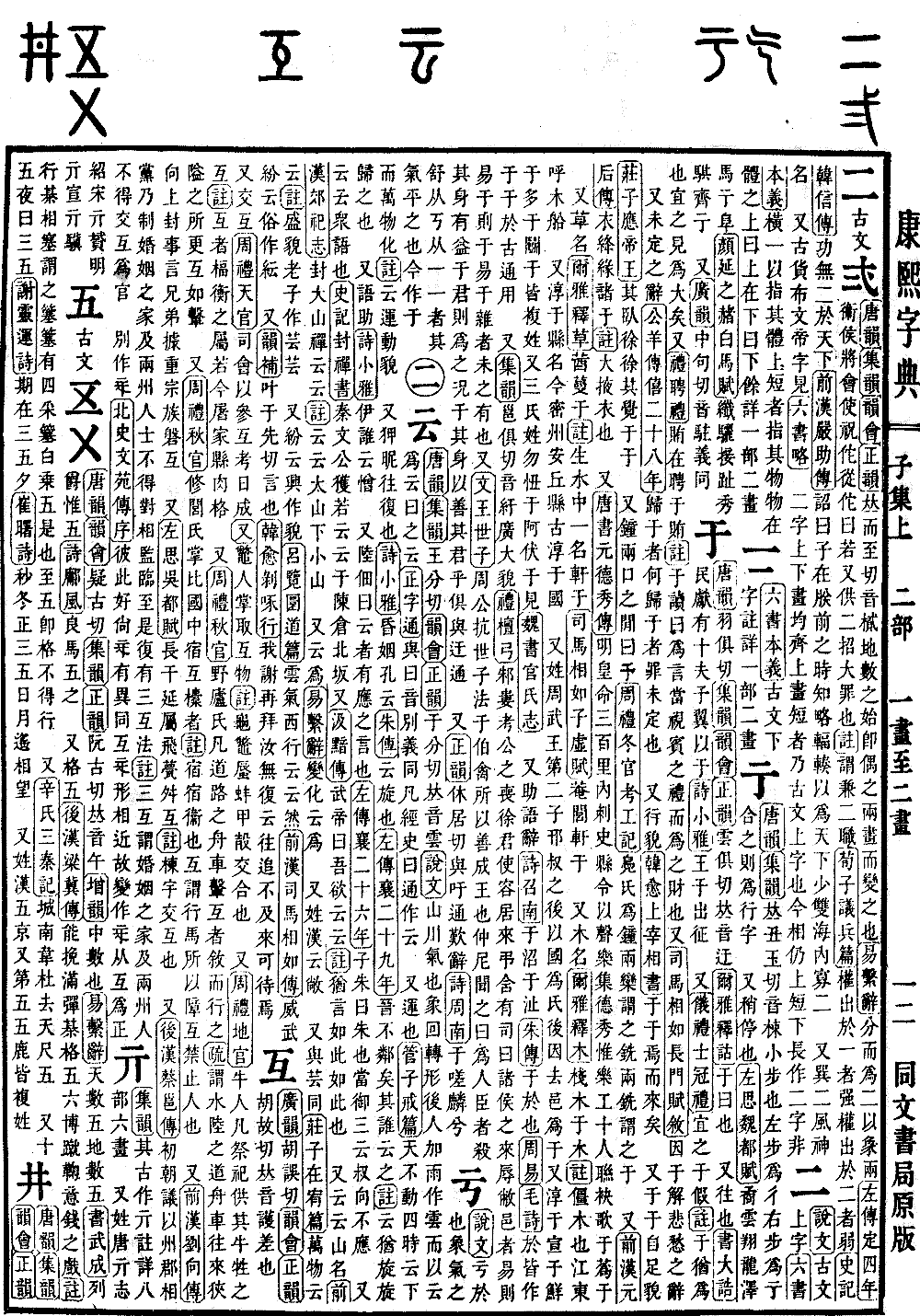
Zi Collection, Page Position: Upper
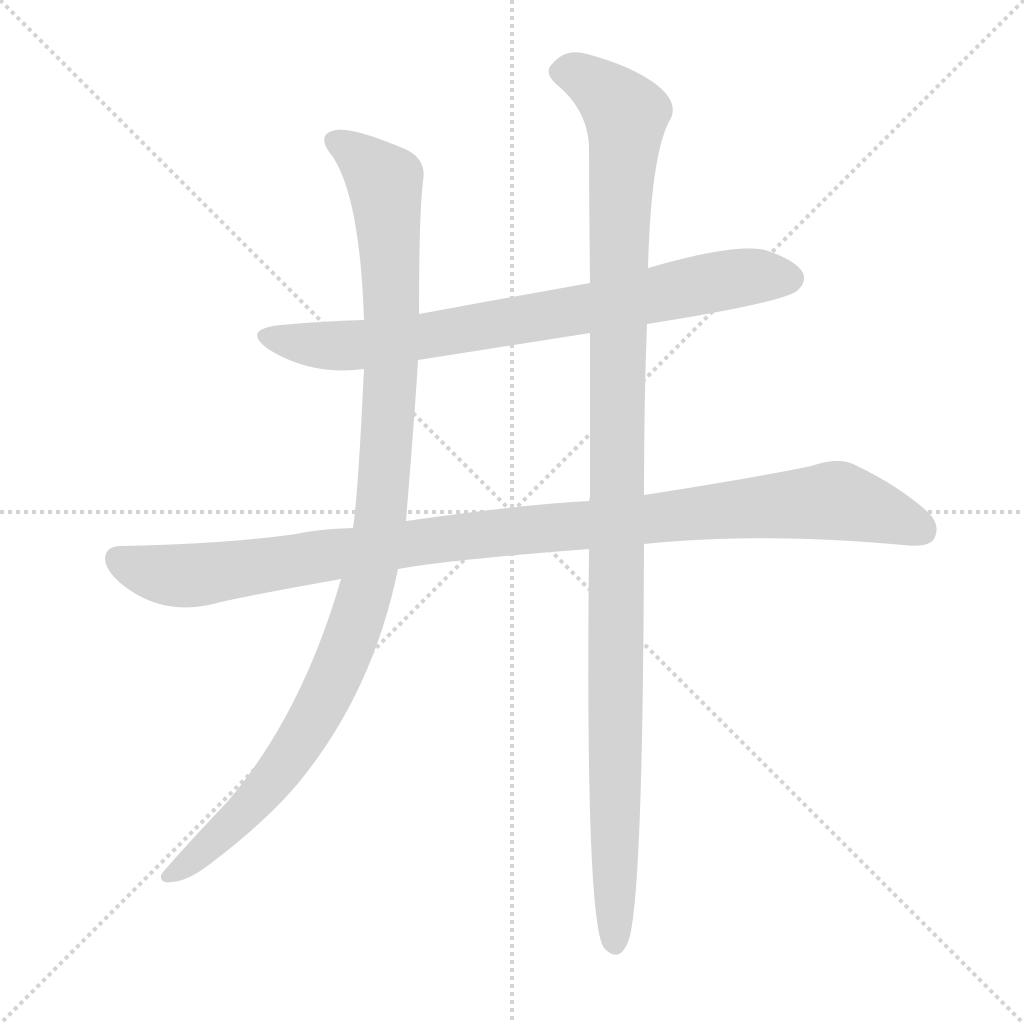
Radical: Well (jǐng)
Kangxi strokes: 4
Page 86, Entry 14
Pronounced jǐng (rising tone)
To dig the earth and draw water is called a well.
Meaning: "Jing" has the meaning of cleanliness.
Meaning: A well has the meaning of depth. There is the Well hexagram in the "Book of Changes" (Yijing).
Record: Bo Yi created wells.
Record: The Yellow Emperor created wells.
Record: Digging a well nine ren deep, yet still not reaching the spring water.
Also recorded: Nine hundred mu of land is called a jing, shaped like nine regions.
A square li is divided into one jing, and one jing has nine hundred mu.
Also refers to a marketplace.
Meaning: Digging the earth for water, created by Bo Yi; markets formed around wells, hence the name.
Said: A marketplace is a place of trade; a well is a place for drawing water together. Markets formed around wells, hence the name.
It is also the name of a southern constellation.
Record: The star Dongjing in the Southern Vermillion Bird constellation governs water affairs.
Meaning: Dongjing has eight stars and governs water conservancy.
Also "jing jing," describing a neatly organized appearance.
Described: Orderly and methodical.
Also describing continuous coming and going.
Described: Coming and going in an orderly fashion.
It is also a surname. There was a person named Jing Dan in the Han Dynasty.
Also refers to a caisson ceiling.
Meaning: A caisson ceiling is made in a hall, symbolizing the Dongjing star, and using algae patterns to suppress fire.
Also refers to an ornate well ceiling.
Described: Ornate well ceilings arranged sparsely, hanging like flower buds.
Meaning: House planks are made in the shape of a well, decorated with colors like brocade, beautiful.
In classical Chinese, "jing" was used interchangeably with "Xing."
There is Jing Bo in the "Zuo Tradition" (Zuozhuan), who is Xing Bo.
Originally written as "丼".