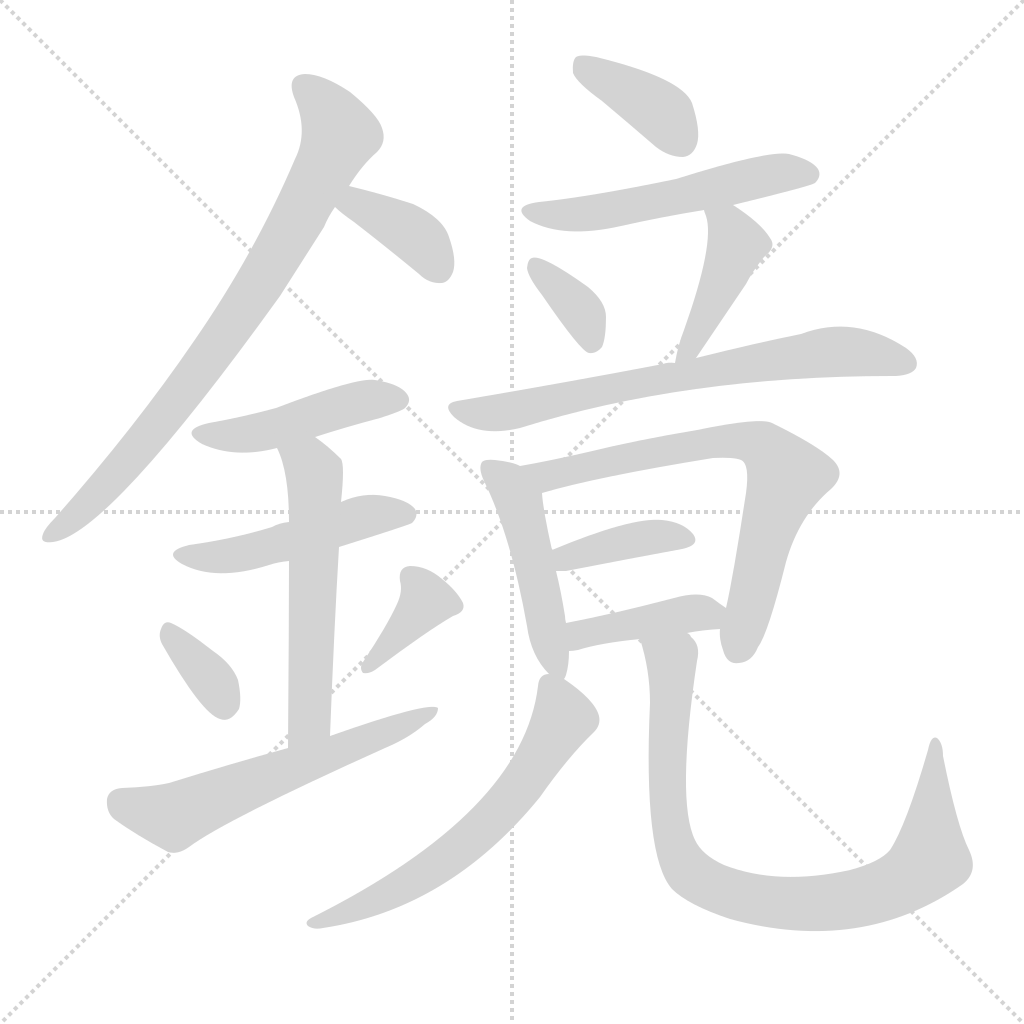
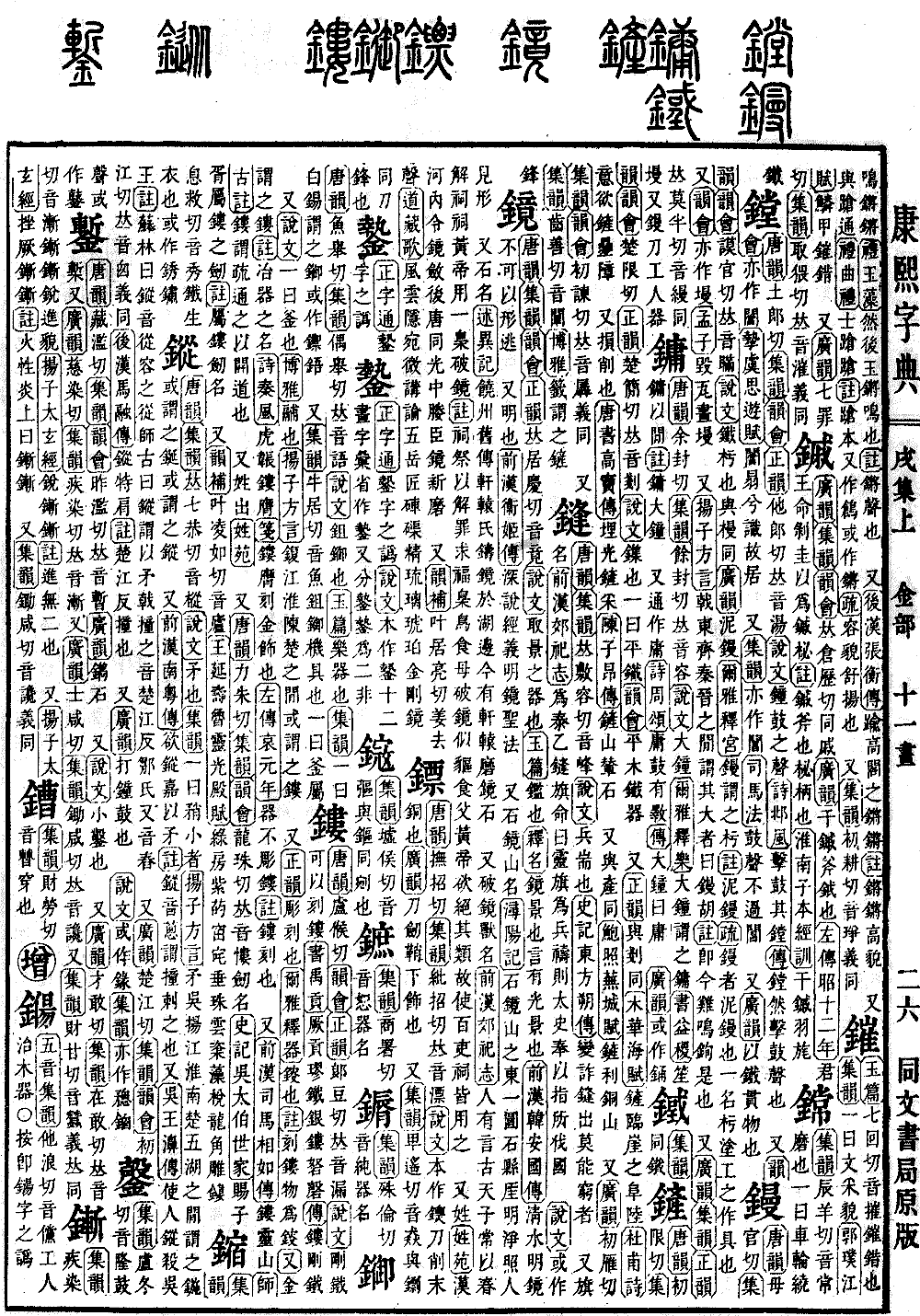
Xu Collection, Upper Volume
Radical: Metal (jīn)
Kangxi Strokes: 19
Page 1320, Entry 10
Pronounced jìng. According to the Shuowen Jiezi (Explaining Graphs and Analyzing Characters), it is a device for capturing light (or reflection). According to the Yupian (Jade Chapter), it is a mirror. According to the Shiming (Explanation of Names), a mirror is a reflection, meaning it possesses brilliance and reflection. In the Biography of Han Anguo in the History of the Former Han (Qianhan Shu), it is stated: With clear water and a bright mirror, one cannot escape one's own form. It also means to illuminate or clarify. In the Biography of Lady Wei in the History of the Former Han, it is stated: To deeply explain the meaning of the classics, and to clearly reflect the sacred laws. Also, Stone Mirror is the name of a mountain. According to the Xunyang Ji (Record of Xunyang), east of Stone Mirror Mountain, there is a round stone suspended on a cliff, bright and clean, reflecting people so that their forms are visible. Also, the name of a stone. According to the Shuyi Ji (Record of Strange Tales), it is traditionally said in Rao Prefecture that the Yellow Emperor cast a mirror by the lakeside, and today there exists a stone there used by the Yellow Emperor to polish his mirror. Also, Broken Mirror is the name of a beast. In the Treatise on Suburban Sacrifices in the History of the Former Han, it is recorded that people said that ancient emperors used to perform the Jie ritual in spring, sacrificing to the Yellow Emperor using one owl and one Broken Mirror. The commentary states: Sacrifices were performed to absolve sins and seek blessings; the owl eats its mother, and the Broken Mirror, resembling a wild beast, eats its father; the Yellow Emperor wished to exterminate their kind, and thus commanded all officials to use them in their sacrifices. Also, a surname. According to the Xingyuan (Garden of Surnames), there was a Han dynasty magistrate of Henei named Jing Lian, and in the Later Tang dynasty during the Tongguang reign, there was a courtier named Jing Xinmo. Also, in the Yunbu (Supplement to the Rhyme Dictionary), pronounced jiàng (falling tone). In the Daozang Ge (Songs of the Daoist Canon), it is written: Wind and clouds are hidden and subtle, discussing the craftsmen of the five sacred mountains; giant clam shells, fine glazed glass, amber, and diamond mirrors.