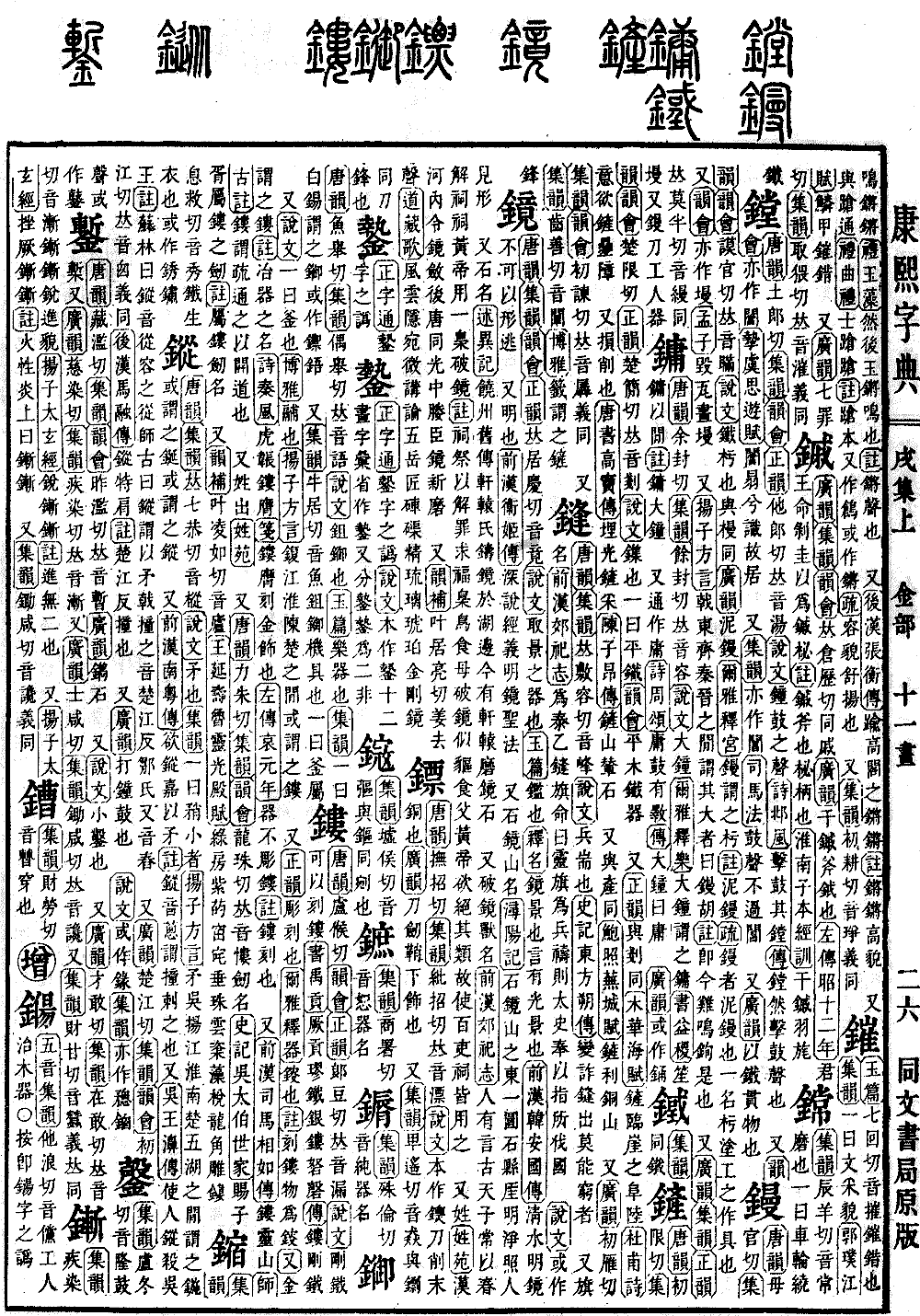
Xu Collection, Upper Volume
Radical: Metal (jīn)
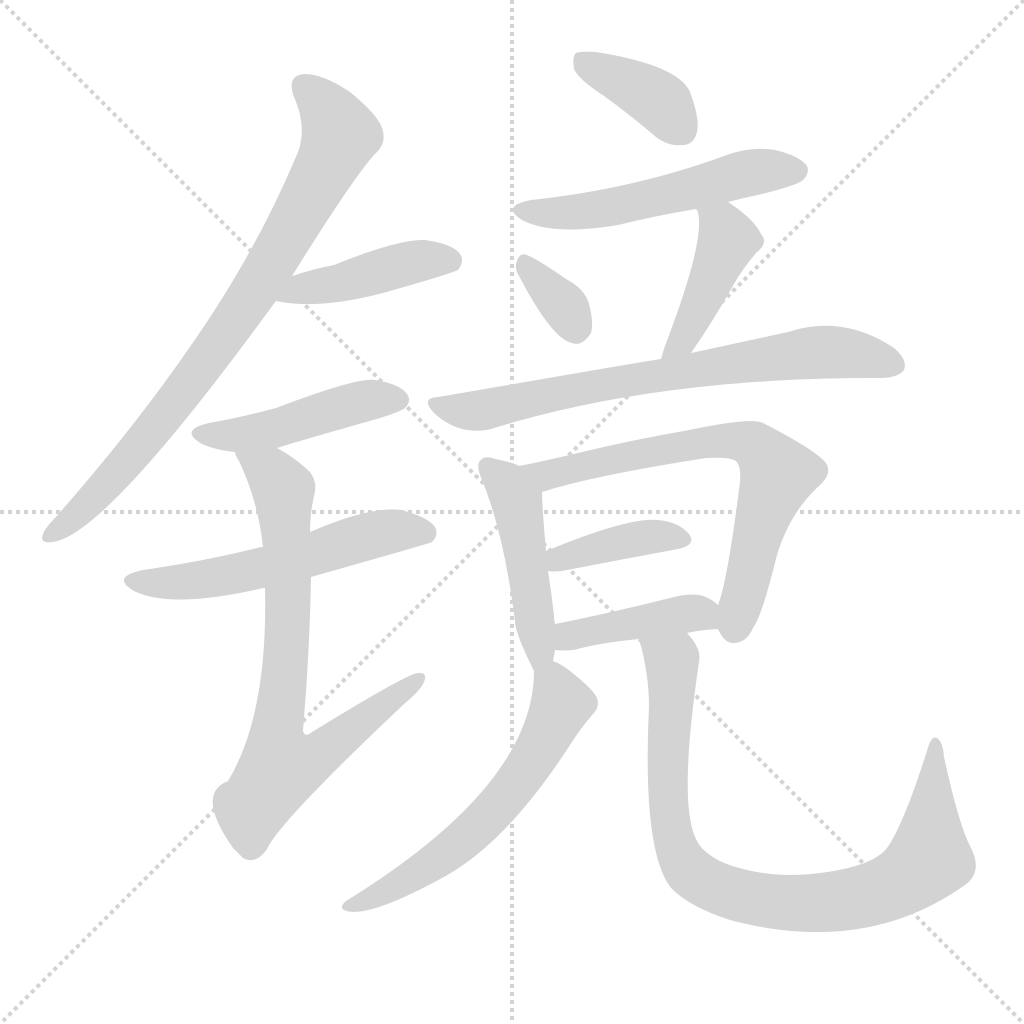
鏡
Kangxi Stroke Count: 19
Page 1320, Entry 01
Tang Rhyme (Tangyun), Collection Rhyme (Jiyun), Rhyme Meetings (Yunhui), Correct Rhymes (Zhengyun): Pronounced jing (falling tone).
Shuowen Jiezi (Shuowen): An instrument for capturing light.
Jade Chapters (Yupian): A mirror.
Explanation of Names (Shiming): Mirror (jing) means light (jing). It refers to that which possesses brightness and light.
Book of Han (Hanshu), Biography of Han Anguo: Clear water and bright mirrors cannot allow a form to hide.
Also means to clarify. Book of Han (Hanshu), Biography of Lady Wei: Deeply explain the meaning of the classics, and clarify the laws of the sages.
Also Stone Mirror, a mountain name. Records of Xunyang (Xunyang ji): To the east of Stone Mirror Mountain, there is a round stone suspended on a cliff, bright and clean, reflecting the human form.
Also a stone name. Records of Remarkable Things (Shuyiji): The old traditions of Raozhou state that the Yellow Emperor (Xuanyuan shi) cast mirrors by the lakeside; there is still a stone there where the Yellow Emperor polished his mirrors.
Also Broken Mirror, a beast name. Book of Han (Hanshu), Treatise on the Suburban Sacrifices: Some say ancient emperors used to perform the Jie sacrifice in spring, offering an owl and a broken mirror to the Yellow Emperor. Commentary: Sacrifices were performed to absolve sins and seek blessings. An owl eats its mother, and a broken mirror—a beast resembling a small leopard—eats its father. The Yellow Emperor wished to eliminate their species, so he commanded all officials to use them in sacrifices.
Also a surname. Garden of Surnames (Xingyuan): Han Dynasty magistrate of Henei, Jing Lian; during the Tongguang period of the Later Tang, there was an attendant named Jing Xinmo.
Also Supplement to Rhymes (Yunbu): Rhymes with liang (falling tone), jiang in the departing tone. Daoist Scripture Songs (Daozang ge): Wind and clouds hidden, vague and subtle, discussing the artisans of the Five Sacred Peaks. Giant clam shells, refined glass, amber, and diamond mirrors.