Xu Collection, Middle Volume
Radical: Green (qīng)
Page 1382, Entry 16
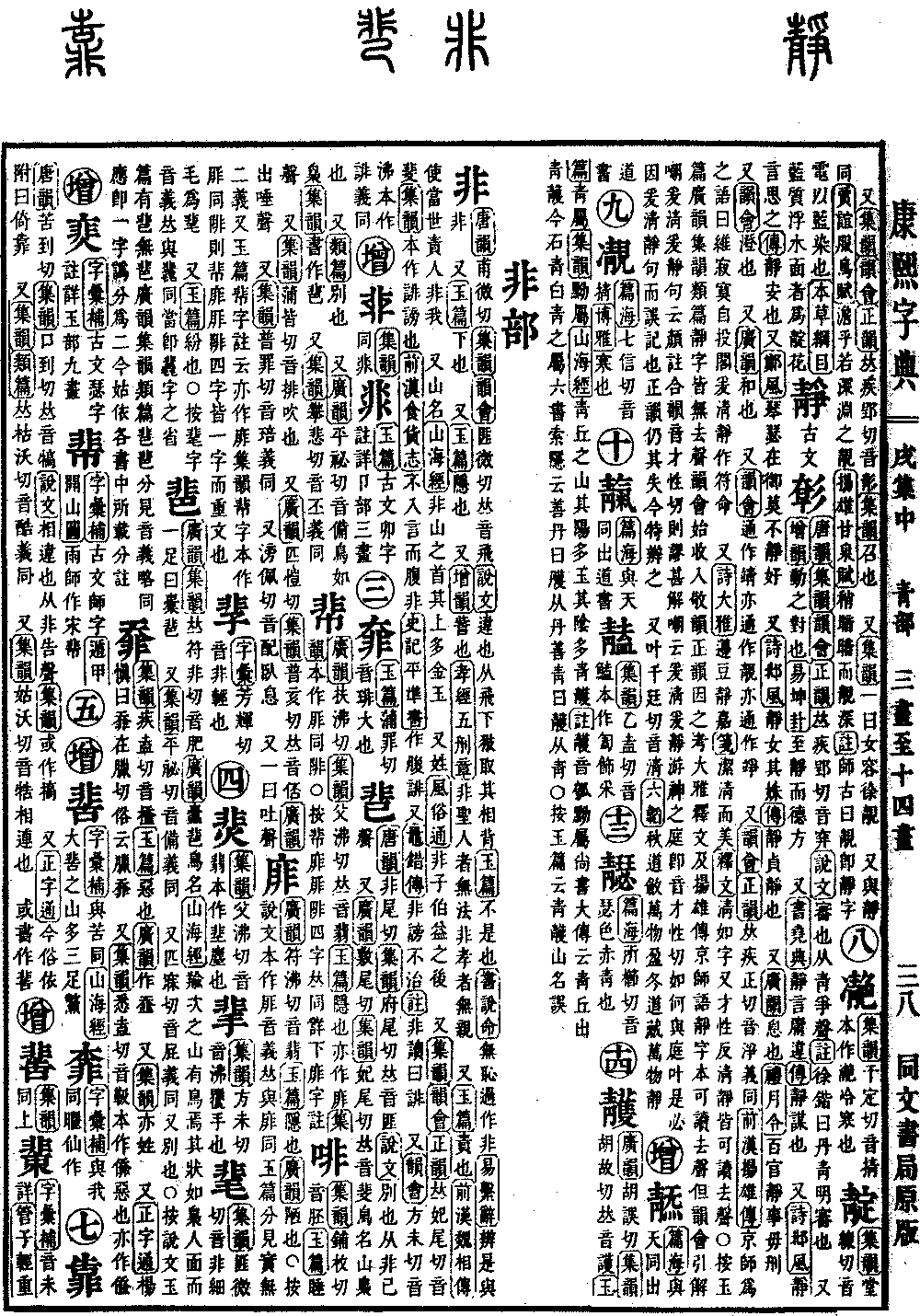
Ancient script. Pronounced jing (falling tone). According to the Explaining Graphs and Analysis of Characters (Shuowen Jiezi), it means to examine or to scrutinize. Formed from the radical Green (qīng) with the sound provided by the element for contention (zhēng). Note: Xu Kai states that it refers to the clarity and precision of cinnabar and green pigments.
Also, as stated in the Amplified Rhymes (Zengyun), it is the opposite of movement. From the Book of Changes (Yijing), Kun Hexagram: To be extremely still and of square virtue.
Also, from the Book of Documents (Shangshu), Canon of Yao: To speak calmly but act in opposition. Commentary: Stillness here means planning.
Also, from the Book of Odes (Shijing), Beifeng: To speak calmly and think of it. Commentary: Stillness here means peace.
Also, from the Book of Odes (Shijing), Zhengfeng: With zither and lute present, there is nothing that is not calm and good.
Also, from the Book of Odes (Shijing), Beifeng: The quiet girl is beautiful. Commentary: Stillness here means chaste and quiet.
Also, from the Wide Rhymes (Guangyun), it means to rest. From the Book of Rites (Liji), Monthly Ordinances: Let all officials cease their affairs.
Also, from the Collection of Rhymes (Yunhui), it means to clarify or settle.
Also, from the Wide Rhymes (Guangyun), it means harmony.
Also, from the Collection of Rhymes (Yunhui), it is interchangeably used with the character for peace (jìng). It is also interchangeably used with the character for beautiful (liàng) and the character for quiet (jìng).
Also, from the Collection of Rhymes (Yunhui) and the Correct Rhymes (Zhengyun), pronounced jing (falling tone). The meaning is the same. From the History of the Former Han (Qian Han Shu), Biography of Yang Xiong: The capital city had a saying about him: Secluded and lonely, he threw himself from a pavilion; desiring purity and stillness, he composed omens.
Also, from the Book of Odes (Shijing), Daya: The sacrificial vessels are pure and fine. Commentary: Clean and beautiful. Gloss: Qing is read as written, but can also be pronounced with a departing tone. Both qing and jing may be read in the departing tone. Note: In the Jade Chapters (Yupian), Wide Rhymes (Guangyun), Collection of Rhymes (Yunhui), and Classification of Characters (Leipian), the character jing is not listed with a departing tone. The Collection of Rhymes (Yunhui) was the first to include it under the jing rhyme, and the Correct Rhymes (Zhengyun) followed suit. Examining the gloss for the Daya and the popular saying in the biography of Yang Xiong, the character jing was originally readable in the departing tone. However, the Collection of Rhymes (Yunhui) cites the line desiring purity and stillness from the Jiezhao, claiming that Yan's commentary suggests a rhyming pronunciation, but the claim that it sounds like cai xing qie is highly erroneous. The Jiezhao says, desiring purity and stillness, roaming in the courtyard of the spirit. If it were pronounced like cai xing qie, how could it rhyme with the character for courtyard (ting)? This must be a mistaken record based on the line desiring purity and stillness. The Correct Rhymes (Zhengyun) persists in this error, which I now specifically clarify.
Also, as a rhyming character, pronounced qing. From the Six Strategies (Liutao): The path of autumn is to gather, and the ten thousand things are full. The path of winter is to conceal, and the ten thousand things are still.