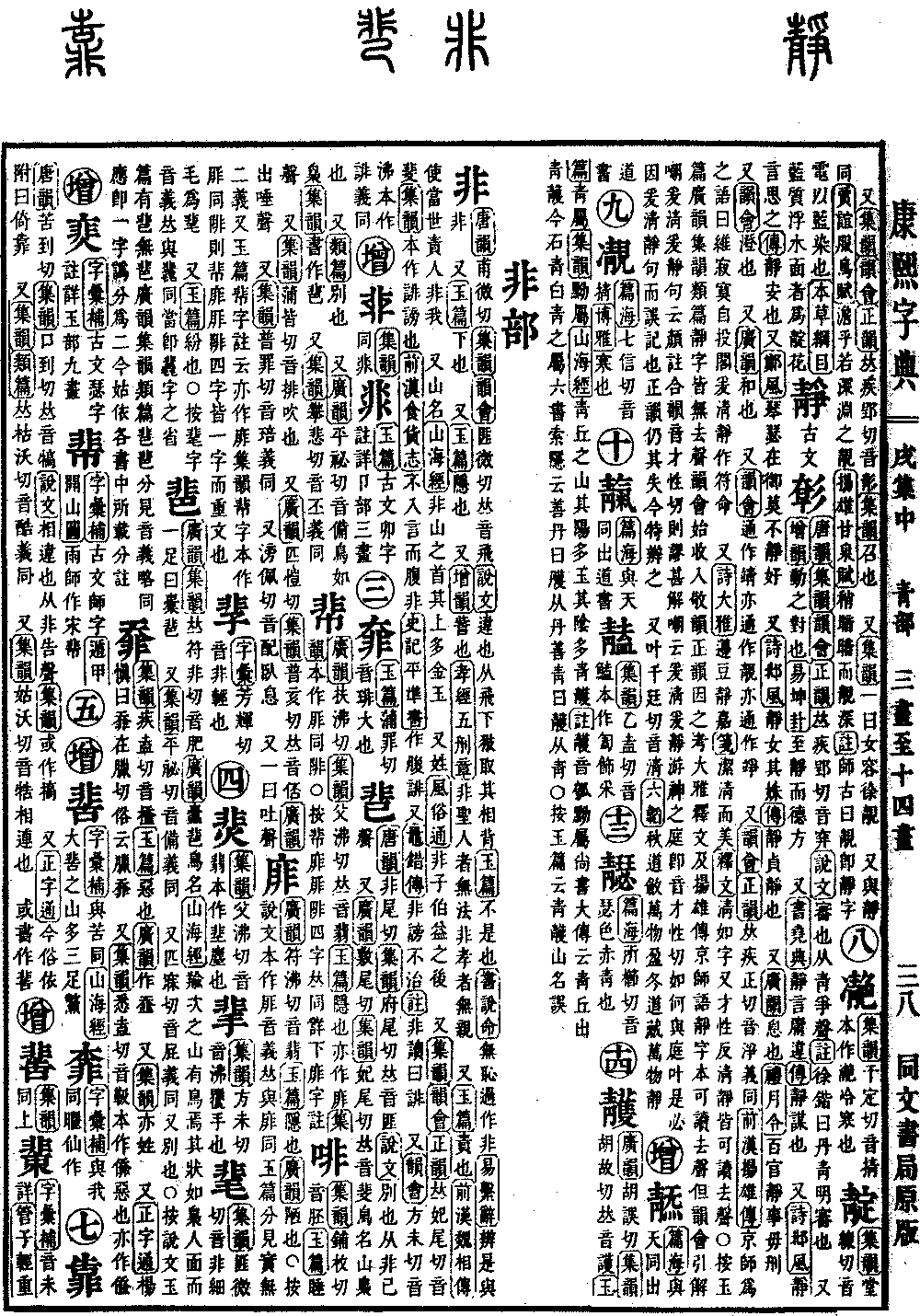
Xu Collection, Middle Volume
Radical: Green (qīng)
Kangxi Strokes: 16
Page 1382, Entry 03
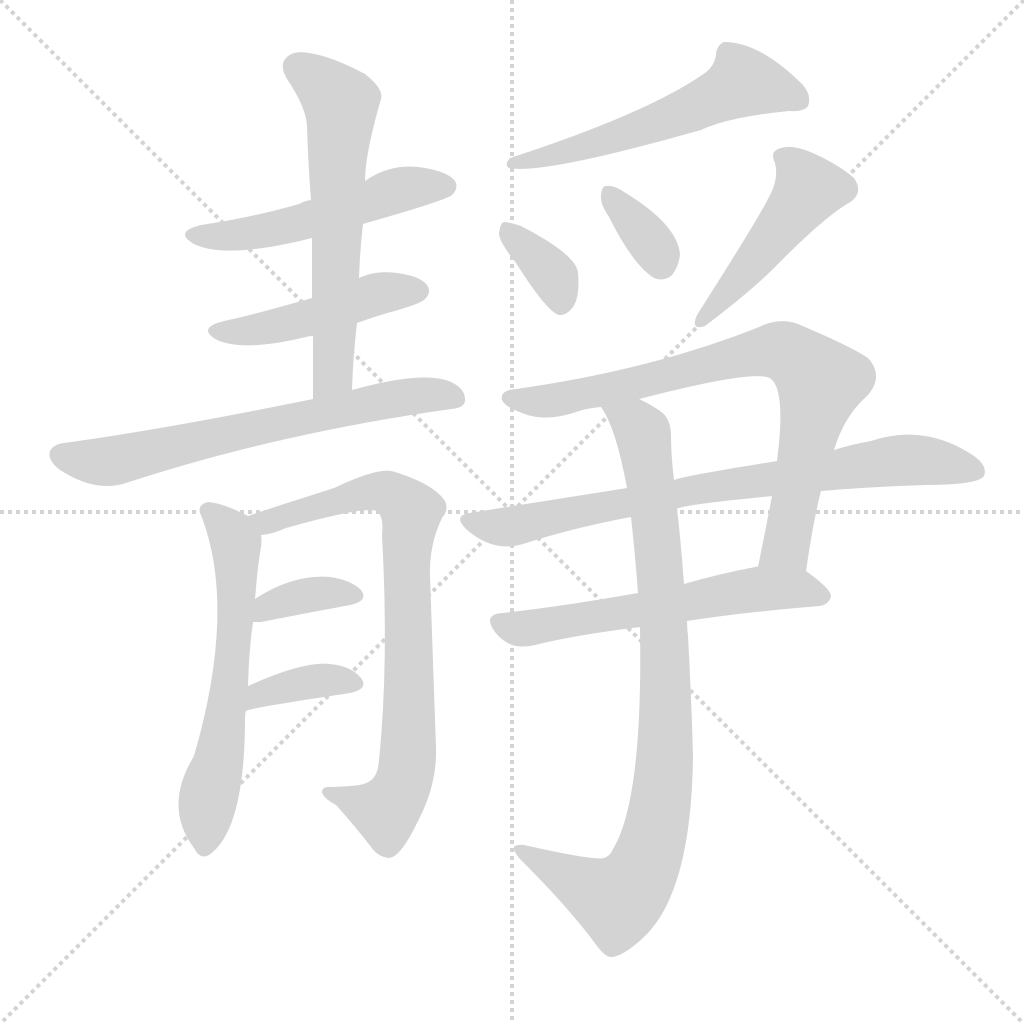
Ancient records: Tang Rhymes (Tangyun), Collection Rhymes (Jiyun), Rhyme Meetings (Yunhui), and Correct Rhymes (Zhengyun) state it is pronounced jing (falling tone), with the same sound as the character for a pit. Explaining the character in Explaining Graphs and Analyzing Characters (Shuowen Jiezi): to examine. The character is composed of the radical for green and the phonetic component for to strive. Note: Xu Kai stated that the colors of cinnabar and green are clear and bright, hence one can examine things clearly. Also, in Supplement to the Rhymes (Zengyun), it is the opposite of movement. In Book of Changes (Yijing), Kun Hexagram: Only when one reaches the ultimate state of stillness can one’s virtue be upright. In Book of Documents (Shangshu), Canon of Yao: Still are the words used to oppose. Commentary: Stillness here refers to planning. In Book of Odes (Shijing), Beifeng: Still are the words as I think of him. Commentary: Stillness here refers to peace and tranquility. In Book of Odes (Shijing), Zhengfeng: With zithers and lutes in attendance, all is still and good. In Book of Odes (Shijing), Beifeng: The still girl is lovely. Commentary: Stillness here refers to being chaste and quiet. In Extensive Rhymes (Guangyun): to cease or rest. In Book of Rites (Liji), Monthly Ordinances: Let the officials cease their duties and not disturb. In Rhyme Meetings (Yunhui): to clarify. In Extensive Rhymes (Guangyun): harmonious. In Rhyme Meetings (Yunhui): used interchangeably with the character for peace (jìng). Also used interchangeably with the character for adornment (liàng). Also used interchangeably with the character for quiet (jìng). In Rhyme Meetings (Yunhui) and Correct Rhymes (Zhengyun): pronounced jing (falling tone), with the same sound as the character for clean (jìng). The meaning is the same. In Book of Han (Qian Hanshu), Biography of Yang Xiong: The capital city circulated this saying: Only in silence did he throw himself from the gallery; loving purity and stillness, he wrote of omens. In Book of Odes (Shijing), Daya: The bamboo and wooden vessels are still and excellent. Commentary: Clean and beautiful. Explanatory Text: For the word qing (pure), read its original sound, or read as cai (falling tone) and xing (falling tone). Both qing and jing may be read in the falling tone. According to Jade Chapters (Yupian), Extensive Rhymes (Guangyun), Collection Rhymes (Jiyun), and Classification of Characters (Leipian), the character jing has no reading in the falling tone. Rhyme Meetings (Yunhui) first included it in the jing rhyme, and Correct Rhymes (Zhengyun) followed this usage. Investigating the explanatory text of the Daya and the popular saying from the Biography of Yang Xiong, the character jing can indeed be read in the falling tone, but Rhyme Meetings (Yunhui) cites the line "harmonious and pure, harmonious and still" from the Jiechao, claiming that Yan Shigu’s commentary considered it a rhyming match and read it as cai (falling tone) and xing (falling tone), which is highly erroneous. The Jiechao says: Harmonious and pure, harmonious and still, wandering in the court of the spirits. Even if read as cai and xing, how could it rhyme with the character for court? This must be a misrecording of the line "harmonious, pure, and still." Correct Rhymes (Zhengyun) continued this error, and it is now specifically clarified. Also pronounced qing (level tone). In Six Secret Teachings (Liutao): The way of autumn is to gather, and all things are abundant. The way of winter is to hide, and all things are still and settled.