Shen Collection, Upper Volume
Radical: Grass (cǎo)
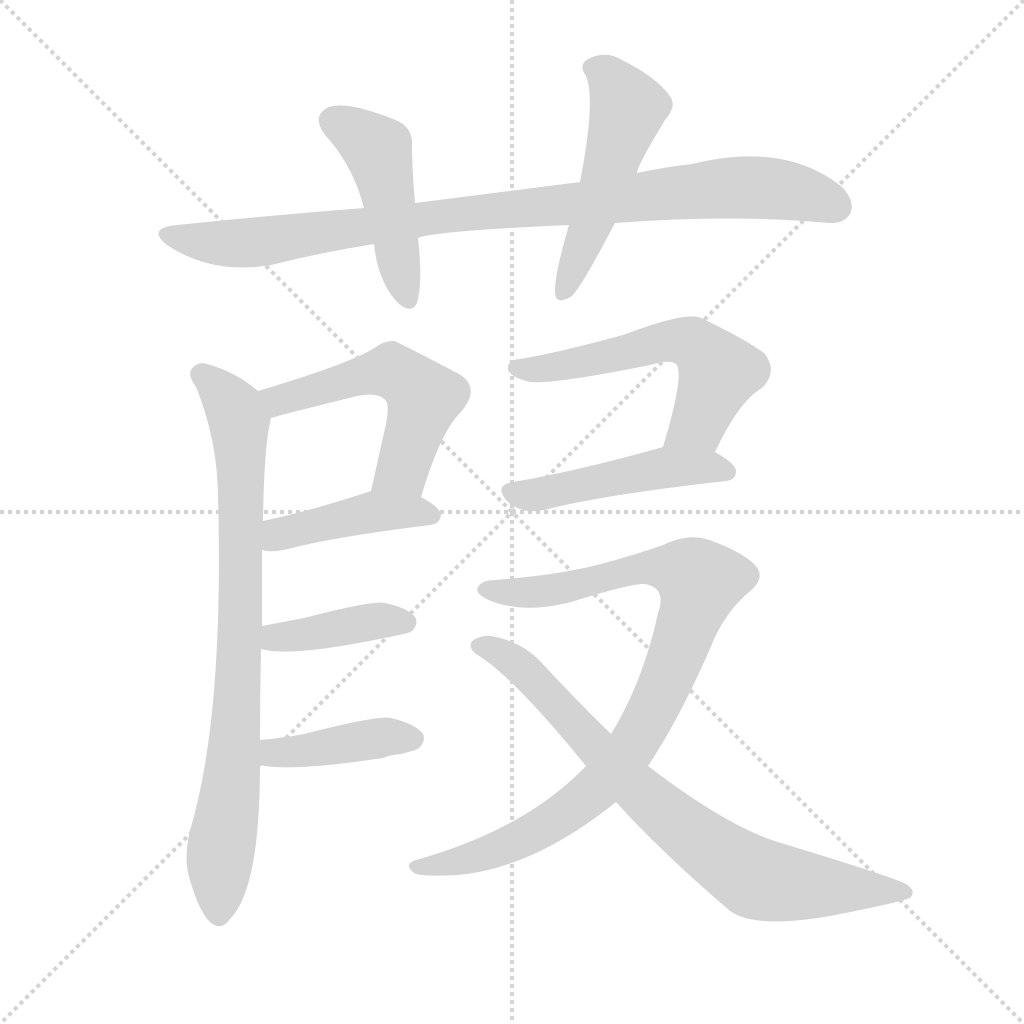
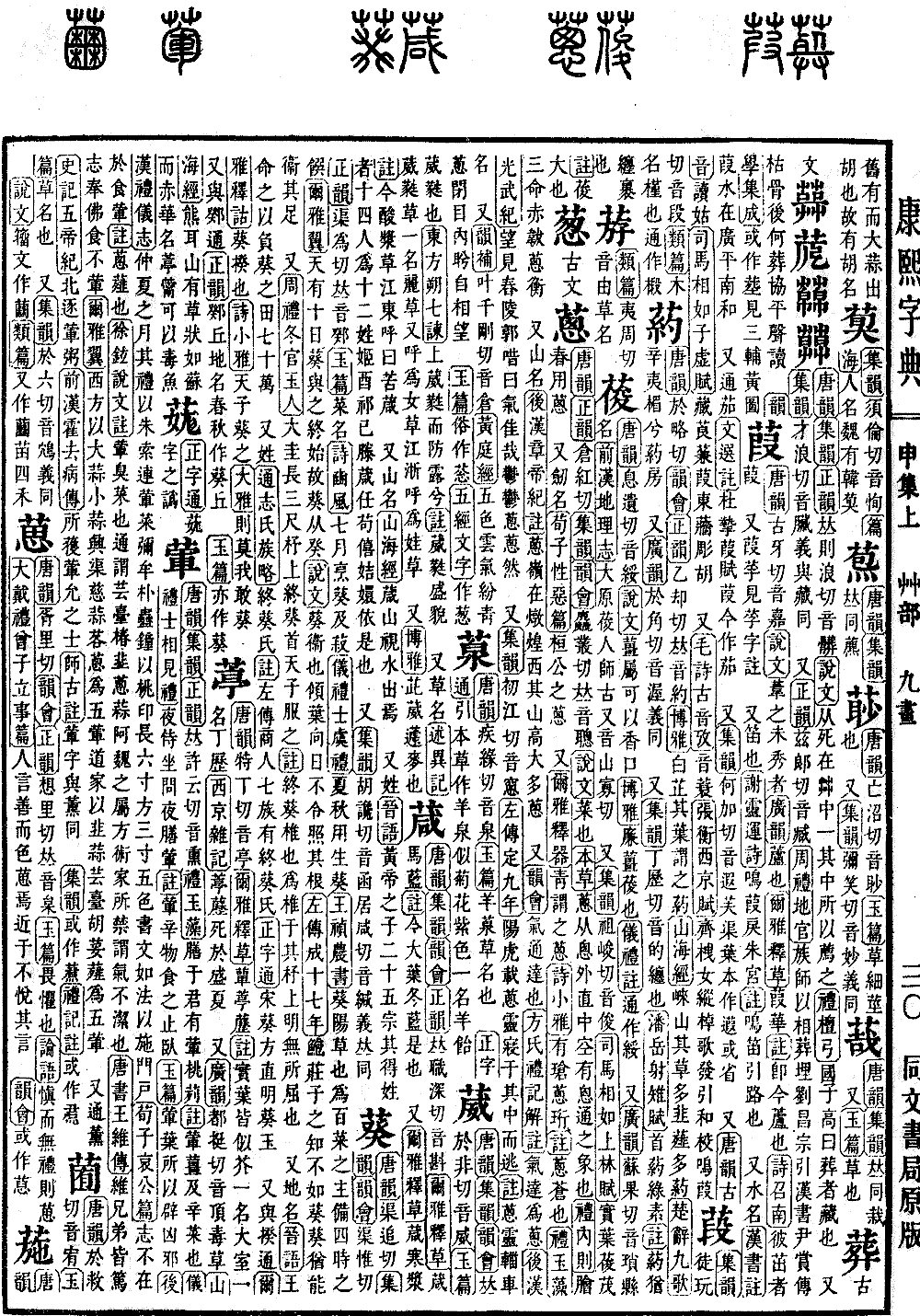
葭
Kangxi strokes: 15
Page 1046, Entry 10
Pronounced jia.
Shuowen Jiezi (Shuowen): The part of a reed that has not yet sprouted an ear or flowered.
Guangyun (Guangyun): This is the reed.
Erya (Erya), Explanation of Plants: Jia is the flower.
Commentary: This refers to the current-day reed.
Book of Odes (Shijing), Shao Nan: That which grows vigorously is the jia.
Also, jiafu (the membrane inside a reed), see the commentary under the character fu.
Also refers to a flute.
Xie Lingyun poem: Playing the jia to arrive at the vermilion palace.
Commentary: Blowing a flute to lead the way.
Also a water name.
Book of Han (Hanshu) commentary: The Jia River is in the south of Guangping and He.
Also interchangeably used with qie.
Literary commentary: Du Zhi, Jia Fu (Rhapsody on Reeds). Jia is currently written as qie.
Also, Jiyun (Jiyun) says: Pronounced xia. Refers to lotus leaves. Originally written as xia, sometimes abbreviated.
Also, Tang Yun Gu Yin (Ancient Pronunciations of the Tang Rhymes): Pronounced gu.
Sima Xiangru, Zixu Fu (Rhapsody on Sir Fantasy): Concealing reed mace and reeds, eastern wild rice and water-grass.
Also, Mao Shi Gu Yin Kao (Investigation of Ancient Pronunciations of the Mao Odes): Pronounced suo.
Zhang Heng, Xijing Fu (Rhapsody on the Western Capital): Arranging the rowers, releasing the oars in song. Giving rise to harmony, blowing the jia in unison.