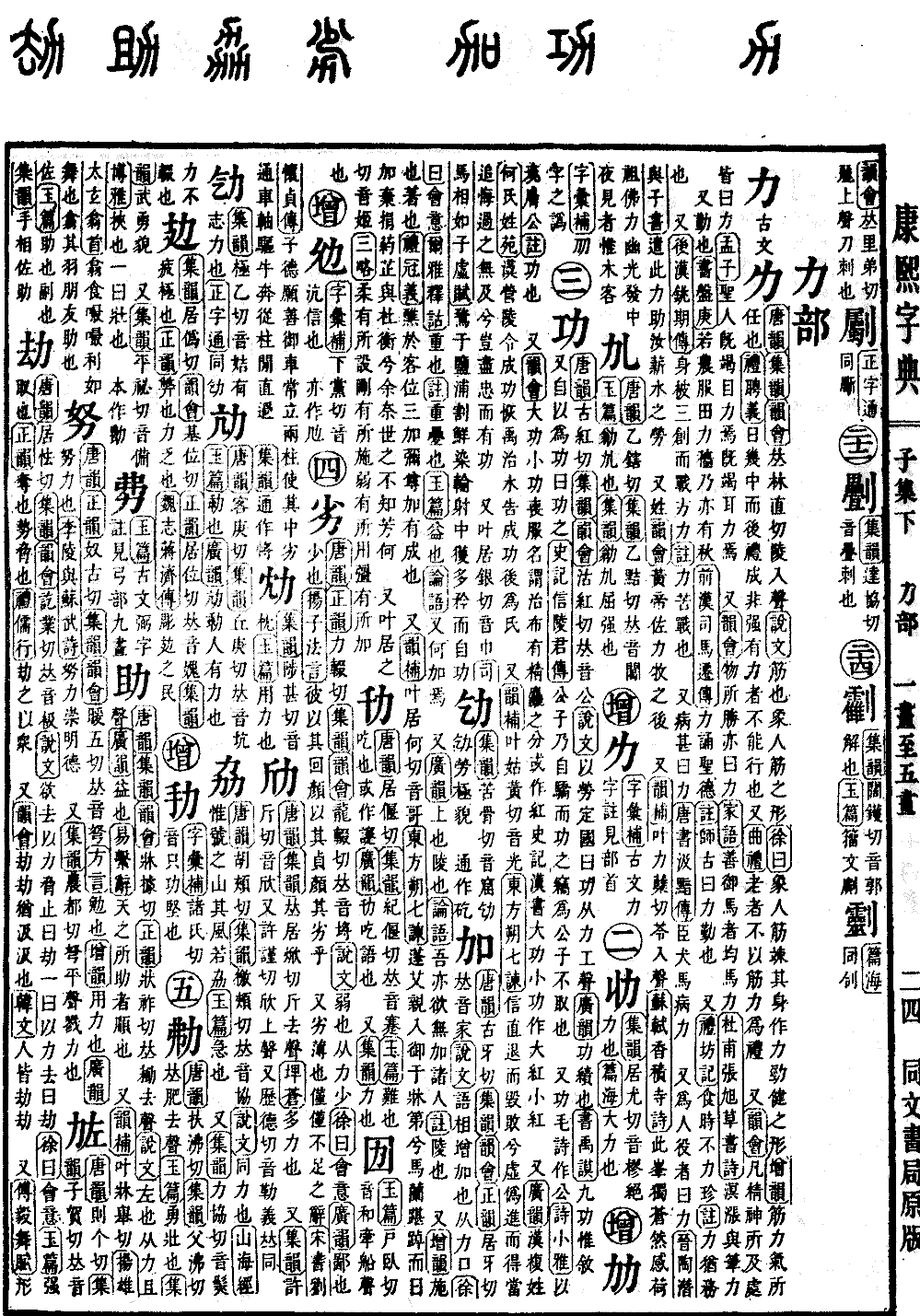
Zi Collection, Page Position: Lower
Radical: Strength (lì)
Kangxi stroke count: 5
Page number: 146, line 13
According to Tang Rhymes (Tángyùn), Rhyme Compendium (Jíyùn), Rhyme Book (Yùnhuì), and Correct Rhymes (Zhèngyùn), pronounced jiā. According to Explaining and Analyzing Characters (Shuōwén Jiězì), it means 'words mutually increasing'. It is composed of the radicals Strength (lì) and Mouth (kǒu). Xu Xuan notes it is an associative compound character. In Er Ya (Ěryǎ), Explanation of Words (Shìgǔ) section, it means 'heavy'. The commentary clarifies it means 'to repeat, to overlap'. In Jade Chapters (Yùpiān), it means 'to benefit, to increase'. From Analects of Confucius (Lúnyǔ): "What more could be added?" Also, according to Extensive Rhymes (Guǎngyùn), it means 'to go up, to invade'. From Analects of Confucius: "I too wish not to impose upon others." The commentary explains it means 'to impose upon, to dominate'. Also, according to Added Rhymes (Zēngyùn), it means 'to apply, to attach'. From Book of Rites (Lǐjì), Meaning of the Capping Ceremony (Guànyì) section: "To offer a libation in the guest's place; the three applications progressively confer greater honor, and these applications signify completion." Also, according to Rhyme Supplement (Yùnbǔ), it rhymes with the sound gē. From Dongfang Shuo's Seven Remonstrances (Qījiàn): "Mugwort and artemisia are received intimately into the bedchambers, while wild iris hobbles along and daily increases. Discarded are medicinal angelica and wild ginger; alas, what can I do about a world that knows not fragrance!" Also, it rhymes with the sound jī. From Three Strategies (Sān Lüè): "The soft has its arrangements, the hard has its applications. The weak has its uses, the strong has its additions."