Yin Collection, Upper Volume
Radical: Corpse (shī)
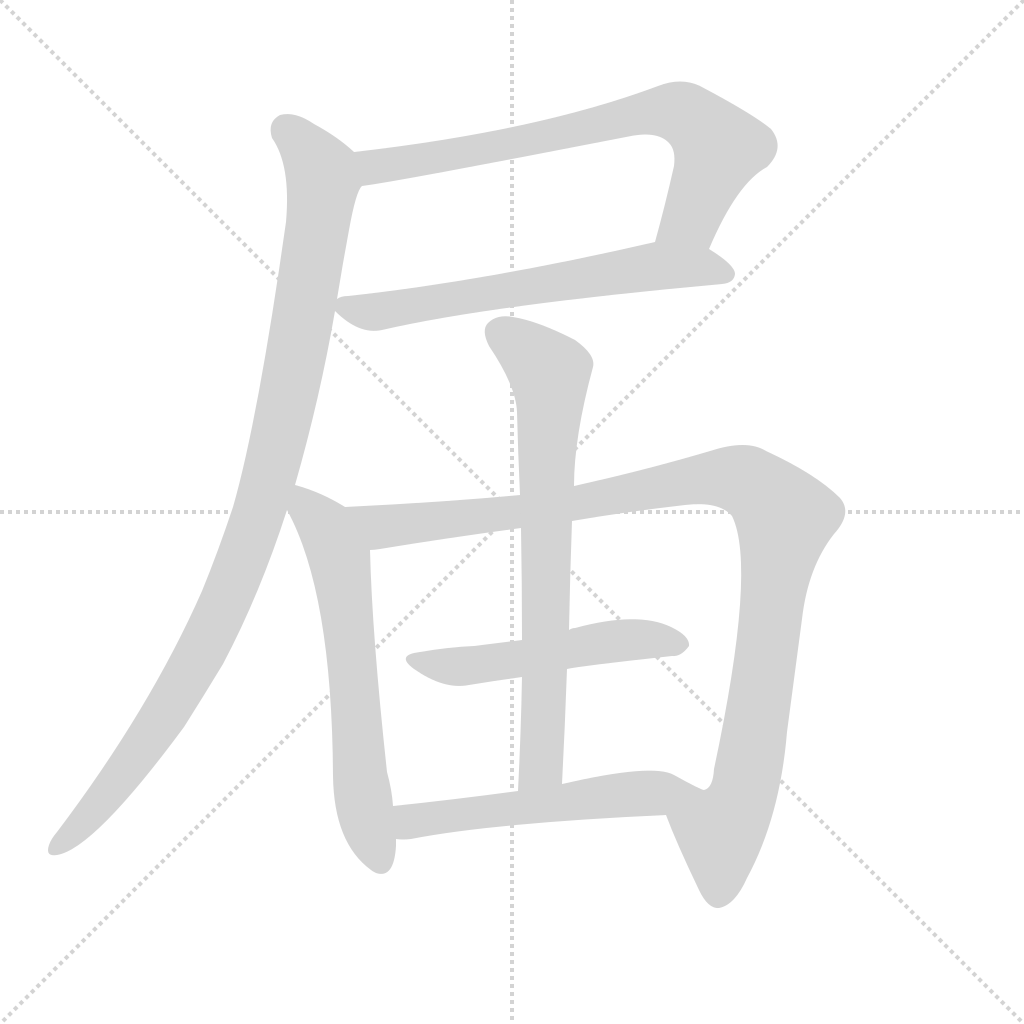
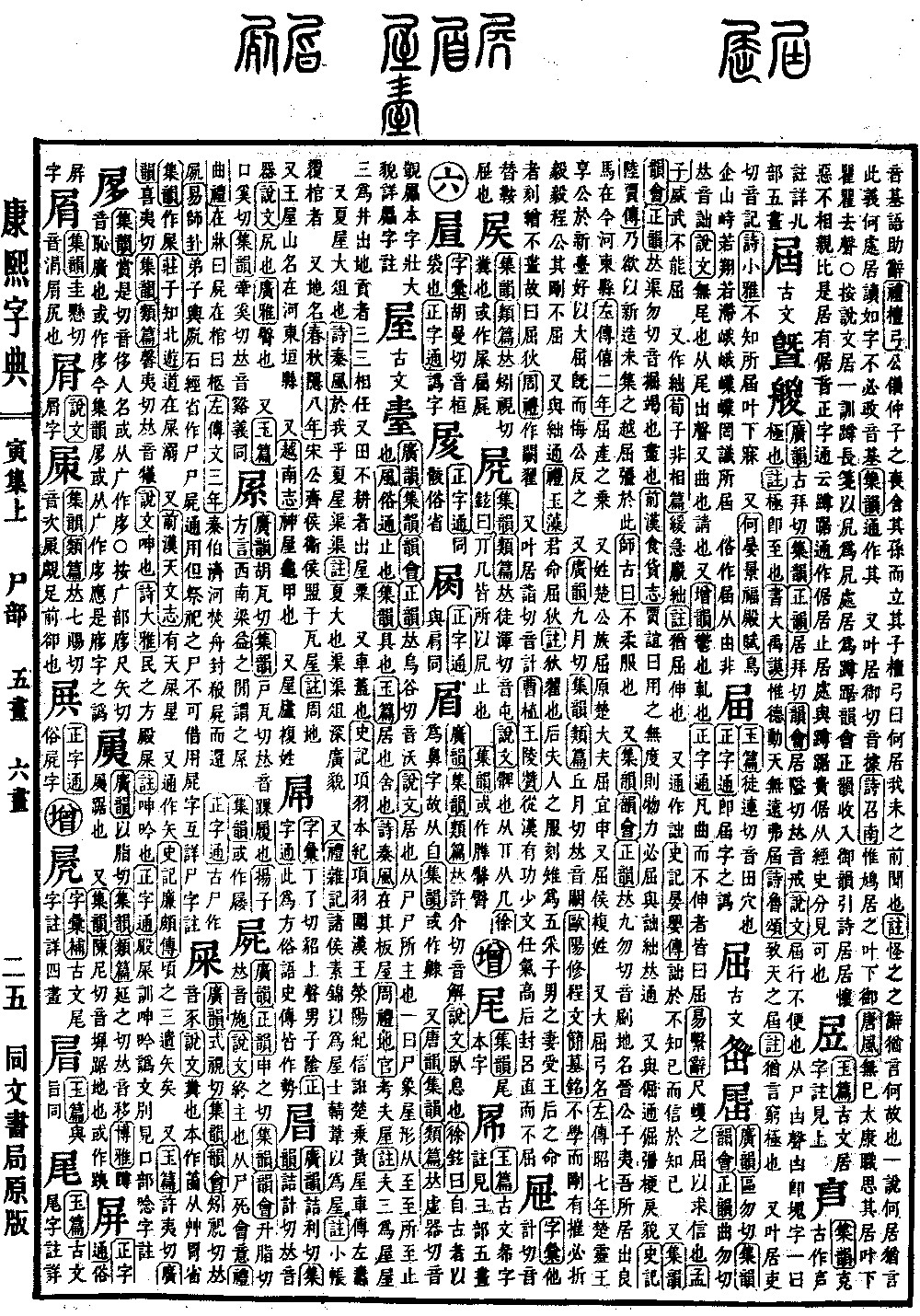
屆; Kangxi brush strokes: 8; Page 301, Entry 14
Ancient forms include jik and su.
According to the Guangyun (Guangyun), the Jiyun (Jiyun), and the Zhengyun (Zhengyun), the pronunciation is jie.
According to the Shuowen Jiezi (Shuowen), the character means walking with difficulty; it is formed from the radical for corpse with a phonetic component. It is the same as the character kuai. Another interpretation is that it means to reach the limit.
The commentary notes that the limit means to arrive at.
In the Book of Documents (Shangshu), Great Plan of Yu: Only virtue can move Heaven, there is no place too far that it cannot reach.
In the Book of Odes (Shijing), Eulogies of Lu: To reach the limit of Heaven. The commentary notes this is the same as saying to reach the extreme.
Also pronounced ji.
In the Book of Odes (Shijing), Lesser Odes of the Kingdom: Do not know where to go. This rhymes with the following mei.
In the prose poem Jingfu Hall by He Yan: Birds rising and mountains standing, as if flying and as if pausing; towering and precipitous, one does not know where they reach.
The common form is written as jie, which uses the radical you, but this is incorrect.