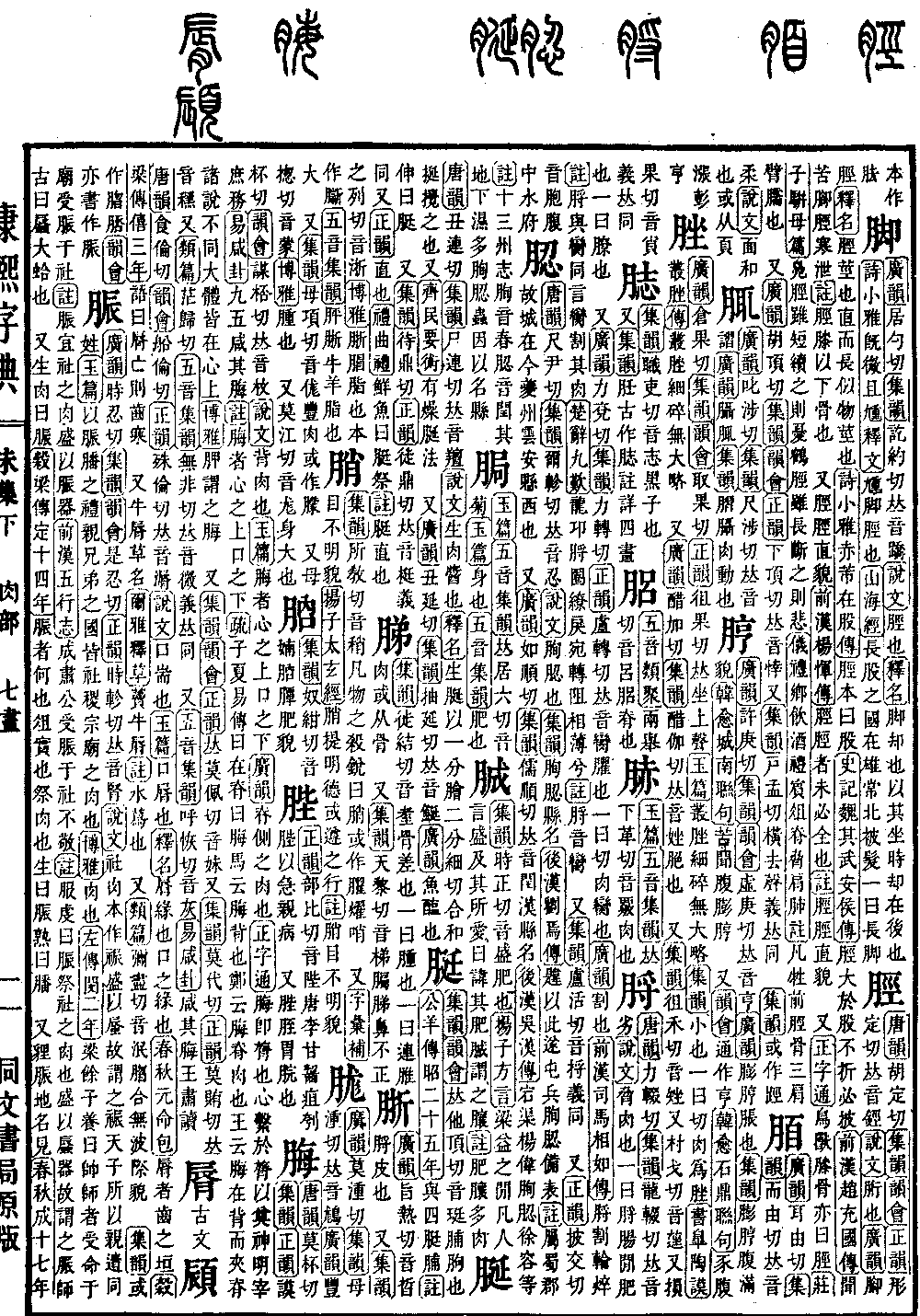
Wei Collection, Lower Volume
Radical: Meat (ròu)
脛
Kangxi Strokes: 13
Page 983, Entry 02
Pronounced xing (falling tone).
According to the Explaining Graphs and Analyzing Characters (Shuowen Jiezi), it refers to the lower leg bone. According to the Broad Rhymes (Guangyun), it refers to the shin of the leg. According to the Explaining Names (Shiming), the term xing signifies a stalk, as it is straight and long, resembling the stem of a plant. In the Book of Odes (Shijing), in the Xiaoya section, the commentary on red knee-pads worn on the thighs states that the base of the shin is called the thigh. In the Records of the Grand Historian (Shiji), the biography of Marquis Wu'an says that if the shin is larger than the thigh, it will break or split. In the History of the Former Han (Qian Hanshu), the biography of Zhao Chongguo mentions suffering from cold and diarrhea in the shins. The commentary notes that the shin is the bone below the knee.
Also, xingxing describes an upright appearance. In the History of the Former Han (Qian Hanshu), the biography of Yang Yun states that those who are overly upright may not necessarily be secure. The commentary notes that xingxing means upright.
Also, according to the Corrected Character Guide (Zhengzitong), the knee bones of birds and beasts are also called xing. In the Zhuangzi, in the chapter on Webbed Toes, it is said that although the duck's shin is short, extending it causes distress, and although the crane's shin is long, cutting it causes sorrow. In the Book of Etiquette and Ceremonial (Yili), in the commentary regarding the meat offerings for the guest, it is noted that for livestock, there are three front shin bones, including the shoulder, arm, and upper arm.
Also, pronounced xing (falling tone). Also, according to the Collected Rhymes (Jiyun), pronounced heng (departing tone). The meaning is the same. According to the Collected Rhymes (Jiyun), sometimes written in a variant form (jing).