Wei Collection, Middle Volume
Radical: Silk (mì)
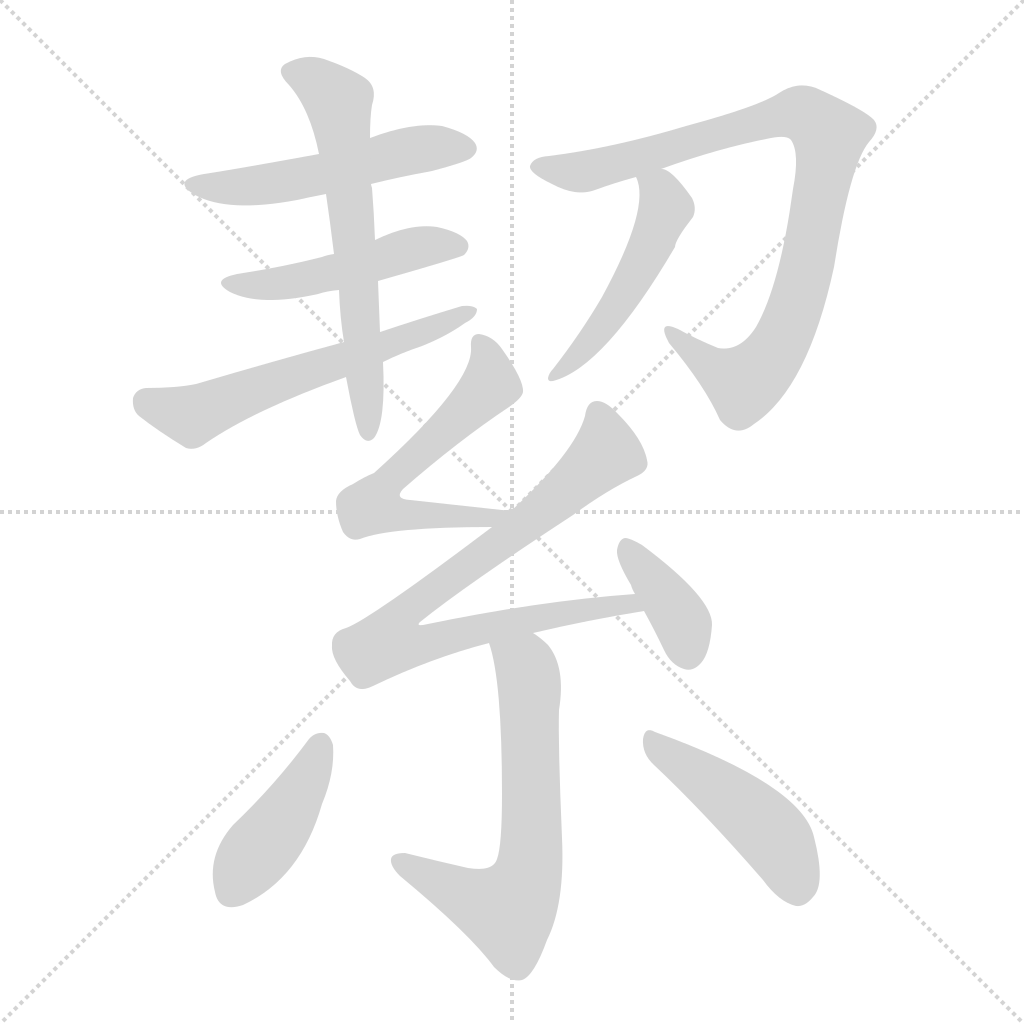
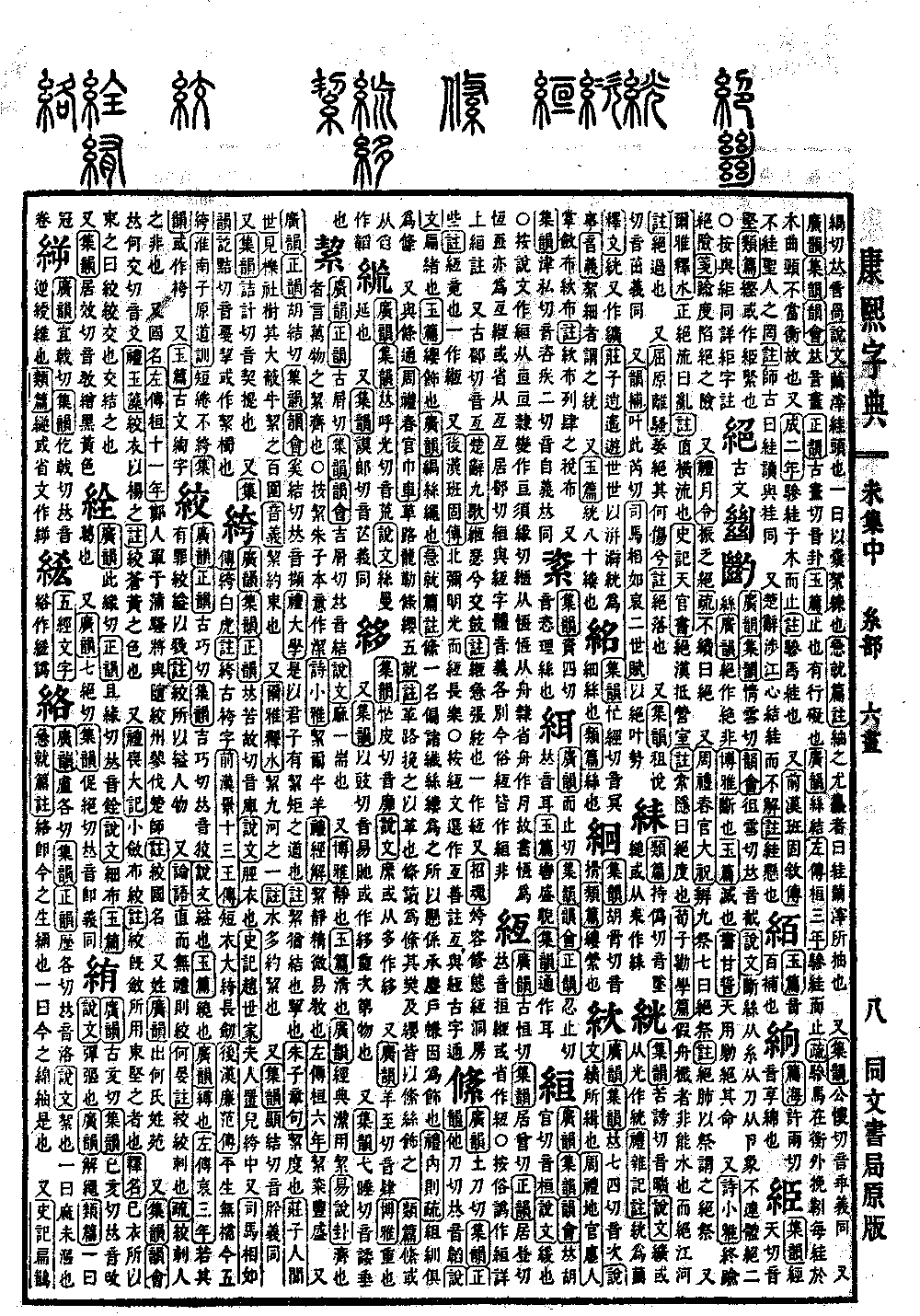
絜
Kangxi strokes: 12
Page 922, Entry 19
Pronounced jie. In the Broad Rhymes (Guangyun) and Orthodox Rhymes (Zhengyun), it is defined by the fanqie system as jie. In the Collected Rhymes (Jiyun) and Rhyme Compendium (Yunhui), it is defined as jie.
In the Explanation of Graphs and Analysis of Characters (Shuowen), it means a single bolt of hemp. In the Extensive Ruminations (Boya), it means quiet. In the Jade Chapters (Yupian), it means pure. The Broad Rhymes notes that in the classics, the form jie is used for the form meaning clean.
In the Book of Changes (Yijing), Discussion of the Trigrams section, it says: Those referred to as orderly are described as the purity and order of all things. Note: regarding this passage, in the Collected Commentaries of Master Zhu (Zhuzi Benyi), it is written as clean.
In the Book of Odes (Shijing), Lesser Odes section: Purify your oxen and sheep.
In the Book of Rites (Liji), Classics Explained section: The pure, the quiet, the refined, and the subtle are the easy to teach.
In the Zuo Tradition (Zuo Zhuan), Sixth Year of Duke Huan: Pure offerings of grain and abundant sacrifices.
Also, in the Broad Rhymes and Orthodox Rhymes, it is defined by the fanqie system as xie. In the Collected Rhymes and Rhyme Compendium, it is defined as xie.
In the Book of Rites (Liji), Great Learning section: Therefore, the gentleman possesses the way of the measuring square (jieju). The commentary notes: Jie means to bind, or to carry. In Master Zhu’s Commentaries (Zhuzi Zhangju), it means to measure.
In the Zhuangzi, In the World of Men section: He saw the sacred oak tree, its size large enough to cover an ox; measured (jie) around, it was a hundred spans. The Sounds and Meanings (Yinyi) notes: Jie means to bind or restrain.
In the Literary Expositor (Erya), Explanation of Water section, Jie is the name of one of the Nine Rivers. The commentary notes: It refers to water that is much restrained and bound.
In the Collected Rhymes, pronounced xi. The meaning is the same.
In the Collected Rhymes, pronounced qi. It means to lift or carry.
In the Collected Rhymes, pronounced jia. The character qie (meaning to carry) is sometimes written as the variant form jie.
Correction: In the note regarding Master Zhu’s commentary, the original text used the word meaning intent, which has been corrected to the word meaning original commentary in accordance with the source text.