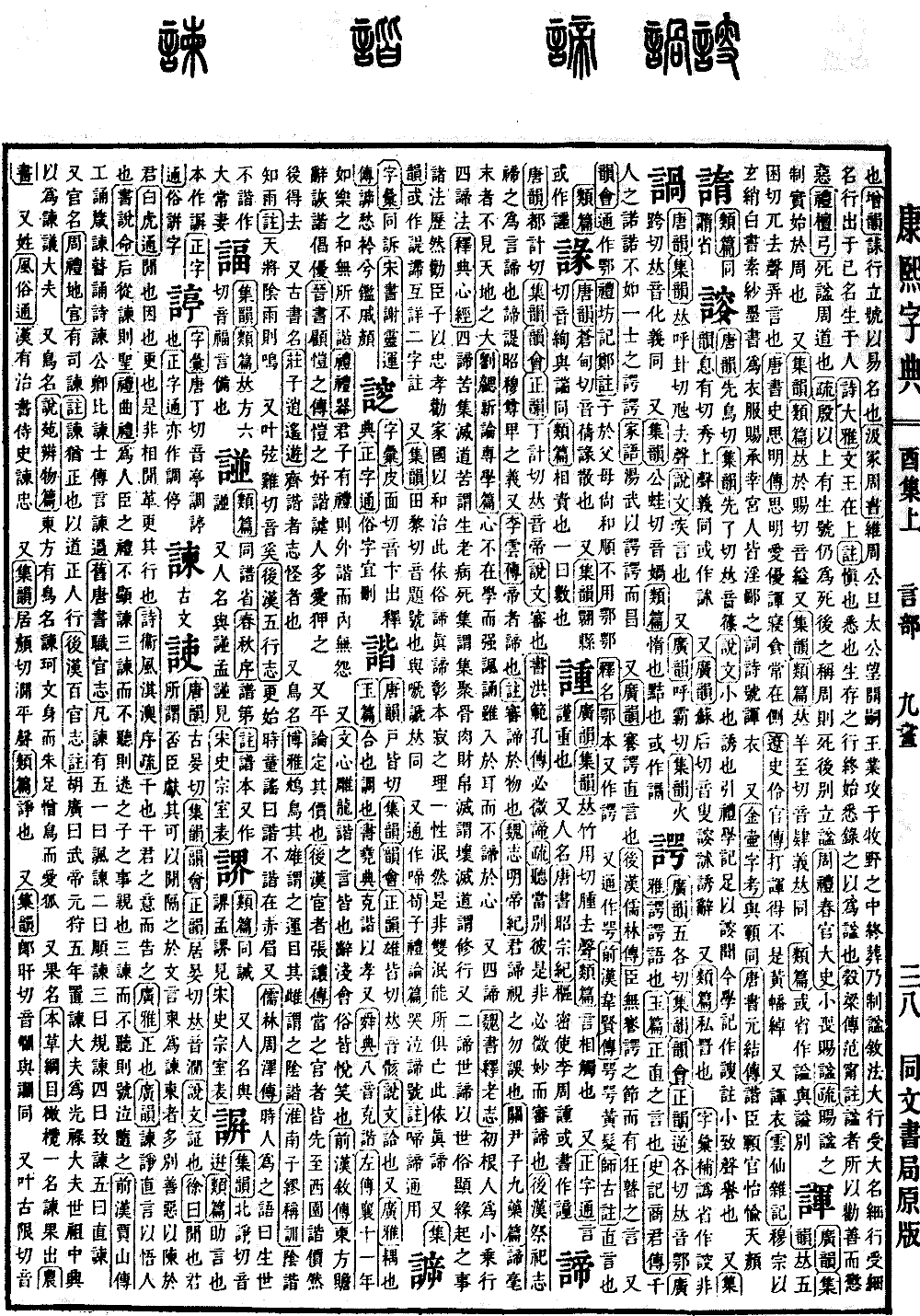
You Collection, Upper Volume
Radical: Speech (yán)
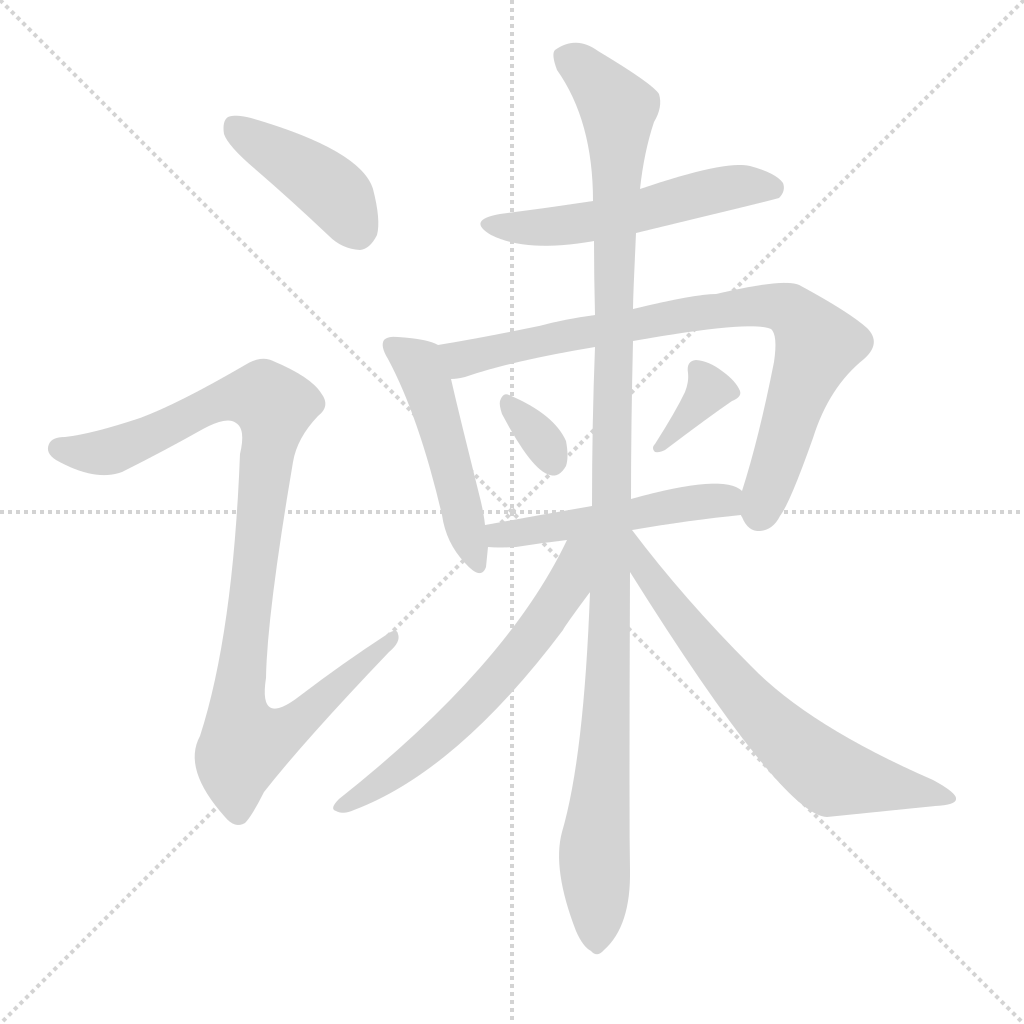
谏
Kangxi Stroke Count: 16
Page 1170, Entry 01
Ancient character. According to Tang Rhymes (Tangyun), pronounced jian (falling tone). According to Collected Rhymes (Jiyun), Rhyme Compilation (Yunhui), and Orthodox Rhymes (Zhengyun), pronounced jian (falling tone).
According to Explaining Graphs and Analyzing Characters (Shuowen), it means to remonstrate. Xu states: It means to separate or intervene. When the ruler says no, the minister offers what is right to intervene; thus, the character is composed of speech and select, meaning to remonstrate. To select means to distinguish between good and evil and present it to the ruler.
According to Comprehensive Discussions in the White Tiger Hall (Baihu tong), it means to intervene, to rely on, to change. It is to let right and wrong intervene to reform conduct.
According to the sub-commentary to the Preface to the Odes of Wei (Shijing), it means to press. It means to press against the ruler's intent and inform him.
According to the Broad Dictionary of Matters (Guangya), it means to correct.
According to the Broad Rhymes (Guangyun), to remonstrate or dispute, to use direct speech to enlighten others.
Book of Documents (Shangshu), chapter "Charge to Yue": If the sovereign follows remonstrance, he becomes sagely.
Book of Rites (Liji), chapter "Summary of the Rules of Propriety": The duty of a minister is not to remonstrate openly; if he remonstrates three times without being heard, he should withdraw. A son serving his parents, if he remonstrates three times without being heard, should weep and follow them.
History of the Former Han (Qian Hanshu), Biography of Jia Shan: Craftsmen recite admonitions and remonstrances, blind musicians recite poetry to remonstrate, the nobility compare their remonstrances, and scholars convey their criticisms.
Old Book of Tang (Jiu Tangshu), Treatise on Official Posts: There are five types of remonstrance: first, indirect remonstrance; second, agreeable remonstrance; third, regulatory remonstrance; fourth, effective remonstrance; and fifth, direct remonstrance.
Also a title of an official. Rites of Zhou (Zhouli), Earth Offices: Includes the official for remonstrance. The commentary states: Remonstrance means to correct; to use the Dao to correct the conduct of others.
Notes to the Treatise on Officials in the History of the Later Han (Hou Hanshu): Hu Guang stated: In the fifth year of the Yuanshou era of Emperor Wu, the position of remonstrance grand master was established as a light-official grand master. When Emperor Guangwu restored the dynasty, it became a remonstrance advisor grand master.
Also the name of a bird. Garden of Stories (Shuoyuan), Chapter on Distinguishing Things: In the east, there is a bird named jianke, with patterned body and red feet, that hates birds but loves foxes.
Also the name of a fruit. Compendium of Materia Medica (Bencao Gangmu): The olive is also called the remonstrance fruit, as cited in the Agricultural Treatise (Nongshu).
Also a surname. Customs and Traditions (Fengsu Tong): During the Han dynasty, there was an Imperial Secretary named Jian Zhong.
According to Collected Rhymes (Jiyun), pronounced jian (level tone). According to Categorized Collection (Leipian), to dispute.
According to Collected Rhymes (Jiyun), pronounced lan (falling tone). Same as the variant form (lan).
Also rhymes with jian (rising tone). Book of Odes (Shijing), Great Odes: The King wishes to treasure you, and thus gives great remonstrance.
Also rhymes with jian (falling tone). Que Zheng, Explication of Criticism: Like someone in the market, or a wandering child chanting at the field boundaries, hoping to increase blessings and offer effort through regulatory remonstrance.
The common practice of writing it with a component for east is incorrect. The character pronounced deng means many words.