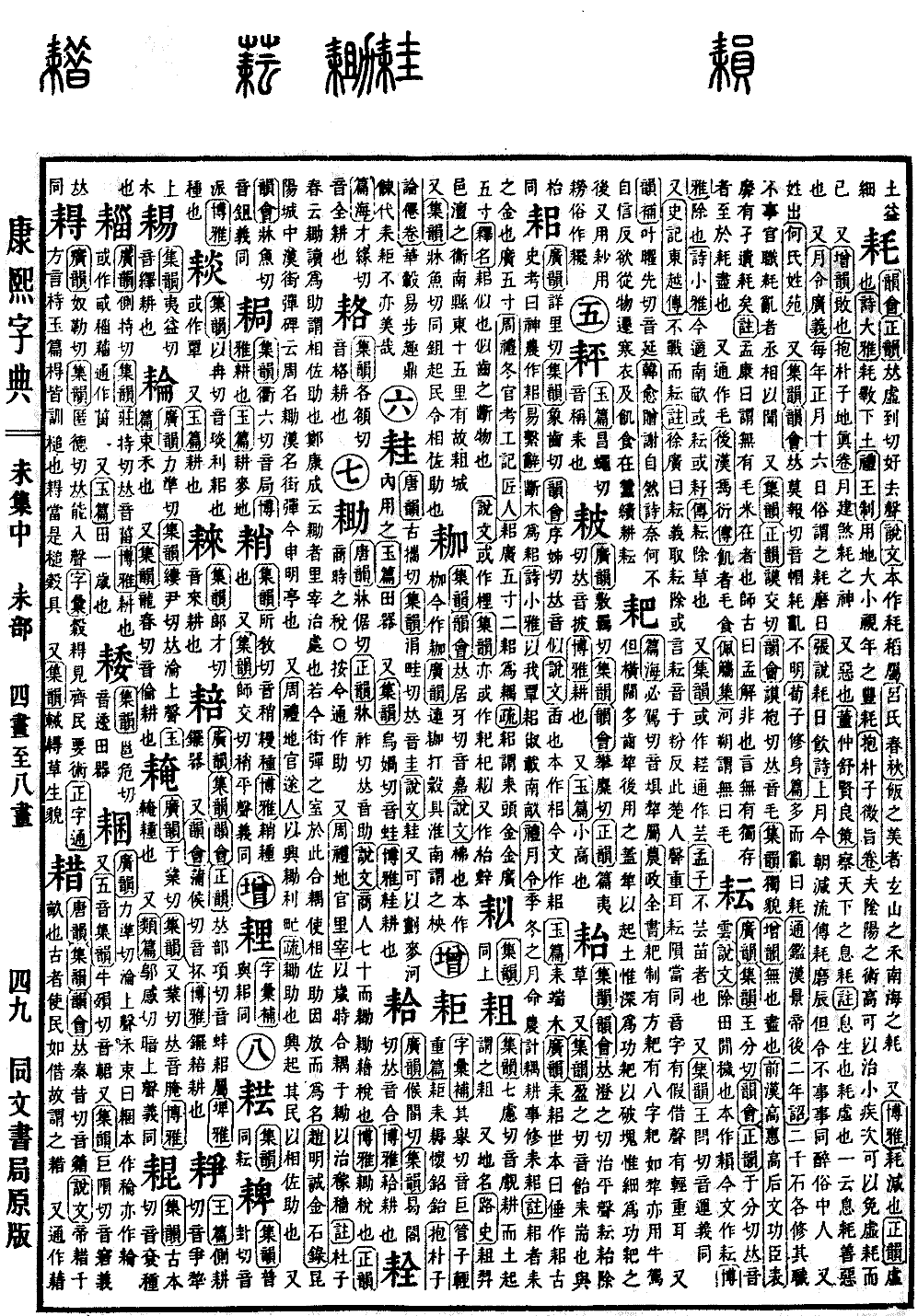
Wei Collection, Middle Volume
Radical: Plow (lěi)
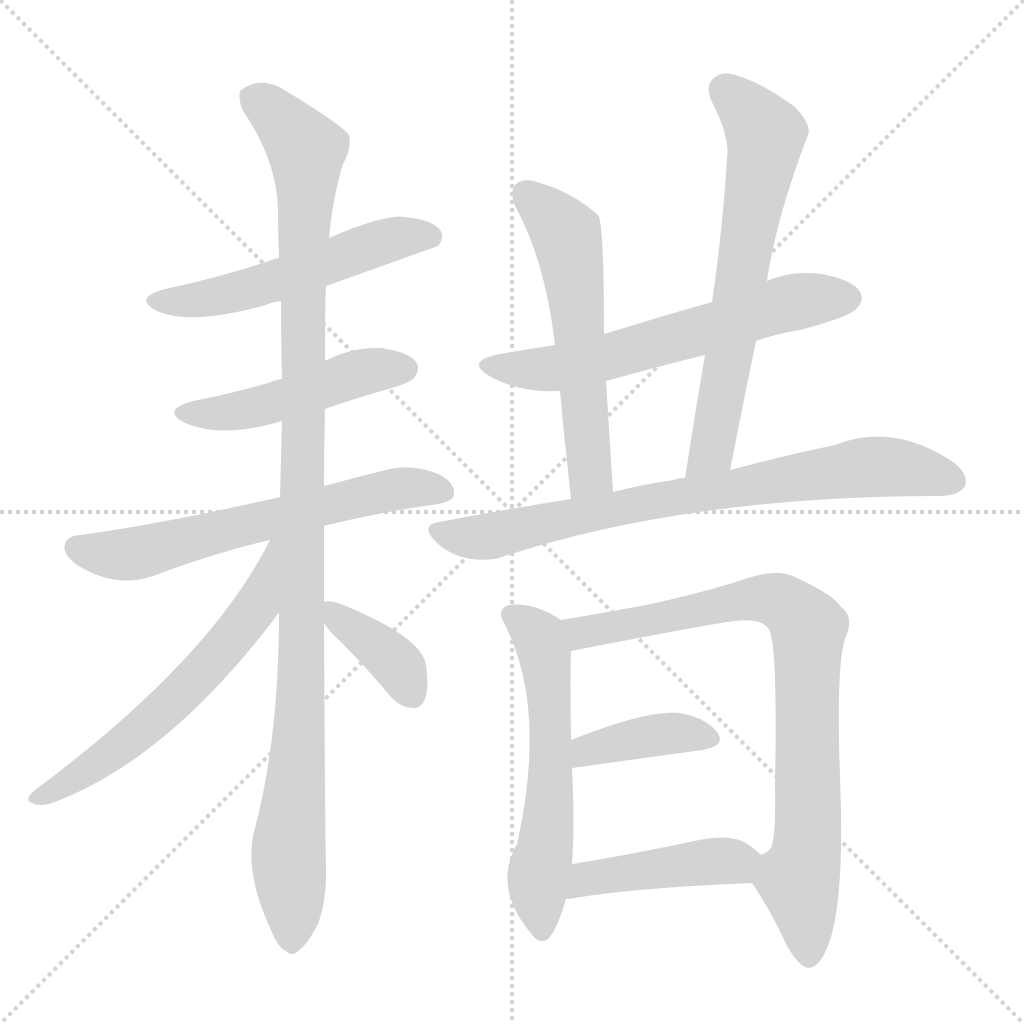
Jie
Kangxi Strokes: 14
Page 963, Entry 34
Tang Dynasty Rhymes (Tangyun), Collected Rhymes (Jiyun), and Collection of Rhymes (Yunhui) state it is pronounced jie.
According to Explaining Graphs and Analyzing Characters (Shuowen), it refers to the emperor cultivating one thousand mu of land. In ancient times, the employment of commoners was treated as a loan, hence the term for this practice. It is also used interchangeably with the character for mat or to borrow (jie).
In the Rites of Zhou (Zhouli), Heaven's Officials section, under the Minister of Fields (Dianshi): "Directing their subordinates to plow and weed the royal fields."
In the History of the Former Han (Qian Hanshu), Annals of Emperor Wen: "Open the royal fields." The commentary by Chen Zan states: Personal cultivation signifies setting a personal example; it cannot be defined merely as a borrowing. The character here refers to treading upon or pressing down. It also signifies to borrow.
In the History of the Former Han (Qian Hanshu), Biography of Guo Jie: "Driving away and oppressing the friends of his enemies."
Supplementary Collection of Characters (Zihui bu) notes: This character is the ancient form of the character for mat or to borrow; it is not limited to royal fields and the terms can be used interchangeably.
Also, according to Collected Rhymes (Jiyun), it is pronounced xie. It refers to sacrificial offerings in the fields. It is identical to the character for mat or to borrow.