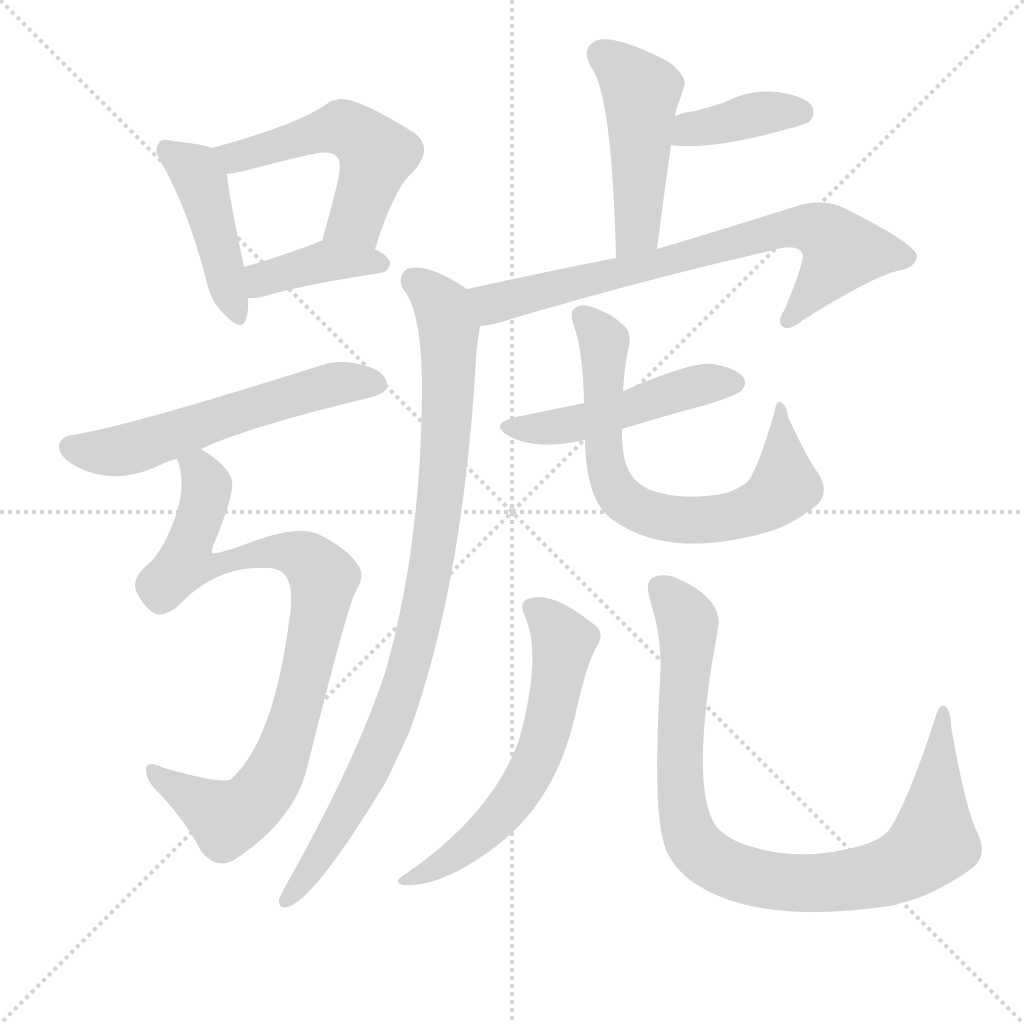
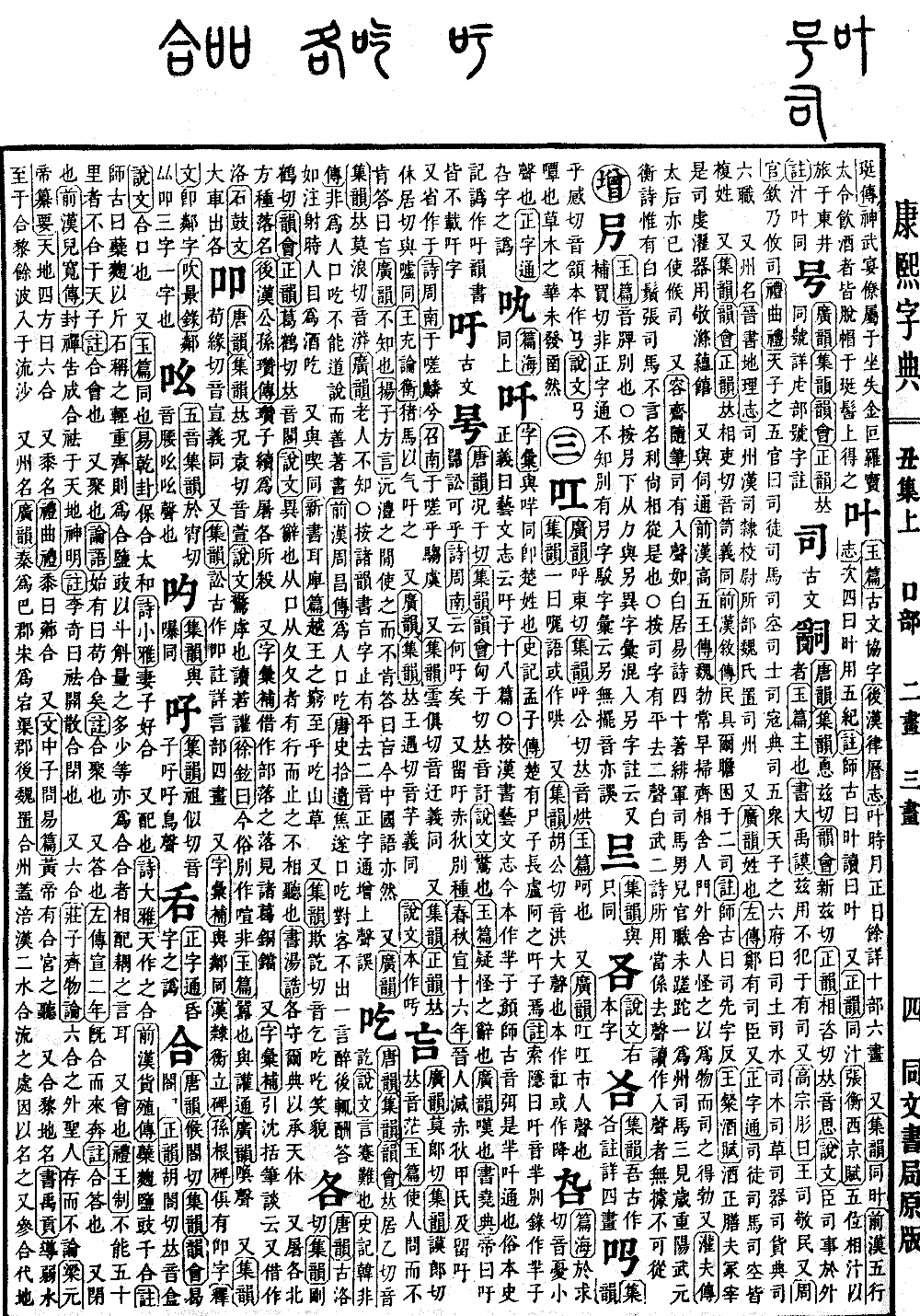
Shen Collection, Middle Volume
Radical: Tiger (hǔ)
Page 174, Entry 02
Kangxi strokes: 13
Pronounced hao
To shout loudly. Book of Odes (Shijing): To shout and to cry out. Book of Odes (Shijing): Then shouting and then clamoring. Commentary: Shouting and clamoring means to cry out loudly.
Also refers to wailing. Book of Changes (Yijing): First wailing and crying, then laughing. Discourses of the States (Guoyu): The husband and wife felt such sorrow and pain at the nighttime wailing that they took him and fled to the state of Bao.
Also refers to a rooster crowing. History of Jin (Jinshu): The rooster crows for the third time.
Pronounced hao (falling tone)
A name or title. Gongyang Commentary (Gongyang Zhuan): During the Spring and Autumn period, there was no avoidance of using the same titles for the noble and the base. Annotation: Referring to titles shared in common. Comprehensive Discussions in the White Tiger Hall (Baihu Tong): The Spring and Autumn Annals (Chunqiu) states: A monarch receives the mandate from Heaven and must select a virtuous title from the world to serve as his designation. Rites of Zhou (Zhouli): Responsible for distinguishing the six types of titles. Annotation: A title refers to honoring a name and adopting a more beautiful designation. Rites of Zhou (Zhouli): Clans are identified by titles. Annotation: Administrative units like townships are called names, while family lineages are called titles. Rites of Zhou (Zhouli): Proclaiming the title. Annotation: Referring to posthumous titles.
Also refers to orders or commands. Book of Changes (Yijing): Like a great command issued to relieve distress.
Also refers to a summons. Discourses of Qi (Qiyu): Sending him to travel the four directions to summon the talented men of the world.
Also rhymes with gou. Pi Rixiu: Facing the vast, undulating waves of the Miluo River, I recall the profound sorrows of Qu Yuan who carried sand and drowned himself. The forests are thick and intertwined, and from time to time, monkeys leap and call to one another.
Collected Rimes (Jiyun): Originally written as the character composed of mouth and kao, though vulgar versions use the component found in the present entry, which is incorrect. Also written in a variant form (hao). The character for the present entry is based on the standard form.