You Collection, Upper Volume
Radical: Speech (yán)
Kangxi Strokes: 13
Page 1158, Entry 01
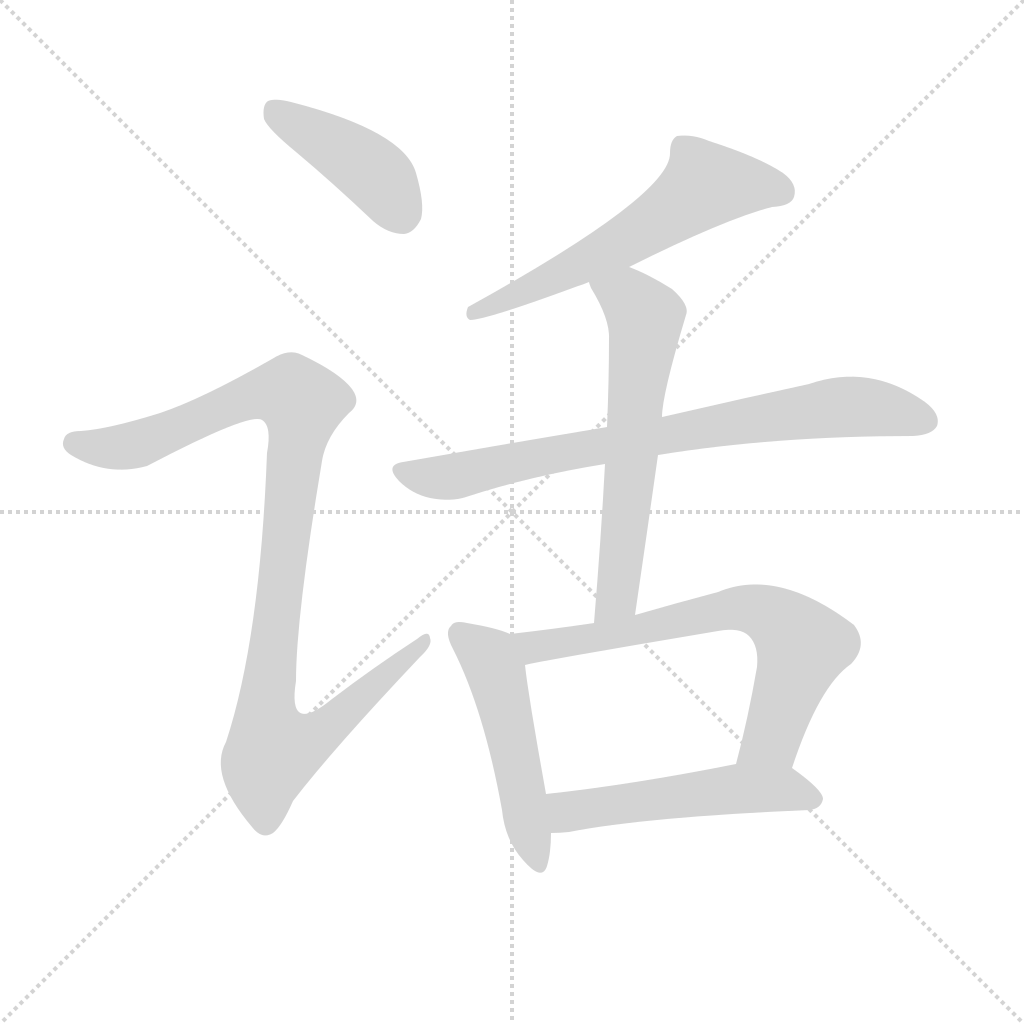
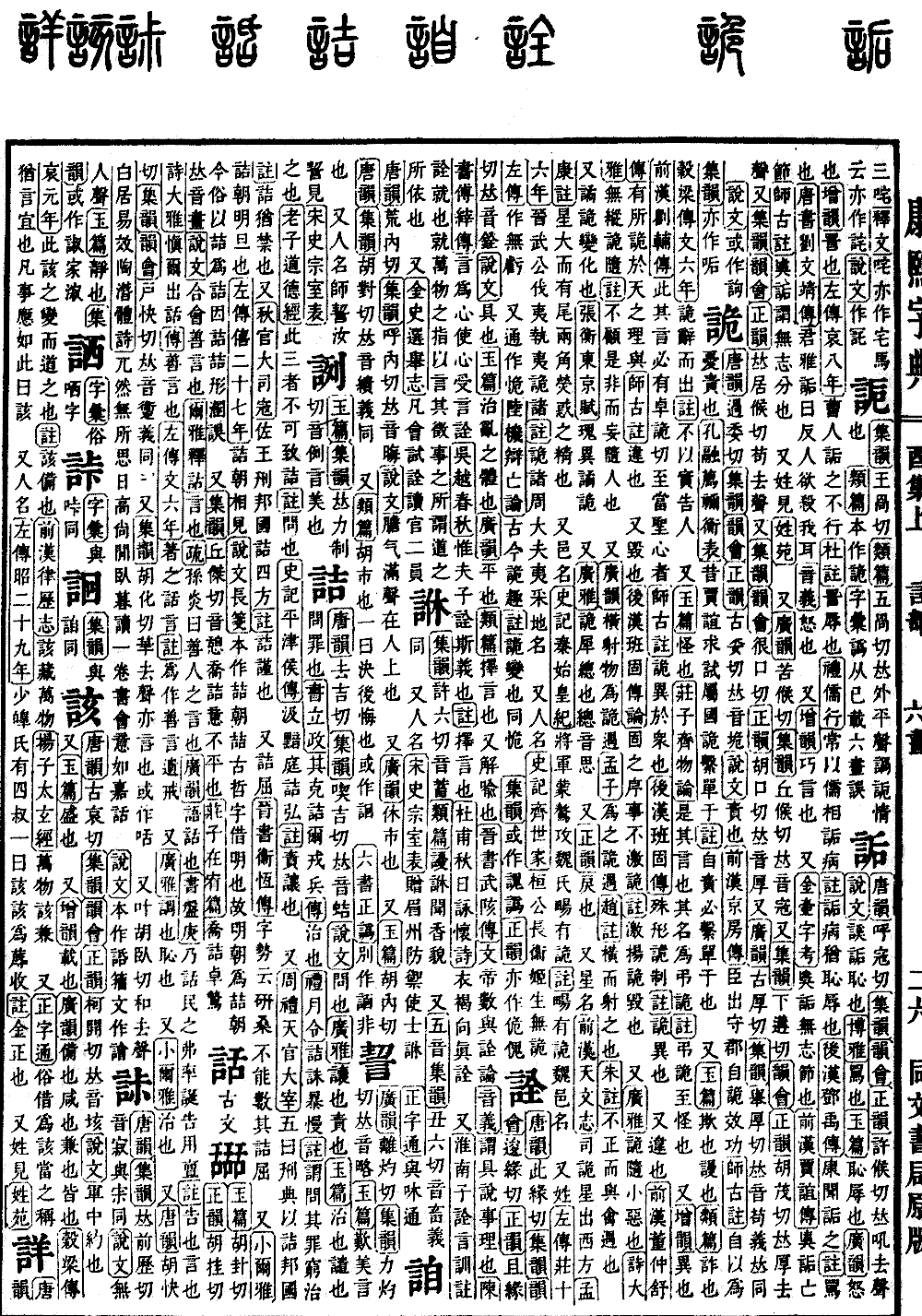
In ancient texts: Jade Chapter (Yupian) reads huà; Correct Rhymes (Zhengyun) reads huà, pronounced huà. According to the Analytical Dictionary of Chinese Characters (Shuowen Jiezi), it means the harmonious assembly of good words. In the Progress of Glosses (Erya Shigǔ), it is defined as speech. The commentary by Sun Yan says it refers to the words of a virtuous person. In the Extended Rhymes (Guangyun), it means conversation. In the Book of Documents (Shujing), specifically the Pan Geng chapter, it says, Speak to the people who do not follow, proclaim and use the truth. The annotation says this means to proclaim or to speak. In the Book of Odes (Shijing), Great Odes, it says, Be cautious in the words you utter. The commentary states this means good words. In the Zuo Tradition (Zuo Zhuan), sixth year of Duke Wen, it says, Record it as worthy words. The annotation says this means to compose good words as a legacy or warning. Also, in the Refined Glosses (Guangya), it means to adjust or to bring shame. Furthermore, in the Little Erya (Xiao Erya), it means to govern. Additionally, in the Tang Rhymes (Tangyun), it is pronounced huài; in the Collected Rhymes (Jiyun) and the Rhyme Compendium (Yunhui), it is also pronounced huài, with the same meaning. Also, according to the Collected Rhymes (Jiyun), it is pronounced huà, with the falling tone, which also means to speak. Sometimes written in a variant form (tián). Also, in rhyme with wò, pronounced hé with a falling tone. In a poem by Bai Juyi imitating the style of Tao Qian, it says, Sitting still with nothing on my mind, the sun is high and I still lie at leisure. At dusk I read a scroll of books, understanding the meaning as if it were a fine conversation. In the Analytical Dictionary of Chinese Characters (Shuowen Jiezi), the original form is written with the character for tongue. The Great Seal script (zhòuwén) variant is written as huì.