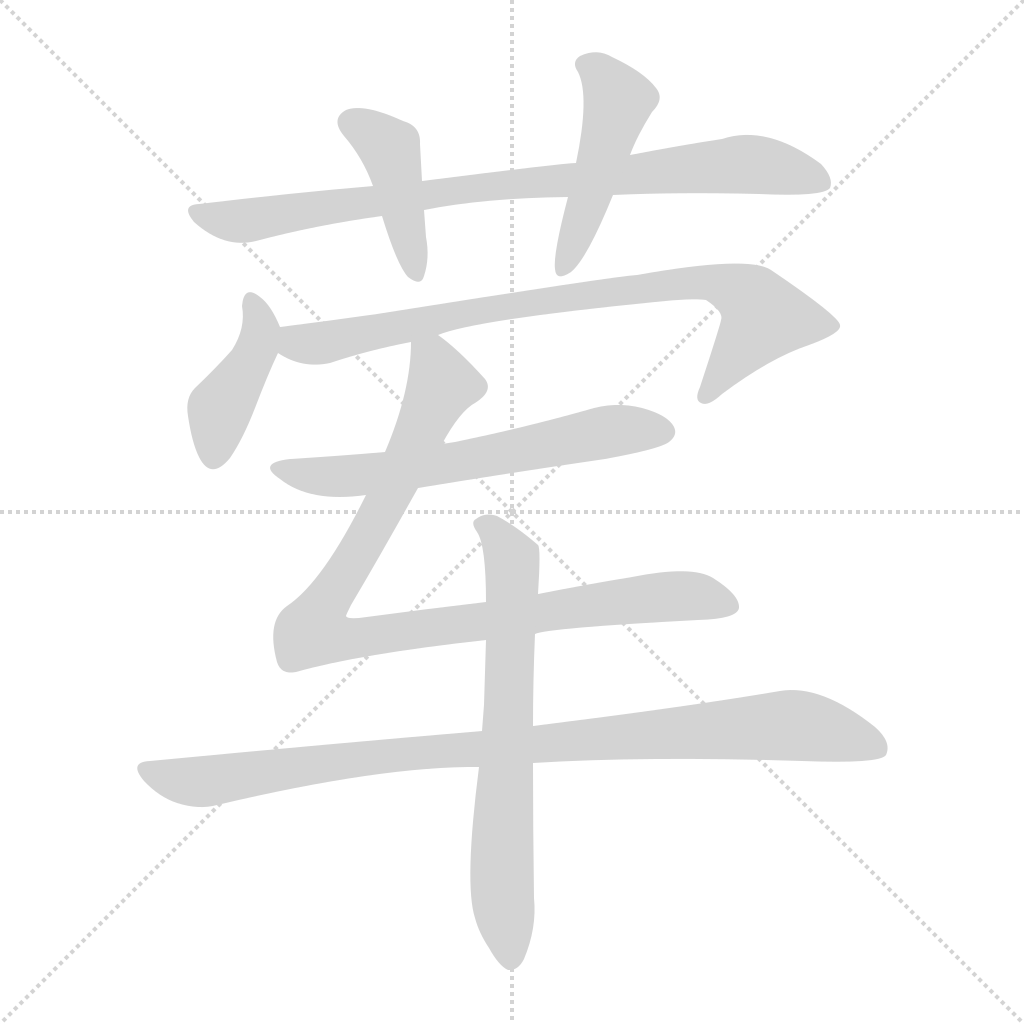
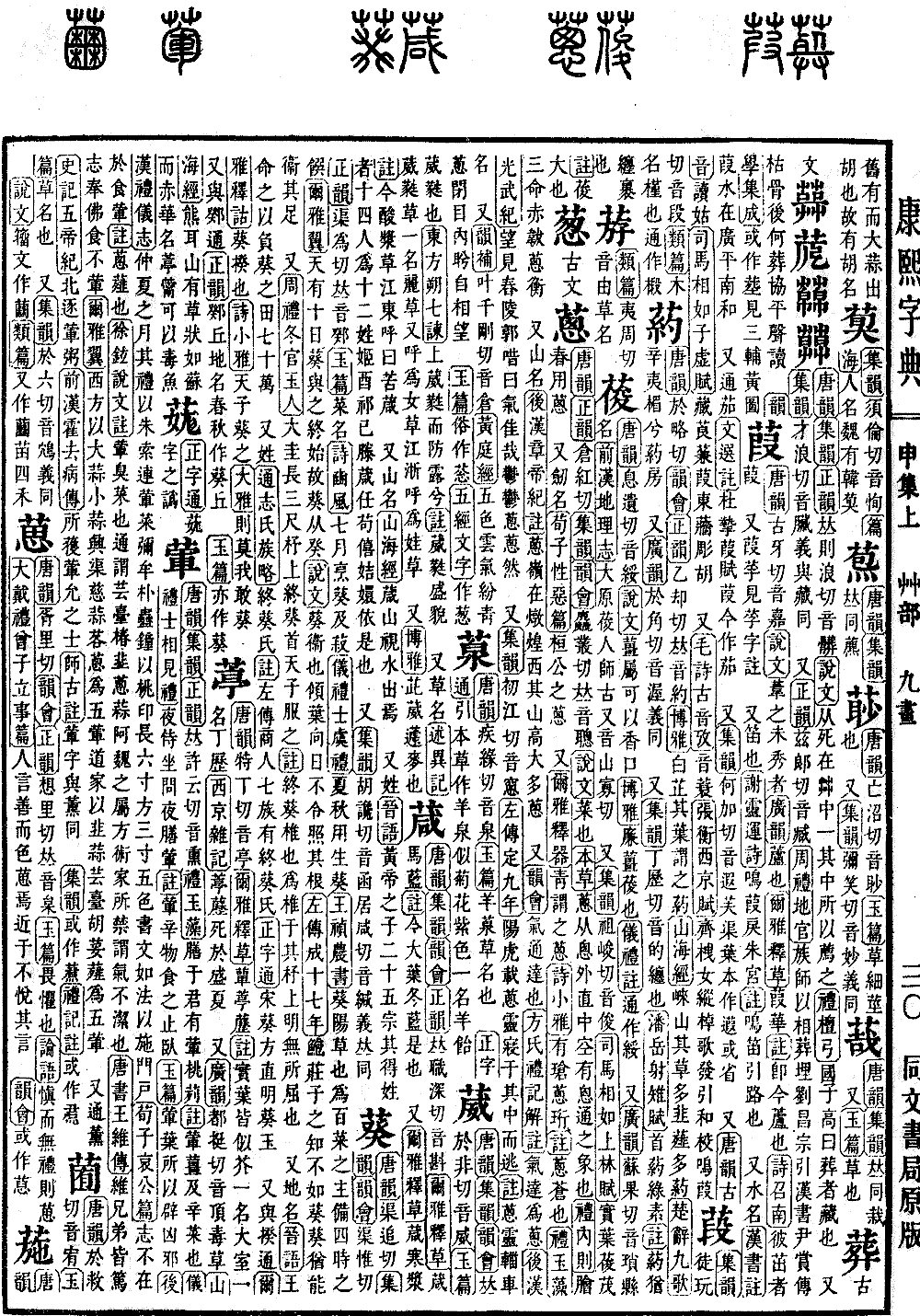
Shen Collection, Upper Volume
Radical: Grass (cǎo)
Hun; Kangxi strokes: 15; Page 1046
Pronounced xūn (level tone)
Book of Rites (Liji), section Jade Decorations (Yuzao): When providing meals to the ruler, one includes pungent vegetables and peach-wood whisking branches. Commentary: Pungent vegetables refers to ginger and sharp-tasting greens.
Book of Etiquette and Ceremonial (Yili), section Scholar’s Social Etiquette (Shixiangjianli): When attending at night, ask about the nocturnal meal of pungent vegetables. Commentary: Pungent vegetables are spicy, aromatic foods that, when consumed, help one avoid drowsiness.
Jade Chapters (Yupian): Leaves of pungent vegetables are used to ward off evil and pestilence.
Book of the Later Han (Houhanshu), Treatise on Rituals and Ceremonies: In the middle of summer, the ritual involves using red cords to bind pungent vegetables, beating drums, and using peach-wood seals six inches long and three inches square, inscribed with five-colored patterns according to prescribed methods, which are then applied to gateways.
Xunzi, section Duke Ai (Aigong): The intent is not on eating pungent foods. Commentary: This refers to scallions and rakkyo.
Xu Xuan’s commentary on the Explaining Graphs and Analyzing Characters (Shuowen Jiezi): Pungent vegetables are plants with strong odors, commonly known as rape, toon, chives, scallions, garlic, and asafoetida. Practitioners of occult arts consider them taboo, believing their odor is impure.
Book of Tang (Tangshu), Biography of Wang Wei: Wang Wei and his brothers were all devout followers of Buddhism and abstained from eating pungent foods.
Wings of the Erya (Eryayi): In the West, the five pungent foods are great garlic, small garlic, asafoetida, mountain garlic, and wild onions. Taoists consider the five pungent foods to be chives, garlic, rape, coriander, and rakkyo.
Also used interchangeably with xūn (scent/smoke).
Records of the Grand Historian (Shiji), Annals of the Five Emperors: Expelled the Hunzhou to the north.
Book of the Former Han (Hanshu), Biography of Huo Qubing: Personally led the captured soldiers of the Hunyun. Commentary by Yan Shigu: The character hun is synonymous with xūn.
Collection of Rhymes (Jiyun): Sometimes written as xūn.
Commentary on the Book of Rites (Liji Zhu): Sometimes written as xūn.
Textual Research: In the Book of the Former Han, Biography of Huo Qubing, the text reads personally led the captured Hunyun soldiers. In accordance with the original text, the words personally led have been added to the passage.