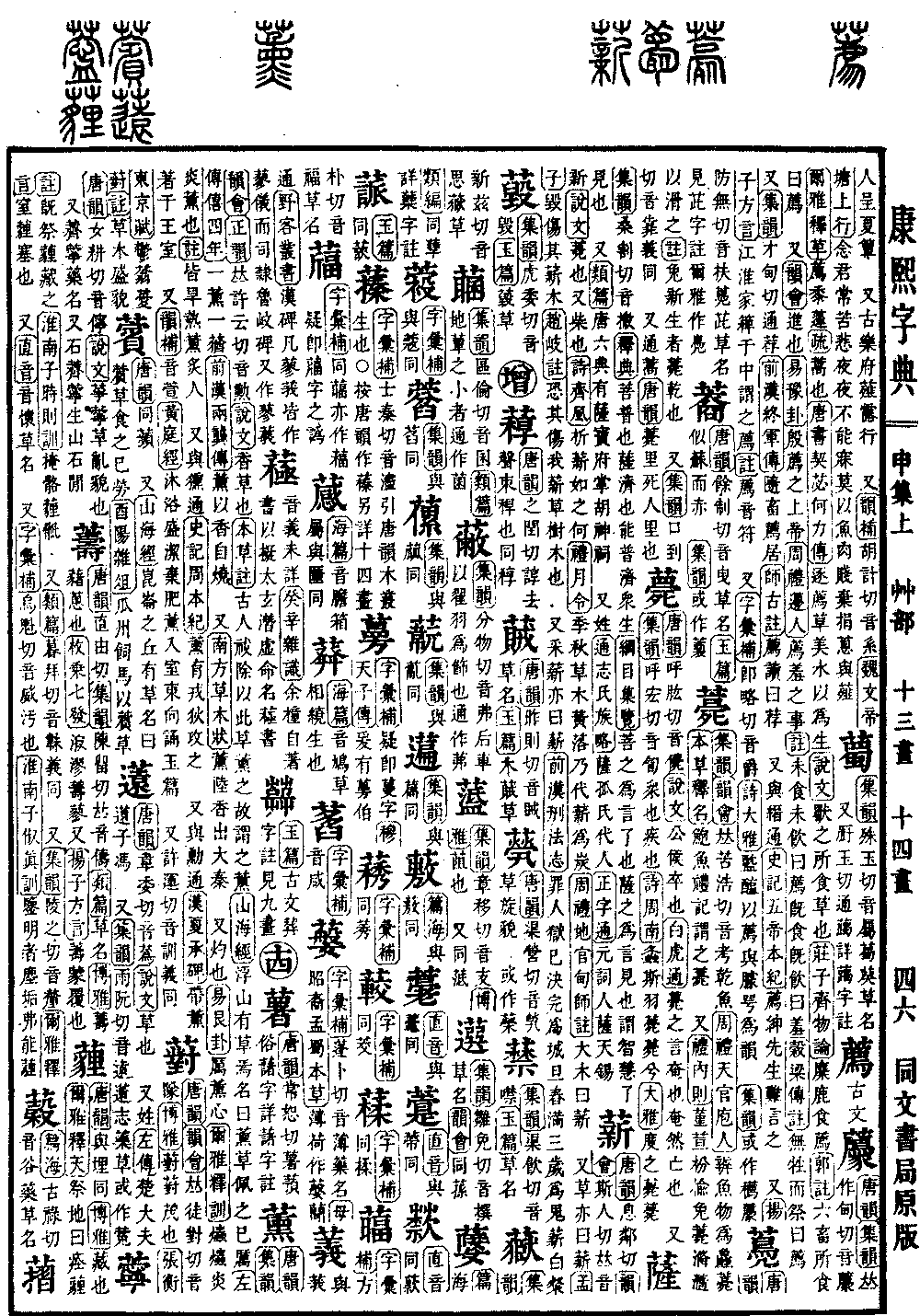
Shen Collection, Upper Volume
Radical: Grass (cǎo)
薰
Kangxi stroke count: 20
Page 1062, Entry 46
Tang Rhyme (Tangyun), Collected Rhymes (Jiyun), Rhyme Meetings (Yunhui), Correct Rhymes (Zhengyun): Pronounced xun (level tone).
According to the Explanation of Simple and Compound Characters (Shuowen): A fragrant herb.
According to the Materia Medica Commentary (Bencao Zhu): In ancient times, when performing rituals to ward off disasters, people used this herb to fumigate their bodies, hence the name xun.
Classic of Mountains and Seas (Shanhaijing): On Floating Mountain, there grows an herb called xun grass; wearing it can cure epidemic diseases.
Zuo Tradition (Zuo Zhuan), Fourth Year of Duke Xi: Fragrant herbs and foul weeds are mixed together.
History of the Former Han (Qian Han Shu), Biographies of the Two Gongs: The xun grass is burned because of its fragrance.
Also, Southern Plants and Trees (Nanfang Caomu Zhuang): Xunlu incense originates from the Great Qin state.
Also means to scorch or roast.
Book of Changes (Yijing), Gen Hexagram: The danger is as if scorching one's heart.
Literary Expositor (Erya), Explanation of Teachings (Shixun): Intense heat is called xun.
Commentary: This refers to dry, hot weather that scorches people.
Also used interchangeably with xun.
Records of the Grand Historian (Shiji), Annals of Zhou: The Xunyu, the northern nomadic tribes, came to attack.
Also used interchangeably with xun (merit).
Han Dynasty, Stele of Xia Cheng: Merits are displayed clearly in the royal court.
Also, Rhyme Supplements (Yunbu): Pronounced xuan (level tone).
Yellow Court Scripture (Huangtingjing): Bathe and purify, abstain from fatty foods and strong-smelling vegetables, enter the chamber, and face east to recite the Jade Chapters.
Also pronounced xun (falling-rising tone). The meaning remains the same.
Verification:
In the Stele of Xia Cheng, the text says the merits were displayed in the royal court. The original text has been corrected accordingly.