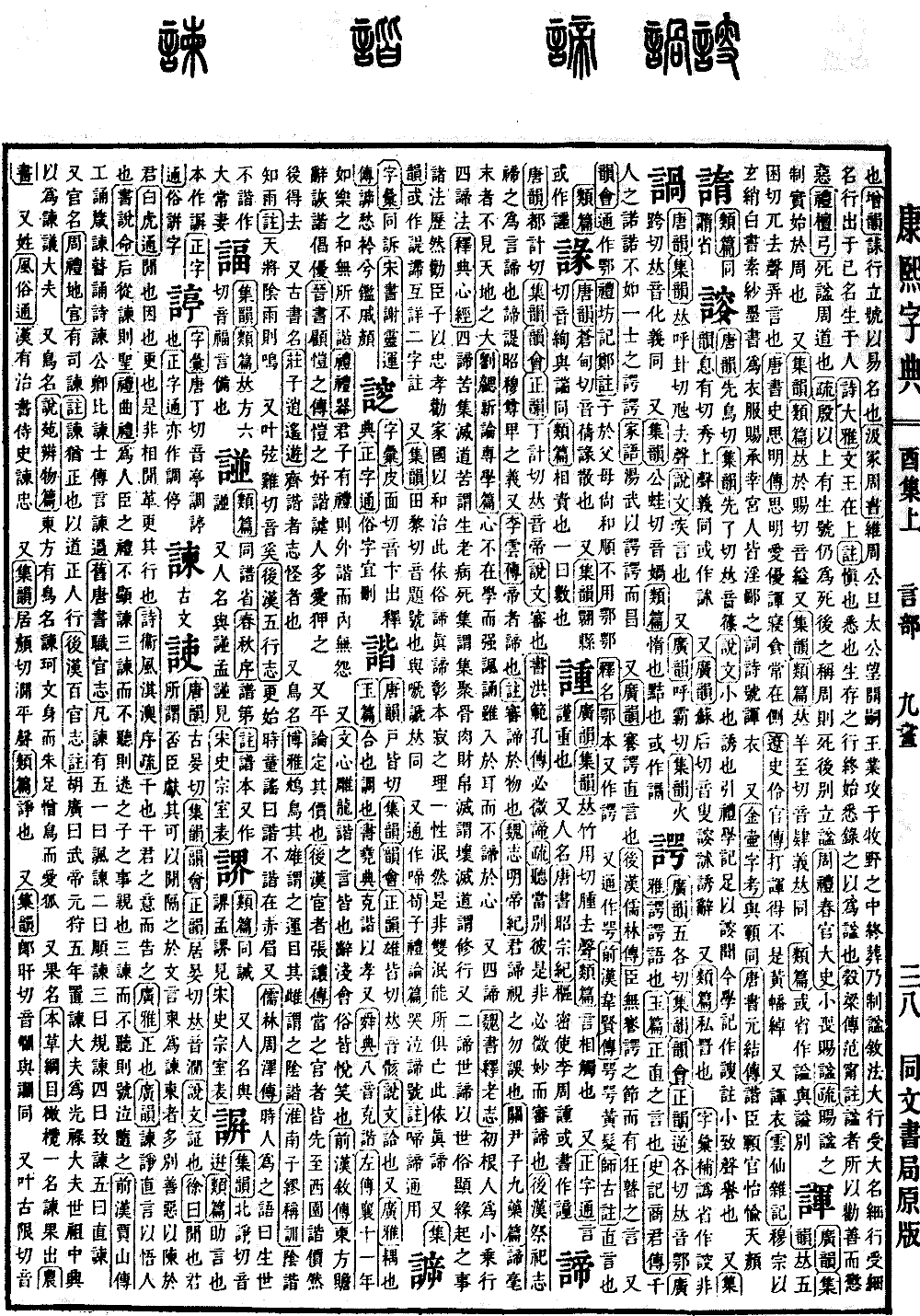
You Collection, Upper Volume
Radical: Speech (yán)
Entry: hun
Kangxi stroke count: 16
Page 1170, Entry 14
According to the Extensive Rhymes (Guangyun) and the Collected Rhymes (Jiyun), it is pronounced kun (falling tone).
It refers to joking or jesting words.
According to the History of the Tang Dynasty (Tangshu), Biography of Shi Siming: Shi Siming favored people who performed and told jokes, and he would often keep them by his side while eating or sleeping.
According to the History of the Liao Dynasty (Liaoshi), Biography of Court Jesters: Engaging in physical comedy and jokes cannot compare to the skill of Huang Fanchuo.
It also refers to jesting attire.
According to the Miscellaneous Records of Yunxian (Yunxian Zaji): Emperor Muzong used thin silk to write white characters and plain gauze to write black characters to create garments, which he bestowed upon favored palace maids. These garments featured light and vulgar poetry, known as jesting attire.
Also, according to the Examination of Characters in the Golden Pot (Jinhuzikao), it is the same as the character pronounced wen (falling tone).
According to the History of the Tang Dynasty (Tangshu), Biography of Yuan Jie: Humorous ministers and officials who provided entertainment caused the Emperor to show a pleasant smile.