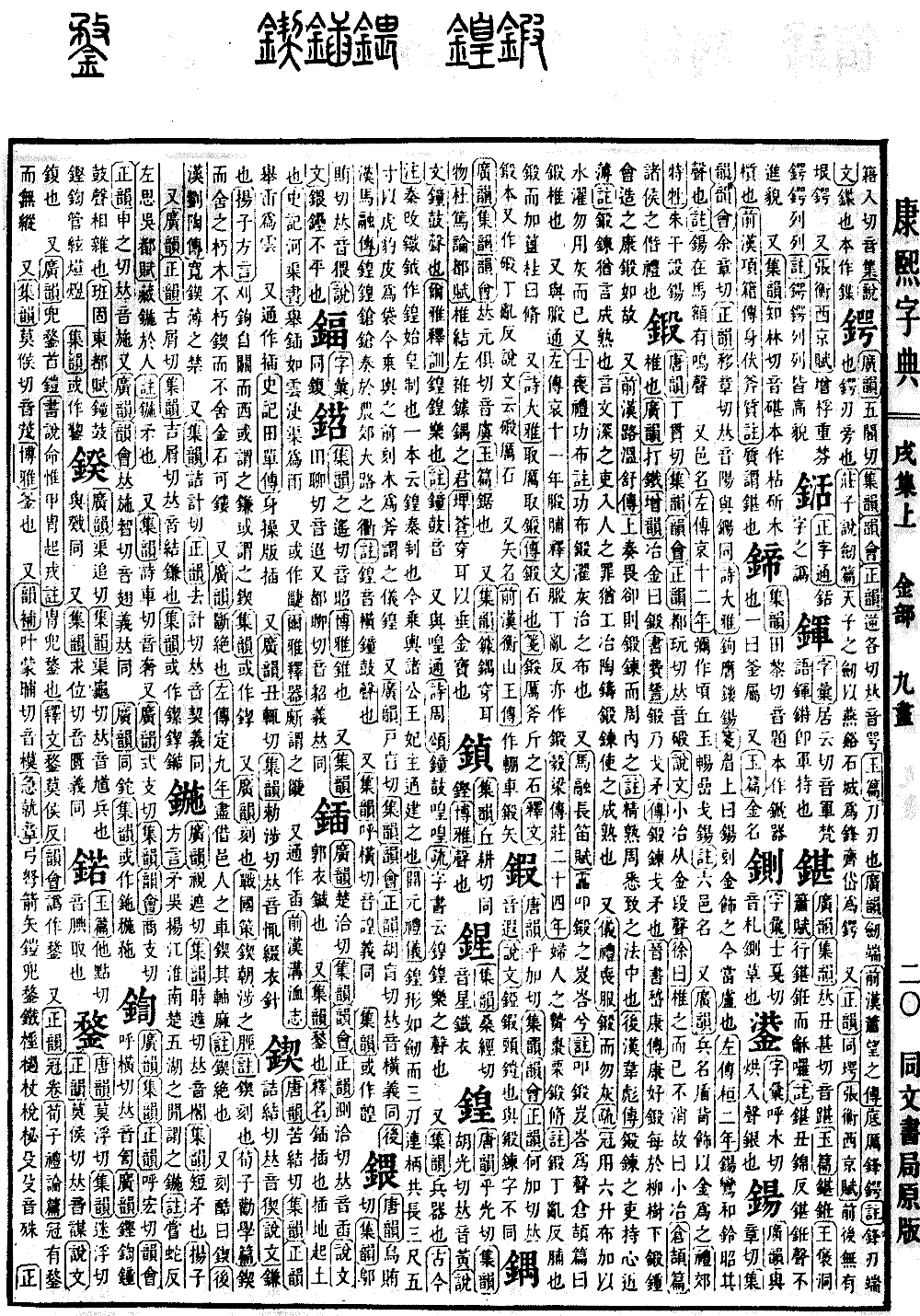
Xu Collection, Upper Volume
Radical: Metal (jīn)
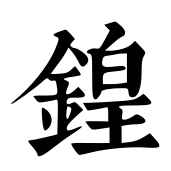
Huang
Kangxi strokes: 17
Page 1314, Entry 14
Pronounced huang
Shuowen Jiezi (Shuowen): The sound of bells and drums.
Erya, Explanation of Teachings (Erya): Huang huang, meaning joy.
Commentary: The sound of bells and drums. Also used interchangeably with huang.
Book of Odes (Shijing), Zhou Odes: The bells and drums sound huang huang.
Sub-commentary: The dictionaries state: Huang huang is the sound of music.
Also, Jiyun (Rhyme Anthology): A type of weapon.
Commentary on Past and Present (Gujin Zhu): Qin replaced the iron yue-axe with the huang; this was established by the First Emperor. One edition states: The huang was a Qin invention. Today, the imperial carriage, dukes, kings, consorts, and heads of state all display them.
Kaiyuan Rites and Ceremonies (Kaiyuan Liy): The huang is shaped like a sword with three blades, measuring three feet and five inches in total length including the handle, and encased in tiger or leopard skin. Today, in front of the imperial carriage, wood is carved into the shape of an axe, which is called the ritual huang.
Also, Guangyun (Broad Rhymes): Pronounced heng
Jiyun (Rhyme Anthology), Yunhui (Dictionary of Rhymes), Zhengyun (Correct Rhymes): Pronounced heng. Same meaning.
Biography of Ma Rong in the History of the Later Han (Hou Hanshu): Huang huang qiang qiang, performed at the crossroads of the great road in the farming suburbs.
Commentary: Huang, pronounced heng. The sound of bells and drums.
Also, Jiyun (Rhyme Anthology): Pronounced huang. Same meaning.
Jiyun (Rhyme Anthology): Sometimes written in a variant form (huang).