Chen Collection, Middle Volume
Radical: Wood (mù)
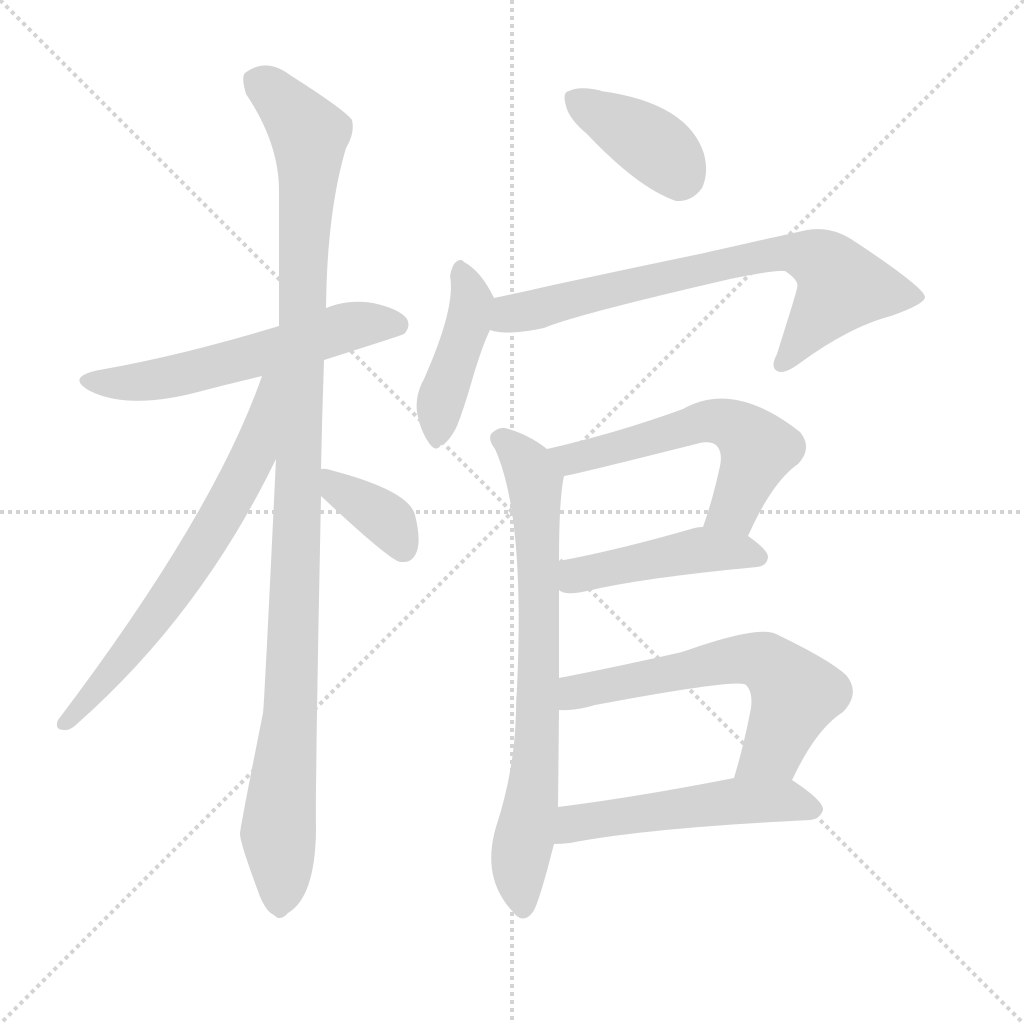
棺
Kangxi Stroke Count: 12
Page 535, Entry 04
Pronounced guan.
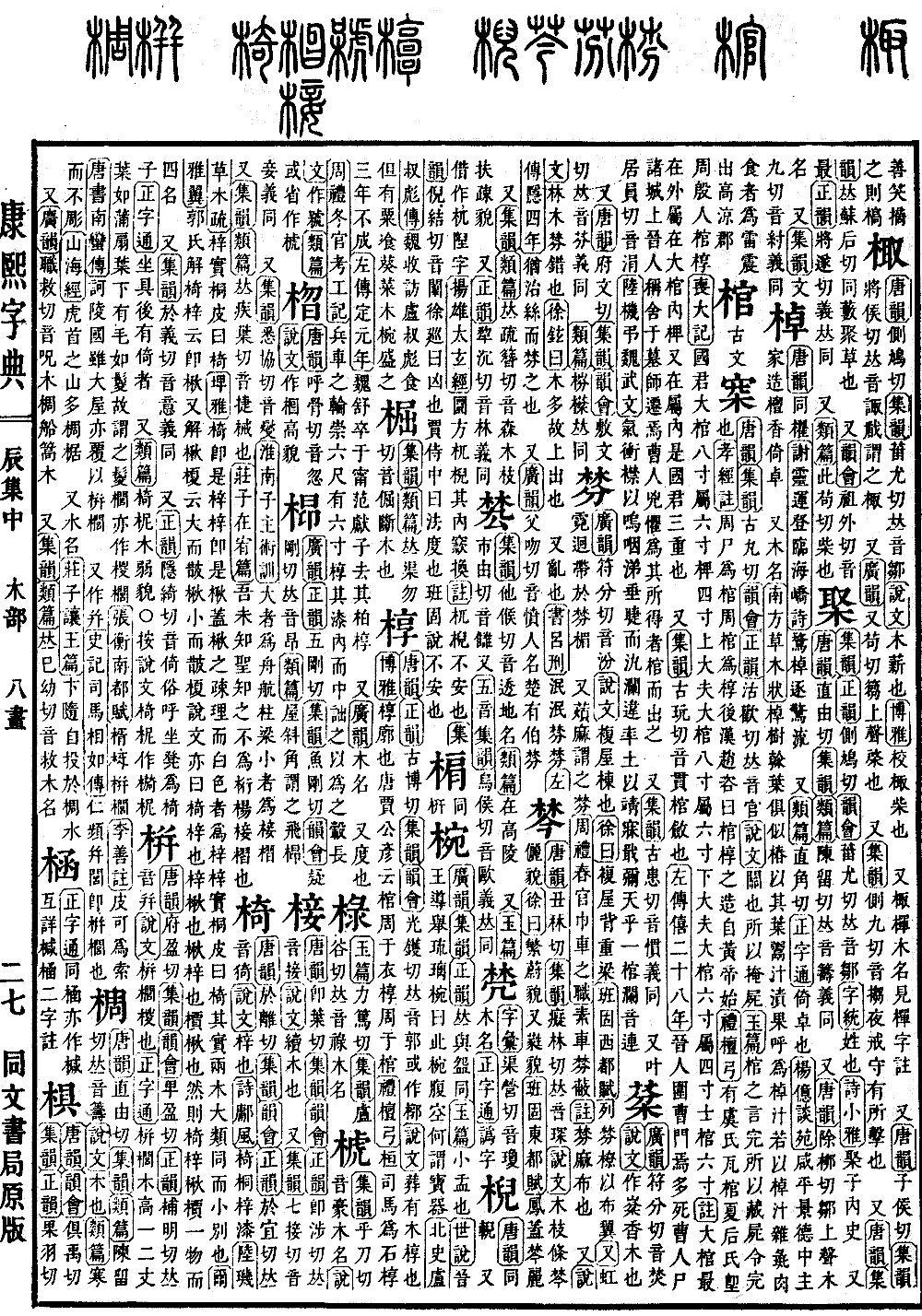
Shuowen Jiezi (Explanation of Characters) defines this as guan, a vessel used to conceal a corpse. Yupian (Jade Chapters) states that the character for coffin takes its meaning from the word for complete, meaning it is used to hold a corpse to keep it intact.
Xiaojing Zhu (Commentary on the Classic of Filial Piety) records: wrapping a corpse is called guan, and wrapping the guan is called guo (outer coffin). Zhao Zi of the Eastern Han dynasty stated: the crafting of coffins and outer coffins began with the Yellow Emperor.
Liji (Book of Rites) records: the Yu clan used earthen coffins, the Xia dynasty used burnt-earth tiled coffins, and the Zhou dynasty used both inner and outer coffins. Sang Daji (Record of Funerary Rites) records: the coffin of a feudal lord consists of three layers; the outermost large coffin is eight inches thick, the middle layer is six inches thick, and the innermost layer is four inches thick. An upper-rank grand master has two layers; the large coffin is eight inches thick and the middle layer is six inches thick. A lower-rank grand master has two layers; the large coffin is six inches thick and the middle layer is four inches thick. A shi (scholar-official) has only one layer, six inches thick. Note: the large coffin is on the outside, the middle layer is inside the large coffin, and the innermost layer is inside the middle layer; this constitutes the triple coffin of a feudal lord.
Pronounced guan. Refers to placing a body into a coffin. Zuo Zhuan (Chronicle of Zuo) records: the Jin army surrounded the state of Cao and attacked the city gates, resulting in many deaths. The people of Cao displayed the corpses of the Jin soldiers on the city walls. The Jin army threatened to camp in the Cao ancestral burial grounds and began moving their troops toward the cemetery. The people of Cao, in fear, placed the Jin corpses into coffins and sent them out of the city.
Pronounced guan. The meaning is the same as the above.
Pronounced juan. In the works of Lu Ji, mourning the Emperor Wu of Wei: breath rushes to the chest with sobs, tears hang from the lashes and flow. Defying the world to sleep in peace, gathering a lifetime of peerless achievements into a single coffin.