You Collection, Upper Volume
Radical: Speech (yán)
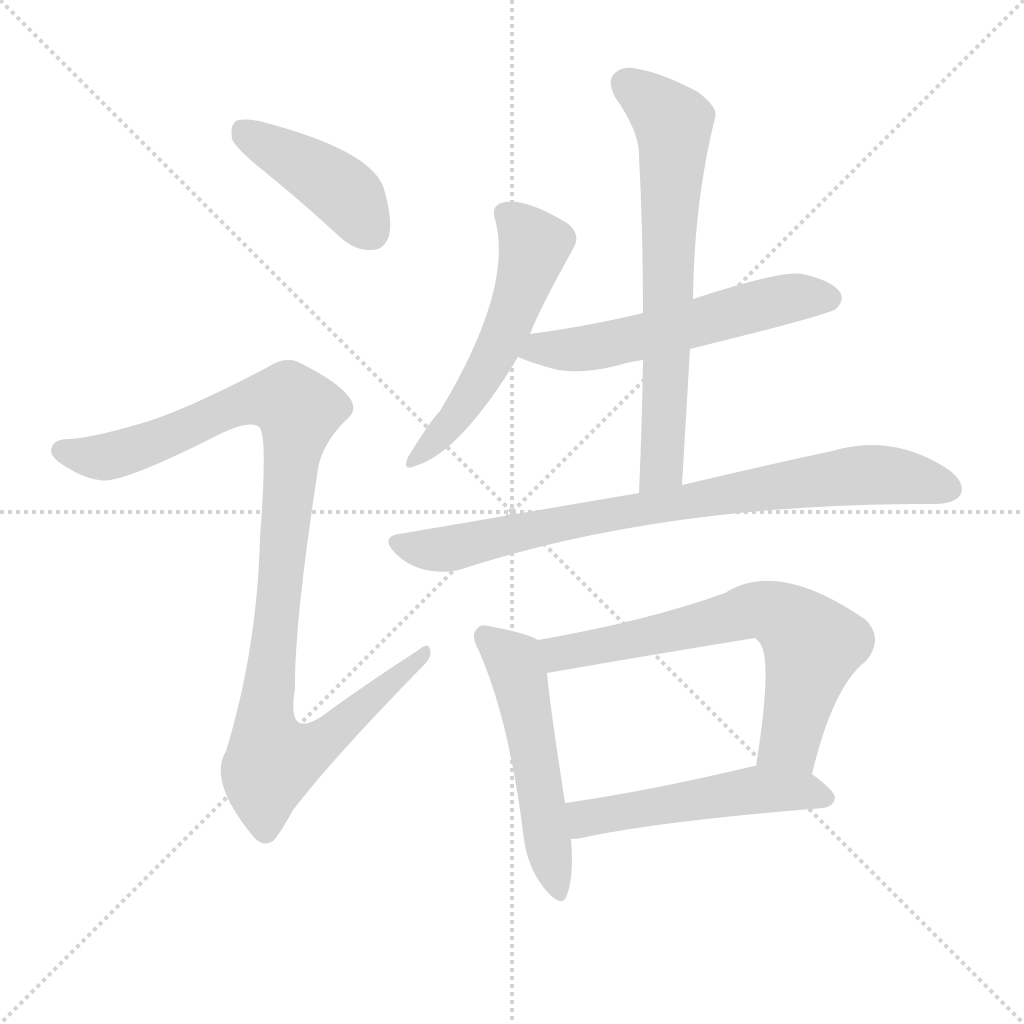
Gao
Kangxi Strokes: 14
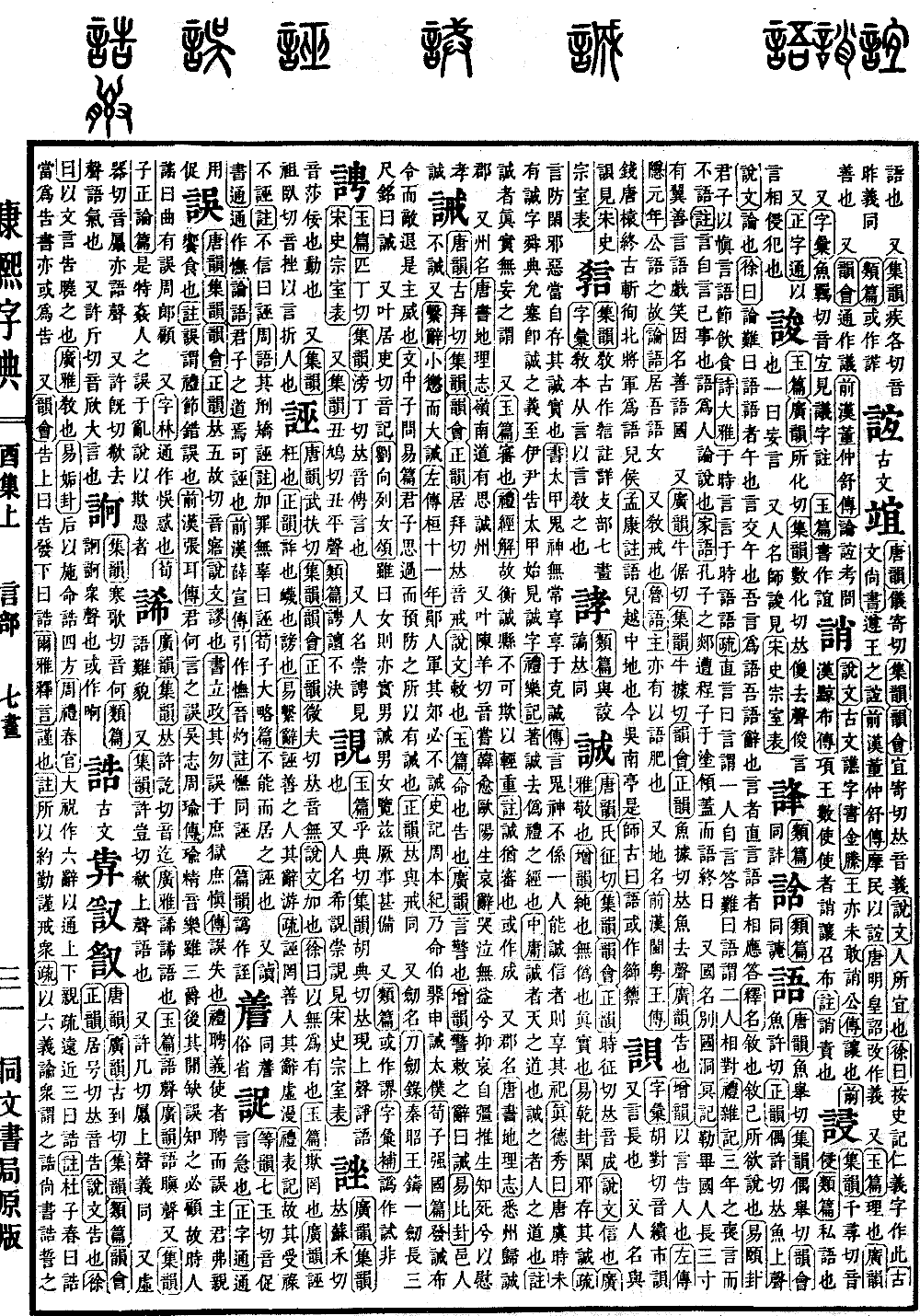
Page 1163, Entry 01
In ancient texts, according to the Tang Rhyme (Tangyun) and the Expanded Rhymes (Guangyun), pronounced gao (falling tone); according to the Collected Rhymes (Jiyun), the Classified Chapters (Leipian), the Rhyme Compendium (Yunhui), and the Correct Rhymes (Zhengyun), pronounced gao (falling tone).
Shuowen Jiezi says: it means to announce. Xu Xuan says: it is to instruct and enlighten through written language. Guangya says: it means to teach.
Book of Changes (Yijing), Gou Hexagram: The sovereign issues commands to proclaim to the four quarters.
Rites of Zhou (Zhouli), Office of Spring: The Great Invoker creates six types of pronouncements to connect those above and below, whether intimate or distant; the third is called gao. The commentary by Du Zichun says: gao should be understood as to announce. The Book of Documents (Shangshu) can also be read as to announce.
Yunhui says: to speak to a superior is called gao (announce), to issue commands to an inferior is called gao (proclaim).
Erya, Explanation of Words: it means to be cautious. The commentary says: it is a means to urge diligence and warn the masses. The sub-commentary says: to instruct the masses with these six types of expressions is called gao; such as the proclamations and oaths in the Book of Documents (Shangshu).
Kong Anguo, Preface to the Book of Documents (Shangshu): The documents of the Xia, Shang, and Zhou dynasties, although they establish teachings in various styles, share the same principle regarding the profound meanings of elegant proclamations. The sub-commentary says: There are eight types of teachings, oaths, orders, songs, tributes, levies, and standards of the three kings. The reason only gao is mentioned is to distinguish it; its categories are eight, but the text is concise, and one gao encompasses them all. Because these eight matters all involve speech to proclaim and demonstrate, they are collectively termed gao.
Guliang Commentary to the Spring and Autumn Annals (Chunqiu Guliang Zhuan), Eighth Year of Duke Yin: Proclamations and oaths did not reach the Five Emperors.
Rites of Zhou (Zhouli), Office of Autumn: The Master of Justice holds the five prohibitions, the second of which is gao, used at assemblies and meetings.
Literary Mind and the Carving of Dragons (Wenxin Diaolong): In the three dynasties, matters combined proclamations and oaths; oaths were for instruction and warning, while proclamations were for the dissemination of governance.
Zhengzitong says: In ancient times, superiors and inferiors both used the term gao; the Qin dynasty abolished the ancient title and used edicts. In the sixth year of the Yuanshou era of Emperor Wu of Han, the term gao was revived, but it was not used for appointing officials. The Tang dynasty used imperial decrees rather than gao. The Song dynasty began using gao to confer titles on officials. The Ming dynasty used imperial orders for officials instead of gao. After three years of performance evaluation, gao was used to bestow praise. In the seventeenth year of the Hongwu era, Ming Taizu decreed that those with noble titles would be granted gao, following the system for the first rank. In the twenty-sixth year, it was established that those from the first to fifth ranks would be granted by gao, and those from the sixth to seventh ranks would be granted by imperial order.
Also the name of a bird. Yang Xiong, Dialects (Fangyan): The cuckoo, in the regions between the Guanzhong area and the states of Liang and Chu, is called jie-gao.
According to the Collected Rhymes (Jiyun), pronounced gu (entering tone). Also means to announce. The same as the word for announce.