Wei Collection, Upper Volume
Radical: Rice (mǐ)
Kangxi Strokes: 17
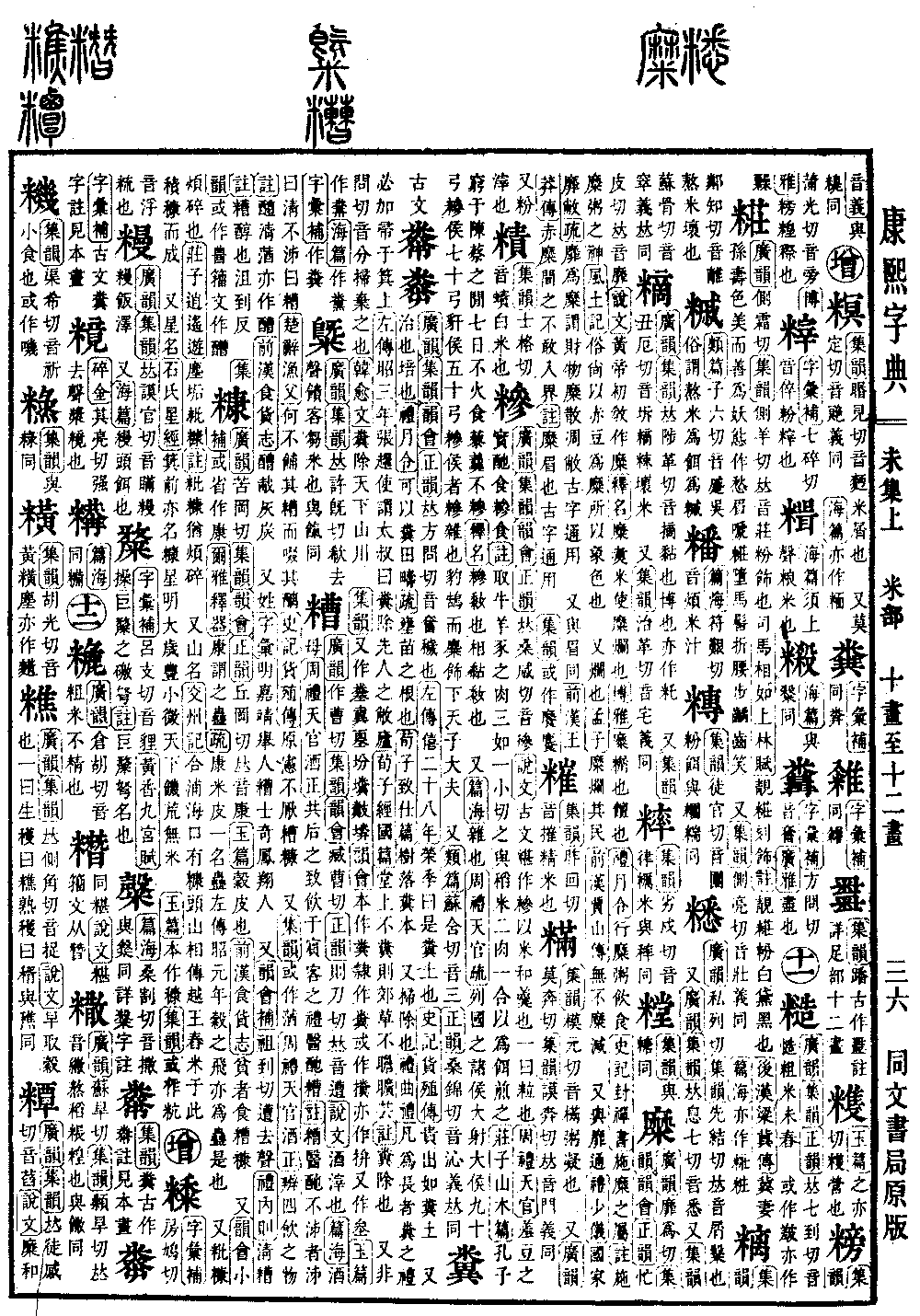
Page 912, Entry 01
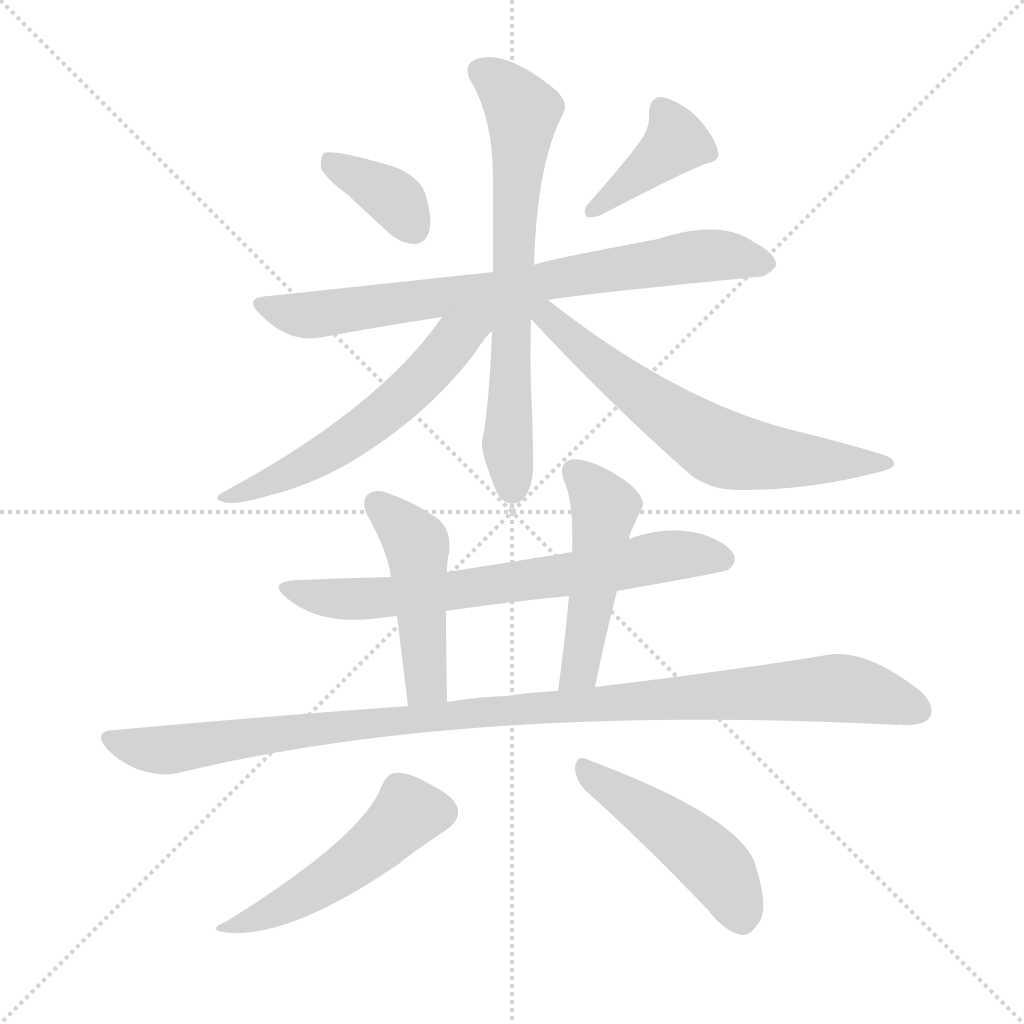
Ancient character. In Broad Rhymes (Guangyun), Collection of Rhymes (Jiyun), Rhyme Compendium (Yunhui), and Correct Rhymes (Zhengyun), it is pronounced fen (falling tone). It means filth. In Zuo Tradition (Zuo Zhuan), twenty-eighth year of Duke Xi, Rong Ji said: This is filth and dirt. In Records of the Grand Historian (Shiji), Biography of Economic Life, it is said: When valuable goods are sold, they are treated like filth and dirt.
It also means to cultivate or to apply fertilizer. In Book of Rites (Liji), Monthly Ordinances, it says: One may fertilize the fields and plots. The commentary says: This refers to banking soil around the roots of sprouts. In Xunzi, On Governing the State, it says: When a tree sheds its leaves, manure the roots.
It also means to sweep or to clean. In Book of Rites (Liji), Pattern of Ritual, it says: In the ritual of sweeping for one's elders, one must always place the broom upon the dustpan. In Zuo Tradition (Zuo Zhuan), third year of Duke Zhao, Zhang Ti had someone say to Taishu: Sweep and clear out the dilapidated dwelling of your ancestors. In Xunzi, On Governing the State, it says: If the halls are not swept, then the outer grasses will not be cleared of weeds. The commentary says: This means to remove or clear away.
Also pronounced fen (level tone). It means to sweep away or discard. In the writings of Han Yu: To sweep and clear the mountains and rivers of the world.
In Collection of Rhymes (Jiyun), it is also written in a variant form (fen). In Rhyme Compendium (Yunhui), the original form is written as (fen), while the clerical form is written as (fen). It is also written as a variant. It is also written as (pian), and also as a variant. In Jade Compendium (Yupian), it is written as a variant. In Sea Compendium (Haipian), it is written as a variant. In Dictionary Supplement (Zihui Bu), it is written as a variant. The original character was written with black under rice, or as a variant.