Mao Collection, Middle Volume
Radical: Hand (shǒu)
Kangxi Strokes: 10
Page 428, Entry 02
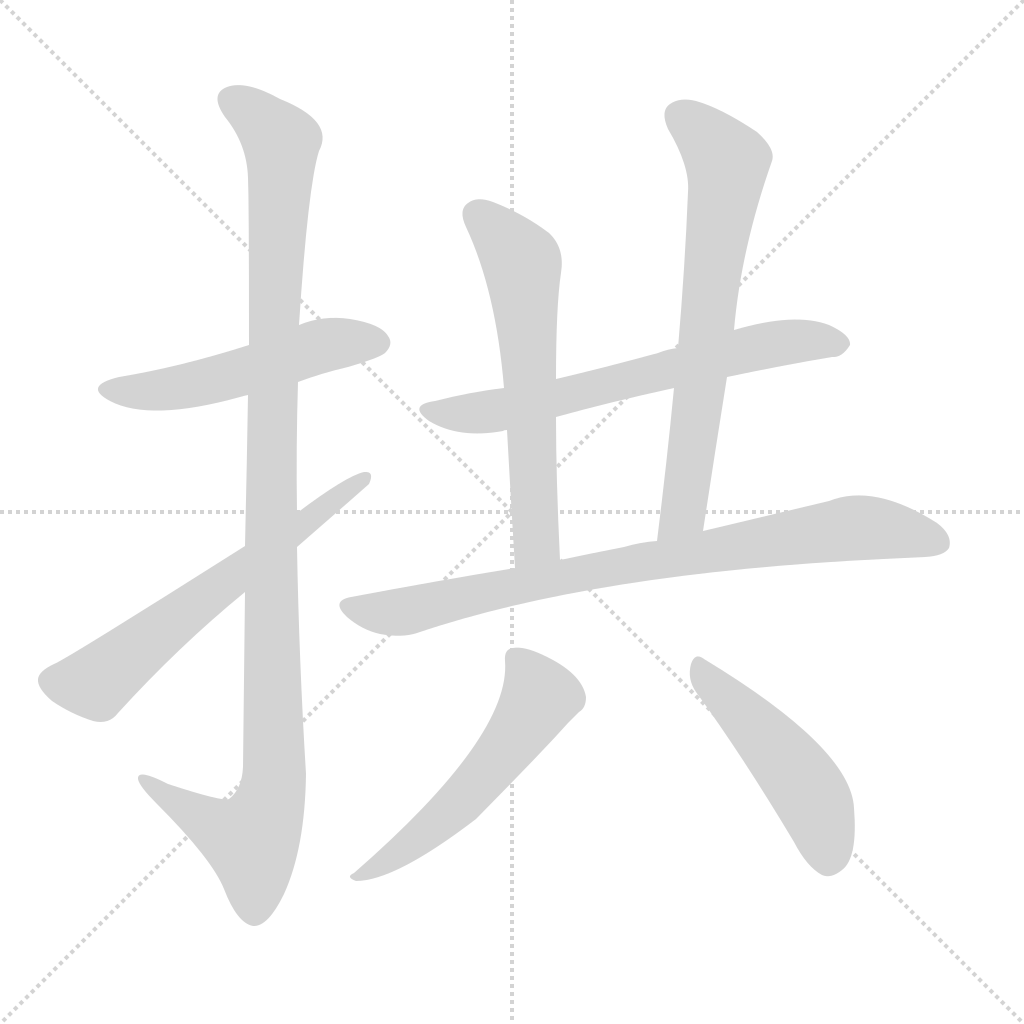
Pronounced gong (rising tone).
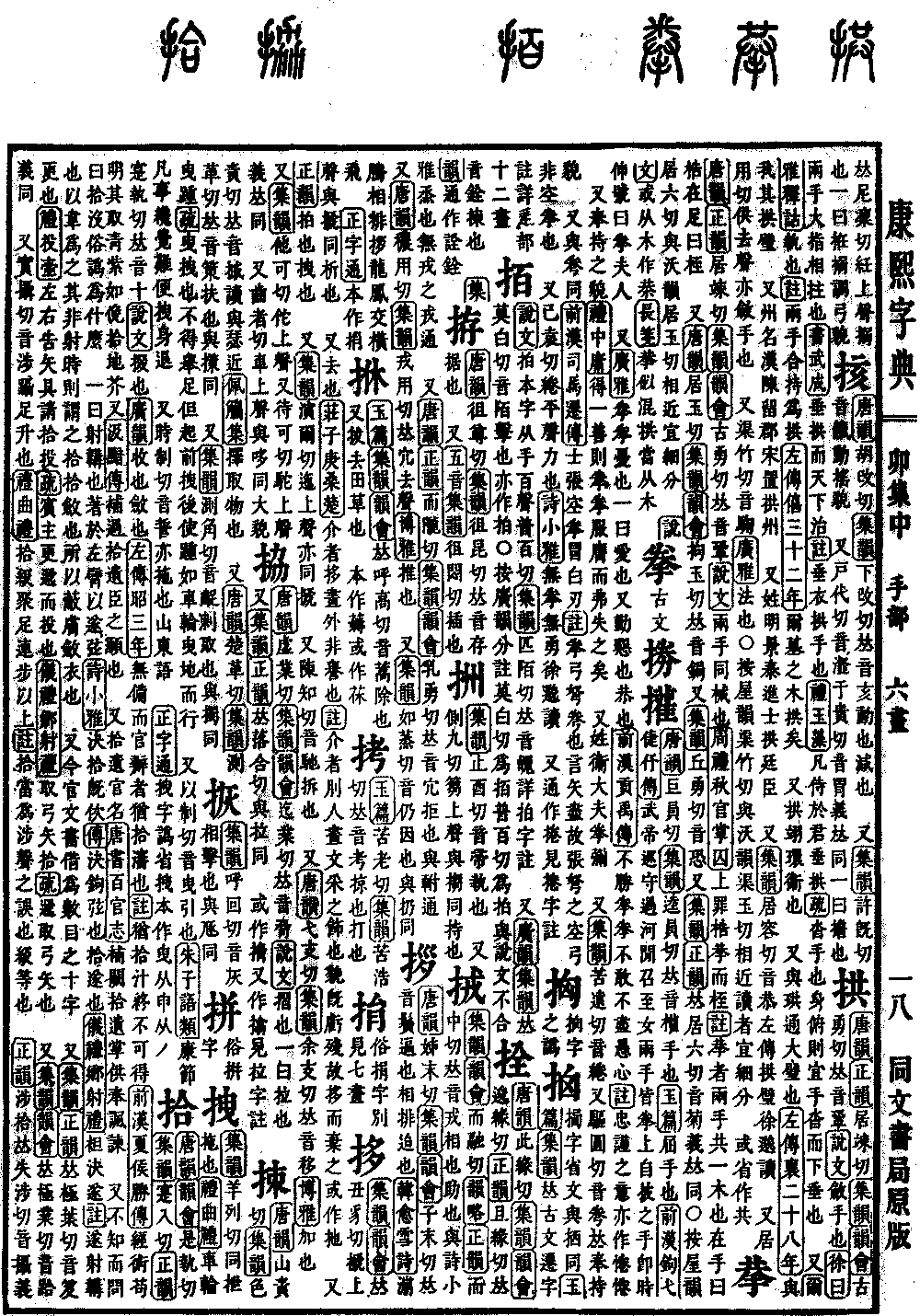
Shuowen Jiezi (Explanation of Graphs and Analysis of Characters) defines this as folding the hands. Xu Shen comments that it is the two thumbs pressing against each other.
Book of Documents (Shujing), Wucheng chapter: By simply folding their hands, the world was governed. The commentary explains this as robes hanging down and hands folded.
Book of Rites (Liji), Yuzao chapter: When waiting upon a ruler, one should stand with hands folded. The sub-commentary states this means overlapping the hands. When the body is bowed, the hands should be overlapped and hung downward.
Erya (Approaching Elegance), Shugu chapter: To hold. The commentary states that joining the two hands together is to gong.
Zuo Tradition (Zuo Zhuan), 32nd year of Duke Xi: The trees on your grave will be large enough to be encircled by two hands.
Also means to assist or protect, as in circling guard.
Also used interchangeably with gong (a large jade disc). Zuo Tradition (Zuo Zhuan), 28th year of Duke Xiang: Give me that jade disc.
Also the name of a prefecture. Established during the Han Dynasty as Liu Commandery, renamed Gong Prefecture during the Song Dynasty.
Also a surname. Gong Tingchen was a successful candidate in the imperial examinations during the Jingtai period of the Ming Dynasty.
Also pronounced gong (level tone), as recorded in Jiyun (Collected Rhymes). In the Zuo Tradition, concerning the jade disc, Xu Miao reads it this way.
Also pronounced gong (departing tone). Another way to express folding the hands.
Also pronounced qu, as recorded in Guangya (Expanded Elegance), meaning a law or method. Note: The pronunciation qu in the wu rhyme category is close to the pronunciation qu in the wo rhyme category; readers should distinguish them carefully.
Sometimes written in a simplified form as gong.