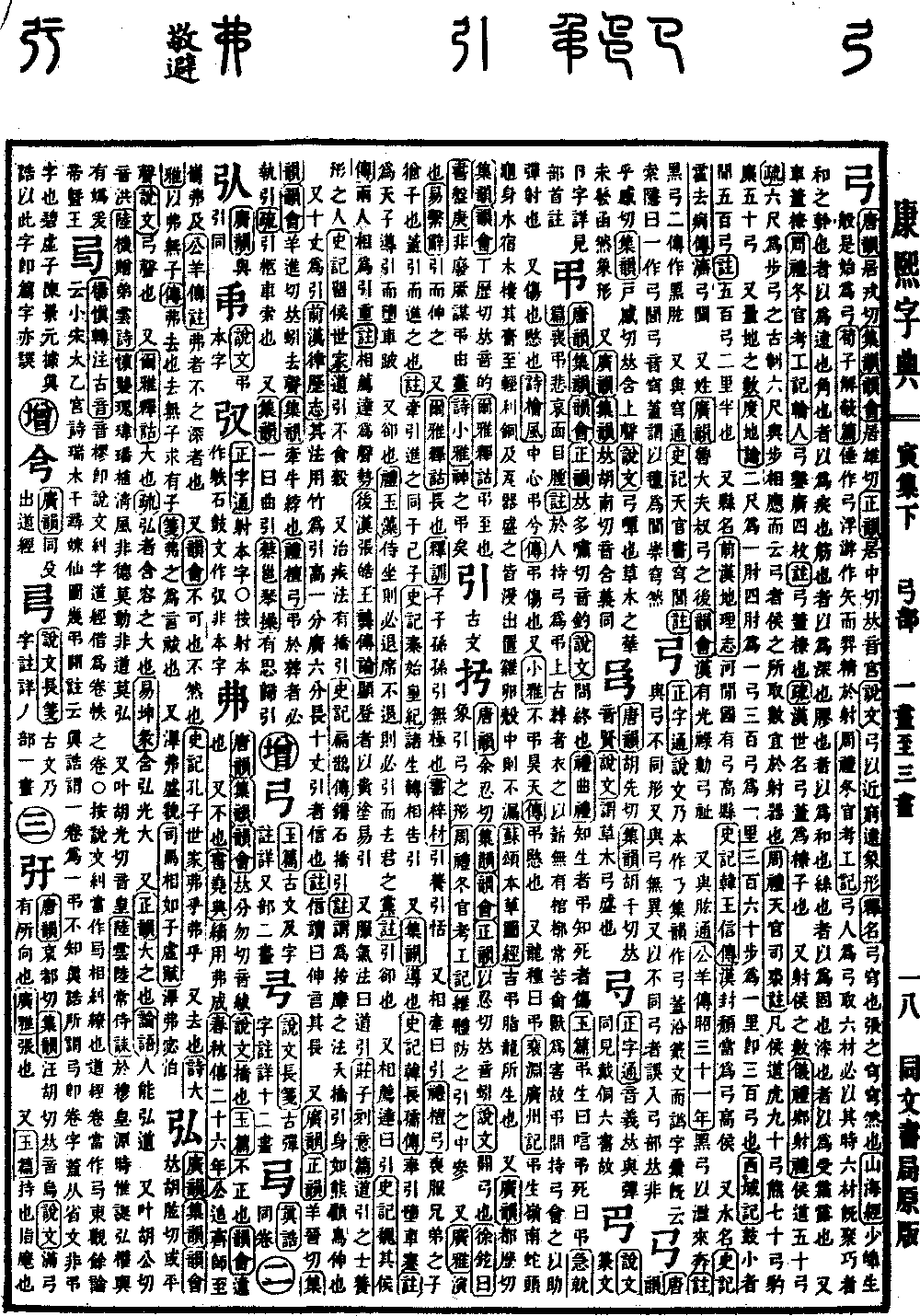
Yin Collection, Lower Volume
Radical: Bow (gōng)
Page 356, Entry 07
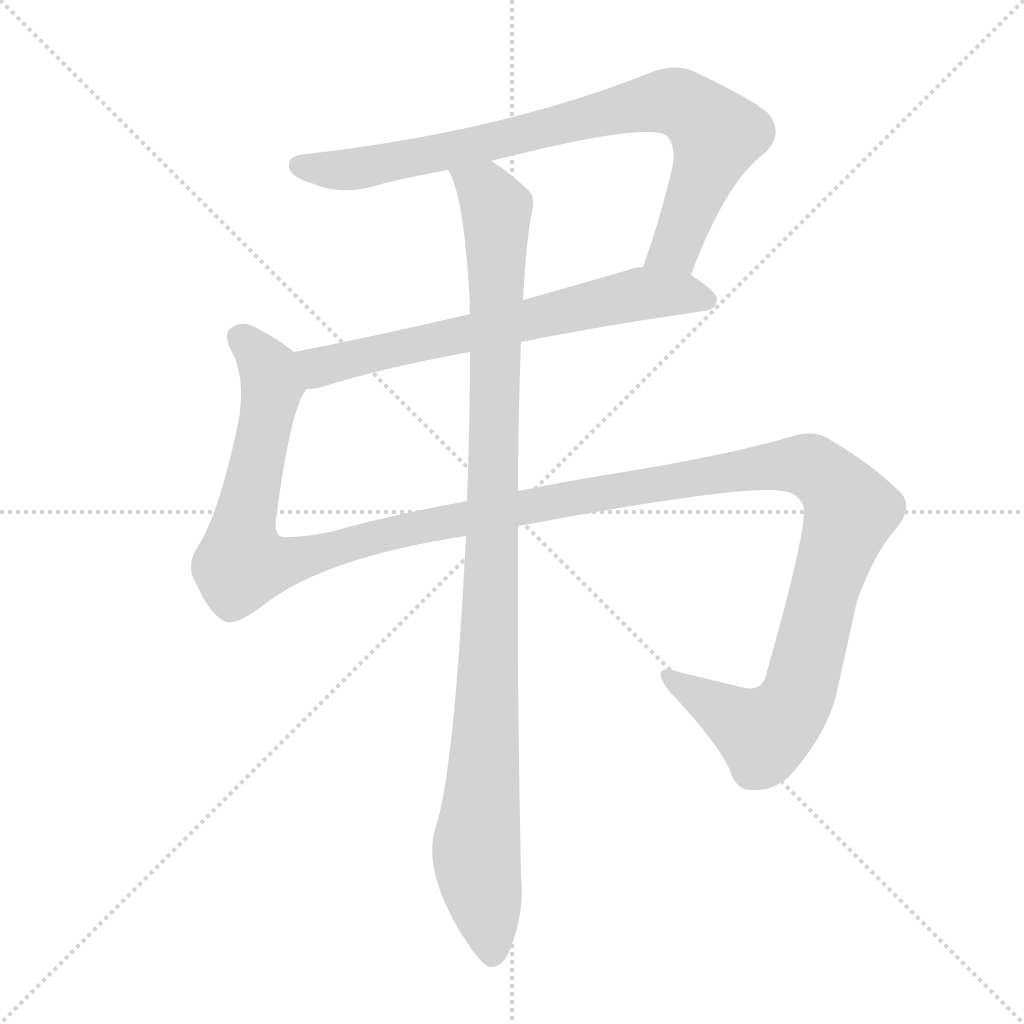
Pronounced diao.
The Shuowen Jiezi explains this as offering condolences at a funeral.
The Book of Rites (Liji) states: Offering condolences to the living is called diao, while grieving for the dead is called shang.
The Yupian states: Offering condolences to the living is called yan, while grieving for the dead is called diao.
The Jijiupian mentions: At a funeral, offering condolences and expressing grief with a swollen, mournful face.
Commentary states: A person holding a bow forms the character diao. In high antiquity, when burying the dead, bodies were wrapped in brushwood without coffins, often subject to the depredations of birds and beasts; therefore, those offering condolences would bring bows to gather and assist in repelling these creatures.
It also carries the meaning of grief and pity.
The Book of Odes (Shijing) says: My heart is sorrowful.
Commentary states: Diao means sorrow.
The Book of Odes (Shijing) also says: Do not pity the heavens.
Commentary states: Diao means pity.
There is also a type of dragon species called diao.
Pei Yuan's Record of Guangzhou (Guangzhou Ji) records: The diao grows in the regions south of the mountains; it has a head like a snake and a body like a turtle, dwelling in the water and living in trees. Its fat is extremely thin and slick; when stored in copper or earthenware vessels, it leaks through, but it does not leak when placed in an eggshell.
Su Song's Illustrated Classic of Materia Medica (Bencao Tujing) records: The fat of the ji-diao is produced by dragons.
Pronounced di.
The Erya: Explanations of Words (Erya) explains: Diao means to arrive.
The Book of Documents (Shangshu) says: It is not that their plans were abandoned, but that they followed the arrival of the divine will.
The Book of Odes (Shijing) says: The divine spirits have arrived.
Pei Yuan's Record of Guangzhou (Guangzhou Ji).