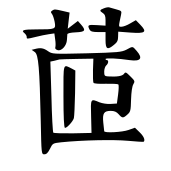
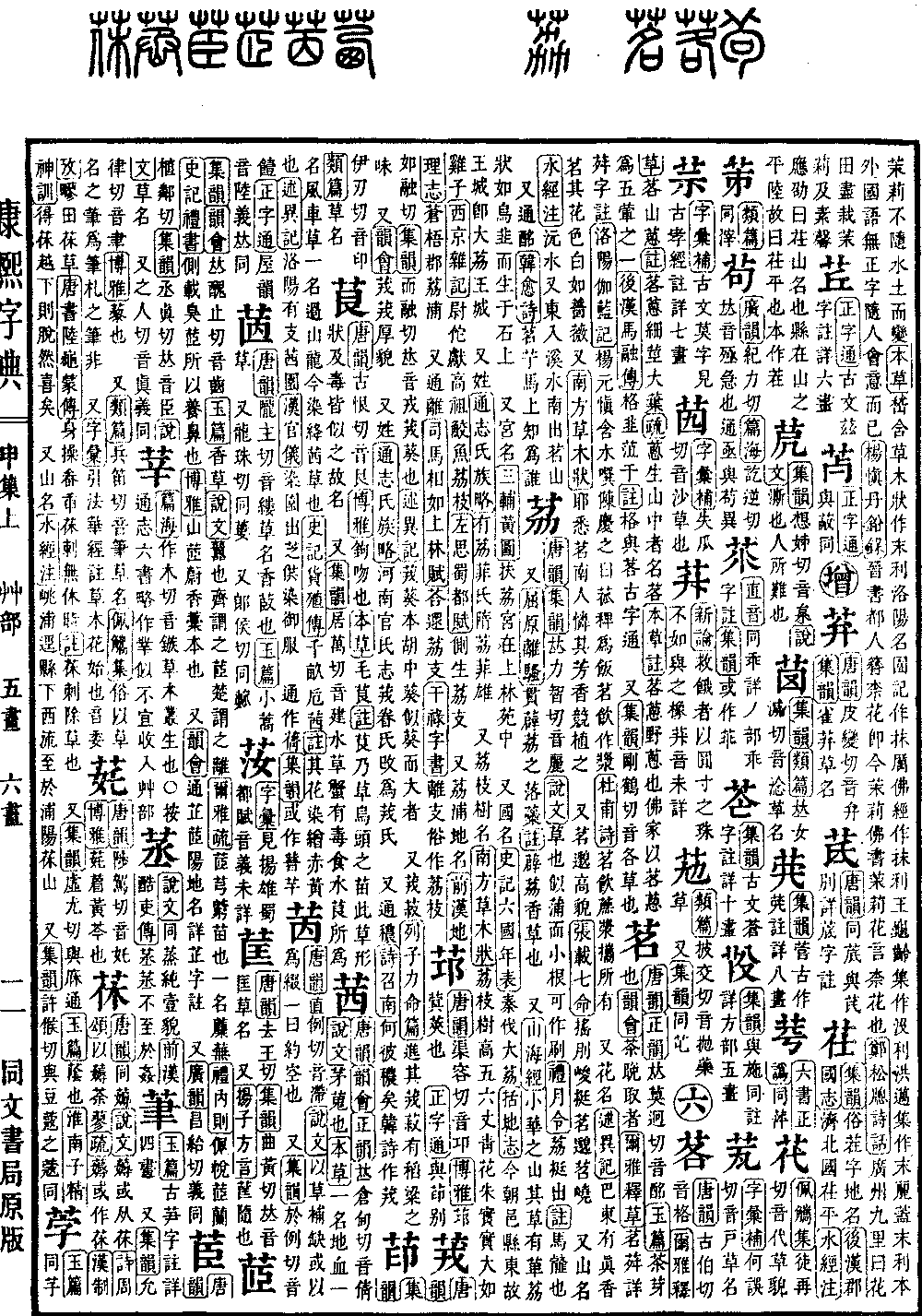
Shen Collection, Upper Volume
Radical: Grass (cǎo)
Chai
Kangxi strokes: 12
Page 1027, Entry 33
Collected Rhymes (Jiyun) and Rhyme Anthology (Yunhui): Pronounced chi (rising tone), sound identical to tooth.
Jade Chapter (Yupian): Interpreted as a fragrant herb.
Etymology Dictionary (Shuowen): Means clamor. In the State of Qi it is called chai, and in the State of Chu it is called li.
Commentary on the Erya (Er Ya Shu): Chai is the seedling of the xiongqiong plant, and another name for it is miwu.
Book of Rites (Liji), Inner Morality (Neize): Records that handkerchiefs worn at the belt were decorated with chai and orchid.
Records of the Grand Historian (Shiji), Treatise on Rites (Lishu): Records that fragrant chai was placed nearby to nourish the sense of smell.
Explanatory Dictionary (Boya): Mountain chai is also known as weixiang or gaoben.
Additionally, Rhyme Anthology (Yunhui) records that chai is interchangeable with zhi. Chaiyang is a place name. For detailed explanation, see the entry for the character zhi.
Also, Extensive Rhymes (Guangyun): Pronounced chai (falling tone). The meaning is the same.