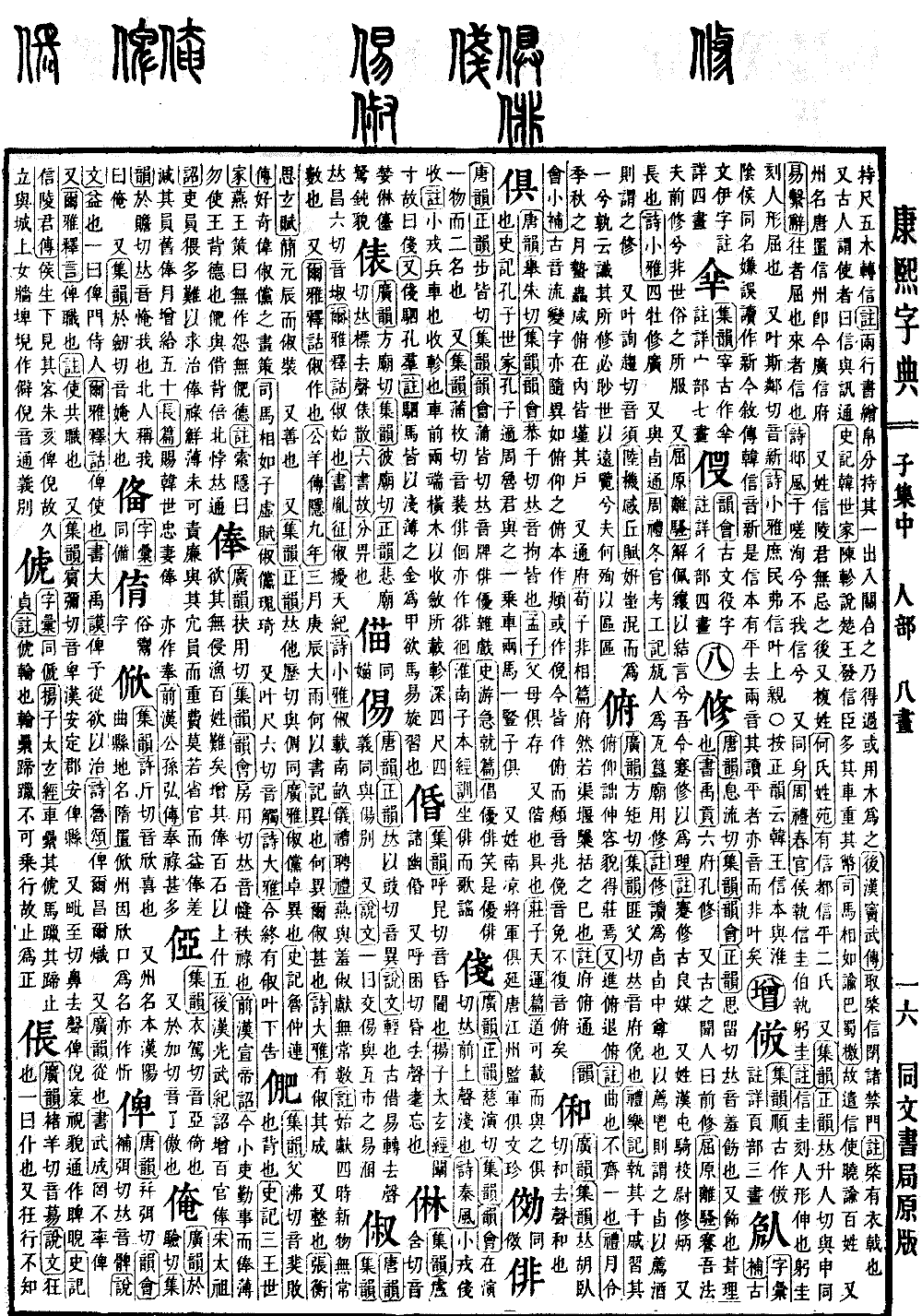
Zi Collection, Middle Volume. Radical: Person (rén). Bi. Kangxi strokes: 10. Page: Page 106, Number 25. Tang Rhymes (Tangyun): Pronounced with the initial of bing and the final of mi. Rhyme Collected (Yunhui): Pronounced with the initial of bu and the final of mi. Sound is the same as bi. Explaining Graphs and Analyzing Characters (Shuowen Jiezi): To increase or benefit. Another definition is bimen, meaning an attendant. Approaching the Correct (Erya), Explaining Ancient Terms: Bi means to cause or to make happen. Book of Documents (Shangshu), Counsels of Great Yu: Make me follow my desires to achieve order. Book of Odes (Shijing), Praises of Lu: Make you prosperous and flourishing. Also, in the Expanded Rhymes (Guangyun): To follow or comply. Book of Documents, Completion of the War: None did not follow and comply. Also, Approaching the Correct (Erya), Explaining Words: Bi means office or duty. Commentary: To cause them to perform their duties together. Also, in the Collected Rhymes (Jiyun): Pronounced with the initial of bin and the final of mi. Sound is the same as bei. This refers to Anbi County in the Anding Commandery of the Han Dynasty. Also pronounced with the initial of pi and the final of zhi, in the departing tone of bi. Bini refers to the appearance of looking askance. It is interchangeably used with the variant pini. Records of the Grand Historian (Shiji), Biography of the Lord of Xinling: Master Hou descended and saw that his guest Zhu Hai was looking askance, so he stood for a long time by the parapet on the city wall. The term for a low wall is written as pini; the sounds are similar but the meanings are different. Textual Research: In the Book of Odes, Praises of Lu, the phrase was recorded as make you prosperous you flourishing. This has been corrected according to the original source text to make you prosperous and flourishing.